

Business phone system
- Business phone systemA complete cloud phone system, set up for you
- Features50+ features: IVR, queues, recording, desktop and mobile apps
- Call flowsDecide exactly how every call is answered and routed
- AI Agents Built inAnswer, book and follow up on calls, day or night
- Time to upgradeStill on an old PBX? Here is what you are missing
Apps and hardware
- Desktop app Live demoCalls, chat, SMS and AI summaries in one window
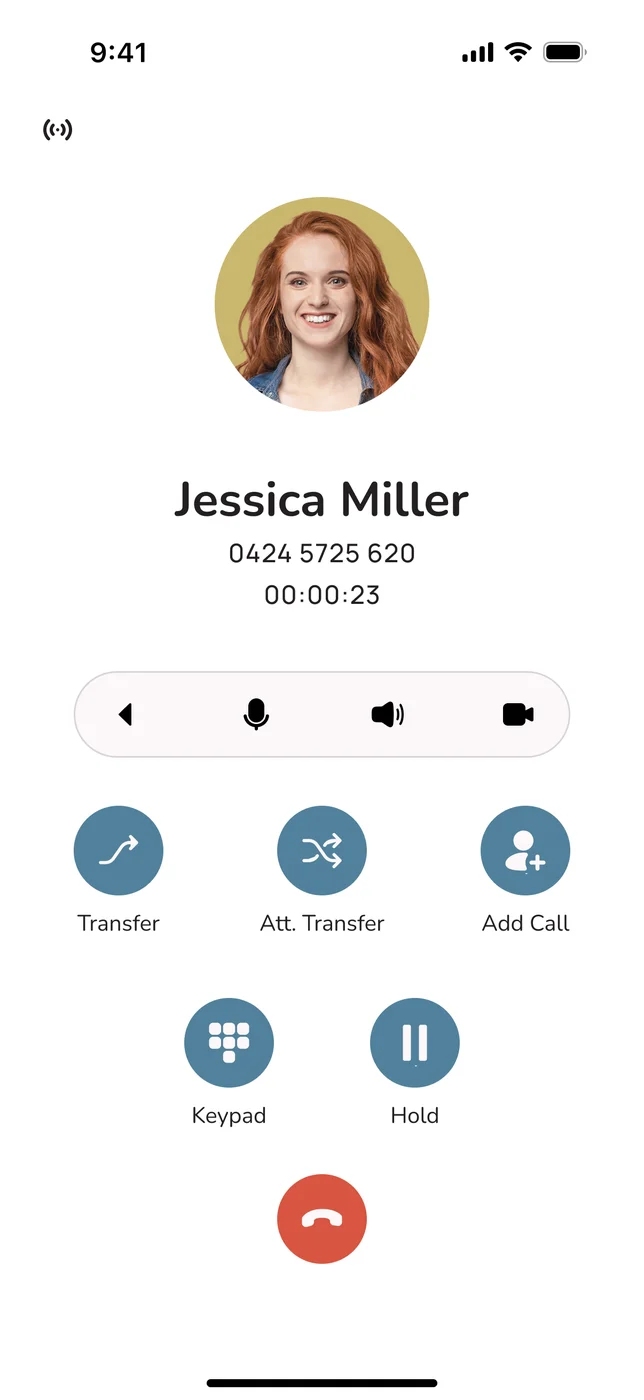
- Mobile app Live demoYour business number on your iPhone or Android
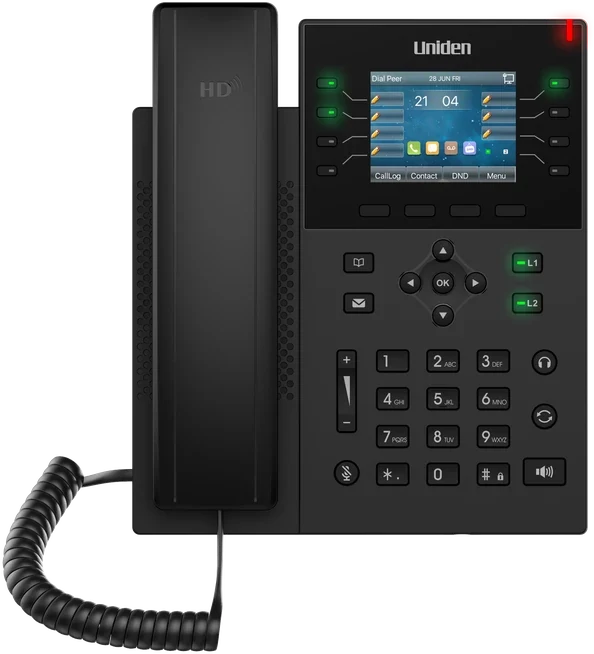
- Uniden desk phonesThe EVOC2 and a full range of office, DECT and conference phones
- Business NBNNBN set up alongside your phones, on one bill
- Why our internetBuilt for voice, so calls stay clear when the line is busy
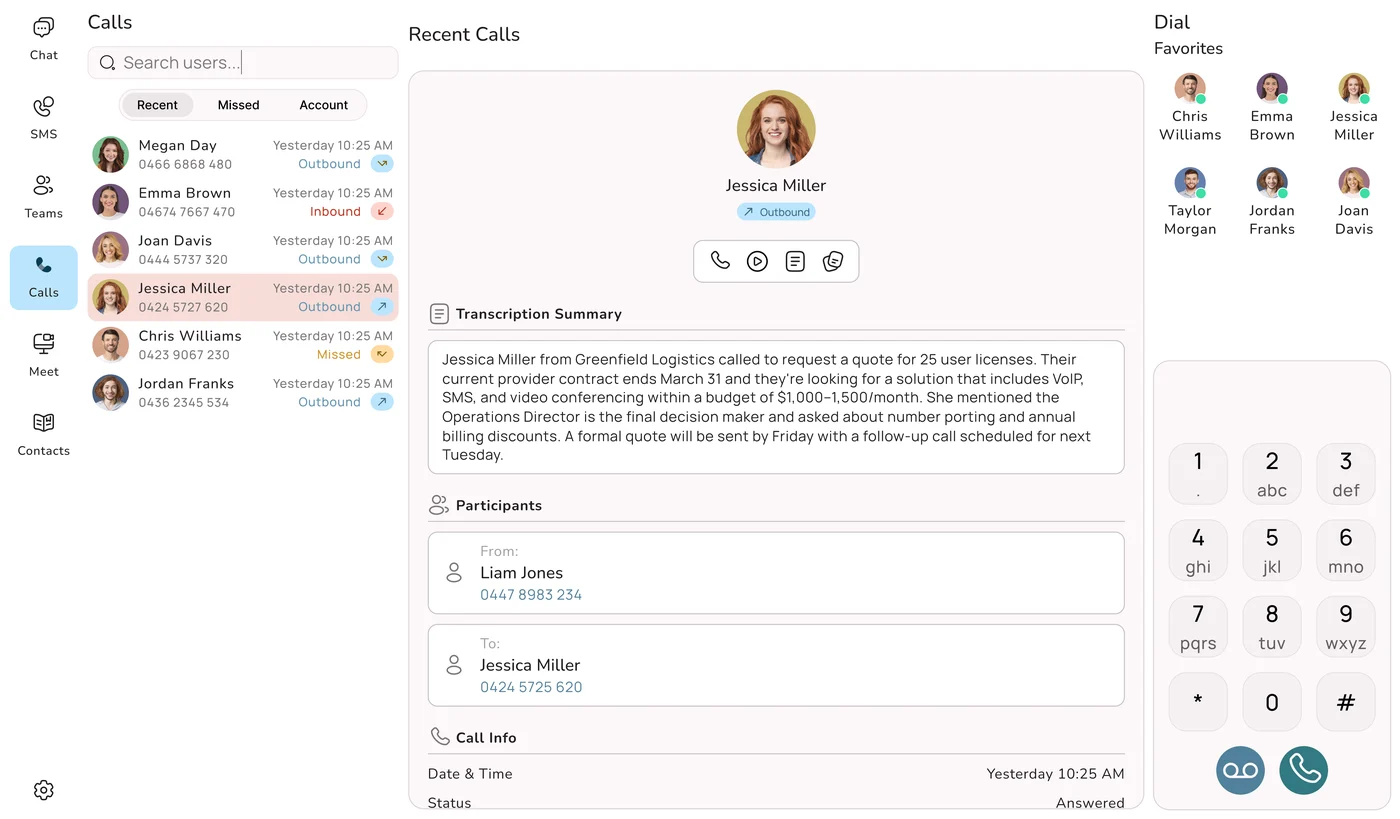
New Try it liveTake the Uniden Voice apps for a spin, right here
Click through working demos of the desktop and mobile apps: calls with AI summaries, team chat, SMS and more. No download, no sign up.
Desktop app demoMobile app demoDesigned, built, hosted and supported in Australia. Uniden desk phones, cloud apps and AI in one system.Book a demoAll features
AI on your phone line
Uniden Voice vs AI receptionists
See every comparisonAI AgentsEvery call answered, day or night
It answers on your own numbers, books the job, sends an SMS and warm transfers to your team when a person is needed.
Meet your AI agentBuilt into your phone system, not bolted on. No second number, no call forwarding.Book a demo
Professional services
Trades, retail and hospitality
Browse all industries Case study · Optical Solutions AustraliaFive branches, five phone systems, now one.5 sites1 systemRead the story
 Case study · Coco's Wealth of HealthWhen every enquiry and phone order matters.Maroubra organic health-food storeRead the story
 Case study · Shuriken Advisory GroupOne connected team across Sydney, home and overseas.30+ team1 platformRead the story
 Case study · Carlingford Dental SurgeryEvery call rings the whole team.Dental Carlingford, NSWRead the story
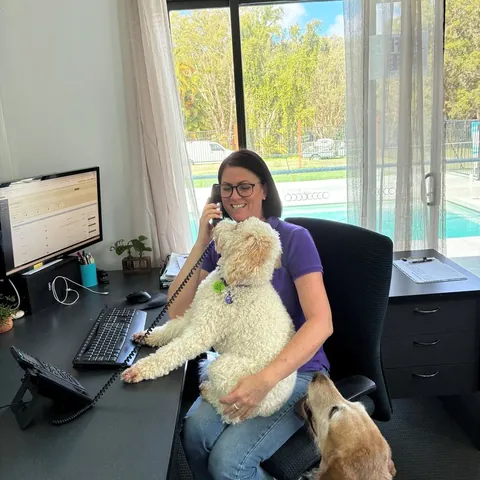 Case study · PTSD Dogs AustraliaA direct line for veterans, answered from anywhere.Charity Sunshine Coast, QLDRead the story
 Case study · Imperial Realtor GroupSales calls to sales, rentals to property management.Real estate Mango Hill, QLDRead the story
 Case study · Good 2 Eat CateringA catering team on the move, on one number.Catering and events Sunshine Coast, QLDRead the story
 Case study · ManolutionsOne number for the firm, a direct line to Paul.Executive advisory Works across time zonesRead the story






Our customersFrom one-person shops to national brands
See how businesses like yours run their phones on Uniden Voice.
Find your industryWorking on your own? A real business number and NBN for sole traders, no lock-in.Sole tradersStartups
Phone plansBusiness phone planfrom$84.90/month3 users included on a 36-month term. Every feature, one simple per-user rate.Free setup and free number portingDesktop and mobile apps includedAI Agents built inSee phone plans![Uniden Voice mobile app on a call]()
![A small team working together at a desk]()
Internet, hardware and more

Bundle and savePhones and NBN from one Aussie team
One provider to call when something needs fixing. No finger pointing.
See NBN plansWe guarantee to beat any competitor's quote. Keep your existing numbers when you move across.Sign up online1300 881 662
Learn and get set up
The library at a glanceBrowse all
180business
guides403kreads
so far
guides403kreads
so far
Guides by topic
- Phone systems67
- AI24
- Industries18
- Costs13
- NBN8
- Security7
- News5
- Other guides38


Need a hand? Our support team is based in Australia.Contact support
Call us on 1300 881 662 or send a message and the team will get back to you.Send a message
Guides and Articles
Almost every Australian small business starts the same way: the owner's own mobile becomes the business number, and a WhatsApp group becomes the office. It works, until it quietly doesn't. Customers end up holding a private number that belongs to one person. Quotes, complaints and promises live in chats nobody else can search. A lost phone stops the business for a day, and a staff member who leaves takes their clients with them. This guide sets out the real costs of running a business on a personal mobile and WhatsApp, gives you a twelve point self-check, and explains what changes when you move to a business phone system. You keep the mobile in your pocket, but it starts working for the business instead of the other way round.
A workshop is a bad place to answer a phone. The owner is under a hoist, the air tools are running, the service adviser is at the counter with a customer and the parts run is late. Most phone advice is written for tradies who work out of a ute, but a mechanic, auto electrician, tyre shop or panel beater has a fixed premises, a front counter, several bays and a very particular mix of calls. This guide sorts those calls into five types and shows where each should go: SMS updates that stop the "is my car ready?" call before it happens, a recorded approval call plus a text the customer replies to when you find extra work, a separate number for parts suppliers and assessors, cordless handsets that vibrate when you cannot hear them, and an AI agent that books services after the roller door comes down. It finishes with a costed example for a four bay workshop.
Most offboarding checklists cover the laptop, the building pass and the email account, then stop. The phone system gets forgotten until a customer complains that they have left three messages on a number nobody answers, or until you notice the person who left last month can still see the team's SMS inbox on their own mobile. This guide covers the phone side of a departure for an Australian business. It starts with the question that decides everything else: whose number is it? A direct line on your account, a mobile in the business's name and a personal mobile the employee used for work are three different situations, and ACMA's rules on account holders treat them differently. Then it works through the callers who keep ringing the old line, removing app access from a personal phone on the last day, what to do with call recordings, voicemails and SMS history under the Privacy Act, client contact, and a dated timeline from the day notice is given to ninety days later. It ends with the onboarding habits that make the next departure take ten minutes. It is general information, not legal or employment advice.
Most owners only look hard at the phone bill when something annoys them: a price rise, a dropped call, a salesperson with a better offer. The better time is a few weeks before the contract renews, because that is when leaving costs the least and when a silent auto renewal does the most damage. This guide is a cost audit you can do at your desk with last month's bills. It walks through the seven places a business phone bill usually leaks money, from line rental and 1300 charges to handsets nobody uses and a PBX in the cupboard that still has a maintenance contract. Then it shows how to work out payback properly, with the exit fee, any lease payout, new hardware and a month of overlap included, using a worked example of a six desk office that is now down to three people. The figures in the example are illustrative. The method is the point, and it works whichever provider you end up with.
At 6.40 on a Wednesday evening, a customer rings a suburban mechanic. She has a service booked for Thursday, something has come up at work, and she would like Saturday morning instead. While she is at it, she wants to know whether the brake check is included. A simple chatbot can answer half of that. It knows the Saturday hours and it can send her a link to the booking page. An operational AI agent answers the whole call: it finds her booking, checks Saturday, moves it, answers the brake question from the price list, texts her a confirmation and leaves the workshop a note for the morning. That gap, between answering a question and finishing the job, is the most important idea in business AI right now. This guide walks one call through both, explains the five things that make an agent operational, and shows how to tell a real agent from a chatbot with a new label.
An accounting practice does not have a phone problem in general. It has three specific ones. Calls arrive in waves that follow the ATO lodgment calendar, so the busiest weeks are also the weeks nobody has time to answer. Every caller who asks about a return, a refund or a bank account could be the client, a family member without authority, or a scammer who has done some homework, and the Tax Practitioners Board Code of Professional Conduct says you must not disclose a client's affairs to a third party without permission. And the conversations themselves now count: since 2025 the Code has required practitioners to keep records of key client discussions for at least five years. This guide works through each one for accountants, registered tax and BAS agents and bookkeepers, then shows how to route calls when partners are with clients, what really connects to your practice software, where an AI agent helps and where it should stay out, and what a six person practice would pay on Uniden Voice. It is general information, not legal or professional advice.
On 21 October 2026 the PHP project shipped emergency releases for two flaws in the PHP runtime itself, CVE-2026-109618 and CVE-2026-109619, which researchers have named PHP2Shell. Both are rated 9.2 out of 10, both can be reached by a single request from someone who has not logged in, and details had leaked a day before the fixes landed. Security firms reported probing traffic within hours. That matters to anyone who hosts their own phone system, because a large part of the self-hosted PBX world is managed through PHP: FreePBX and the products built on it, Issabel, FusionPBX and several billing platforms. Even where the phone software itself is not PHP, as appears to be the case with 3CX, the server it runs on often shares a host or a network with things that are. This briefing explains how PHP2Shell works at a technical level, which phone platforms are exposed, what an attacker gets from a compromised PBX, and the exact steps to take today.
Imagine hiring a brilliant temp who has read every book in the library but has never heard of your business. On day one they can write a lovely email, but they quote the wrong price, book a job in a suburb you do not service and tell a caller you open on Sundays. That is roughly what a general purpose AI chatbot does when you point it at your customers. The shift now under way in business AI is toward specialists: models built or tuned for one industry or one task, and grounded in your own information. Gartner predicts that by 2027 more than half of the generative AI models businesses use will be specific to an industry or business function, up from about 1% in 2023. This guide explains what domain-specific AI means without the jargon, the three ways a model becomes a specialist, why the phone is one of the hardest places to get it right, and the questions and tests that sort a real specialist from a general chatbot with a new name.
Australian offices opened on Friday 13 November 2026 to a Microsoft 365 outage that had been building since the small hours. Exchange Online, Outlook, Microsoft Teams, SharePoint, Copilot, Intune and more than half a dozen other services were listed as affected, under incidents MO1550821 and EX1550543. Microsoft's updates paint an unusual picture: not a flood of users, but servers dropping out of service faster than they could be returned, leaving the rest to carry the load until a core process on them was overwhelmed too. This analysis lays out the timeline in Australian time, explains the failure mechanism as far as Microsoft has disclosed it, traces why businesses running their phones on Teams lost calls as well as email, and asks what Australian businesses should take from it.
Search for a business phone system and every result claims to lead the market. The word is cheap because nobody checks it. So rather than ask you to take it on trust, this article sets out seven measures that genuinely separate a leading business phone system from an ordinary one, shows the evidence for Uniden Voice on each, links to where you can check it yourself, and is candid about the businesses better served by something else.
Australia only just avoided a per capita recession in the June quarter. Real GDP grew 0.4%, which did little more than keep pace with population growth, and on 29 September the Reserve Bank lifted the cash rate to 4.60%, its fourth rise this year. Bank economists expect growth to slow further through the rest of 2026 as household spending cools. For a small business, that is the backdrop, not the verdict. In a downturn customers still buy. They compare more, ring around more and go with whoever answers, responds and looks after them best. This guide sets out eight practical moves to grow through hard times: answering every call, responding fast, looking after existing customers, keeping marketing where you can measure it, cutting cost without cutting capability, covering the phones without hiring, protecting cash flow and watching a few numbers every week.
Ask an Australian over thirty what phone sat on the kitchen bench when they were growing up and there is a fair chance the answer is a Uniden. For more than twenty years Uniden has been Australia's number one cordless phone brand, according to Uniden, citing GfK retail data. Those kids now run clinics, trade businesses, accounting practices and online shops, and when they choose a business phone system they are choosing between two very different things: a global platform sold into Australia from overseas, or Uniden Voice, which is Australian owned and operated and designed, built, hosted and supported here. This article sets out why more of them are picking the second one: the familiarity, the hardware record behind the name, and the practical difference that local ownership makes when something goes wrong, when the law changes or when a customer asks where their recording is kept. It finishes with five questions you can put to any provider, including us.
Choosing a business phone system is one of those decisions that gets made in an afternoon and lived with for three years. The demo goes well, because demos always go well: calls connect, the app looks clean, the menu says press one for sales. What the demo does not show you is the clause about leaving early, the line items that appear on the second invoice, who answers when you ring support at 4:45 on a Friday, or what your callers hear on the morning your internet drops out. Those are the things owners tell us they wish they had asked about. This checklist gives you twenty questions to put to every provider on your shortlist, grouped by the part of the business they protect. For each one you get the reason it matters, what a good answer sounds like and what a red flag sounds like, so you can tell the difference without being a telecommunications expert. There is a scorecard at the end to print and fill in during each call. We have also said how we answer each group ourselves, briefly, because a checklist from a provider that skips its own answers is not worth much.
On Tuesday 29 September the Reserve Bank of Australia raised the cash rate by 25 basis points to 4.60%. It was the fourth increase of 2026, a full percentage point since January, and the Board said it would do what it considers necessary to bring inflation down, "including increasing the cash rate target further if needed". For a small business with a variable loan, an overdraft or a car on finance, that lands as a bigger repayment. For everyone else it lands as customers who are a little more careful with their money. You cannot vote on the cash rate, but you do control a surprising number of the costs that leave your account every month, and fixed costs are where a saving shows up fastest. This guide explains what the RBA said, what a rate rise does to a small business, the five fixed costs worth reviewing this month, how to read a phone and internet bill line by line, our half price nbn offer for new bundles, and the costs you should protect even in a tight year.
Most businesses never choose their on hold music. It came with the phone system, or someone plugged in a radio years ago, or a staff member connected a streaming playlist on their phone. That is how a lot of Australian businesses end up playing copyrighted music to callers without the licence the law requires, or paying for one they did not need. This guide answers the licence question for a modern cloud phone system: when you need a OneMusic Australia Workplace and Telephone On Hold Music licence, how caller capacity is counted when there are no physical lines, what radio, streaming, royalty free and bundled music each need, and what the published fees were for licences taken out from 1 September 2026. Then it turns to the part callers actually notice: how long a hold loop should run, when to break in with a message, whether to announce queue position, and ready to adapt on hold message scripts for clinics, trades, real estate, accounting, retail and hospitality. It is general information, not legal advice.
A business phone system is the arrangement that turns a phone number into a front door for your business. It decides who rings when a customer calls, what happens when they are busy, what callers hear outside opening hours, and where the message ends up when nobody can answer. Most owners start with a mobile, and a mobile works until the second person joins, the first holiday, or the week you realise customers have been ringing out. This guide explains in plain English what a business phone system is in 2026, what it does that a personal mobile cannot, why the old style of office phone system has quietly ended in Australia, and the three types you will be offered when you go shopping. It also untangles the names. Cloud phone system, VoIP, hosted PBX and business phone system describe the same modern arrangement, and knowing that saves a lot of confusion when two quotes use different words for identical things. Finally, there is a simple sizing guide for sole traders, teams of three to twenty and businesses with more than one site, so you can walk into a demo knowing what to ask for.
It is 8.55 on a Monday. The shop opens at nine, the phones are not ringing through, and a customer has just told you on Facebook that your number goes straight to a dead tone. You ring your provider. A recorded voice suggests you visit the help centre. The chatbot offers you an article about resetting your handset. The ticket form promises a response within two business days. That is the moment you find out what you actually bought. Features, prices and apps all look similar across providers in 2026. What does not look similar is what happens when you need help, and it is getting harder to judge because more providers are putting chatbots and ticket queues between you and anyone who can fix the problem. This guide explains how to find a technology partner who knows your business, takes your call and owns the problem until it is solved, and how to test that before you sign rather than after something breaks.
Most business voicemail greetings were recorded once, in a hurry, by whoever set the phones up, and nobody has listened to them since. Callers have. A greeting that names the wrong hours, mumbles the business name or asks people to "leave a message after the tone" with no idea of when anyone will ring back is costing you messages, because people who are unsure whether anyone will listen tend to hang up and ring the next business on the list. This guide gives you twelve professional voicemail greeting examples written for Australian businesses, grouped by the moment a caller hits voicemail: the main line during the day, after hours, public holidays and the Christmas close, a person's own line, a sole trader on the mobile, a tradie on a job, a clinic, a real estate agency and a mailbox nobody checks. Each script is short enough to read in about twenty seconds. Before the scripts there is a four part recipe you can use to write your own, and after them, the phrases to cut and how to set the greeting up so the messages reach someone fast.
Jack Westbury and the #29 Uniden Voice Over Cloud Ute finished the Bathurst 1000 weekend inside the top five in Sunday's Race 4 of the Tyrepower V8 SuperUtes round at Mount Panorama. Watch Jack's race-day message and read how the weekend went, from a tough Friday to a car that was "an absolute jet" by Sunday.
You have just been issued an Australian Business Number. Congratulations, you are officially in business. Most people then do the next few things in whatever order they come to mind: a logo, some business cards, a Facebook page, maybe a website. Then a few months later they discover that half of it has to be redone, usually because the phone number printed on everything was their personal mobile, the business name was never registered, or the bank account is still shared with the grocery shopping. This guide sets out the eight steps that follow an ABN in the order that avoids that rework. Most of them are quick. One of them, choosing your business phone number and the system behind it, looks like a five minute job and ends up being one of the hardest early decisions to undo. We explain why, and what to pick on day one.
On 1 July 2026 Australia's anti-money laundering regime grew from roughly 19,000 regulated businesses towards 100,000, pulling in real estate agents, lawyers, conveyancers, accountants, trust and company service providers and some jewellers. On 30 September AUSTRAC announced its first infringement notices for businesses that had not enrolled: $21,840 for a company and $4,368 for an individual, able to accrue daily. If you run a small firm in one of those sectors, this briefing covers how to tell whether you are in, the dates that matter, the eight things the law actually asks of you, and where your phone system helps with identity checks and records, and where it does not. It is general information, not legal advice, and it points you to AUSTRAC's own guidance at every step.
Uniden Voice Over Cloud is backing Jack Westbury and the #29 Ute in the Tyrepower V8 SuperUtes Series at the Bathurst 1000, Mount Panorama, 8 to 11 October 2026. Jack is 19, the leading rookie of the 2026 series, qualified third on debut in Sydney and took a round podium in Tasmania. This post introduces Jack, explains why an Australian phone and nbn company backs a young Australian driver, lists every SuperUtes session in AEDT with Foxtel, Kayo and Channel 7 details, tells you when to meet Jack at the SuperUtes Podium, and wishes him the very best for the weekend.
Watch someone take a customer call at a busy front desk and you will see the same pattern in almost every Australian business. The phone rings, they answer, and within ten seconds they are looking at a screen rather than listening. They type the name, get the spelling wrong, ask again, type the address, lose the thread of what the customer was actually worried about, and then, after the customer hangs up, sit for another minute or two tidying the note into something the next person could use. Meanwhile the phone rings again and somebody else waits. None of this is anybody's fault. Taking notes and listening at the same time is genuinely hard, and most businesses have simply accepted the cost as part of running a phone line. In 2026 that cost is optional. Phone systems can now transcribe a call as it happens and hand back a summary, action items and a clean note the moment the call ends. The technology is the easy part. The part that decides whether it works is how your people use it: what they say out loud so the note comes out right, how they check it in twenty seconds instead of rewriting it, and which kinds of AI note taking you should never allow on your lines at all. This guide covers all of that, with worked numbers on what wrap-up time is doing to your queue.
Most small businesses do not run out of cash in December. They run out in the second week of January, when the pre-Christmas pay run, the shutdown and a fortnight of customers on holiday all land at once. This year the squeeze is tighter than usual for reasons that are easy to miss: super now leaves with every pay instead of waiting for the end of January, interest on a tax debt is no longer deductible and sits above 11%, the ATO has signalled the end of paying tax by credit card, card surcharges are gone, and the cash rate is 4.60%. None of that is a crisis on its own. Together it means the buffer many owners relied on over the break is smaller. This guide explains each change with its date and source, shows how to build a 13-week cash flow forecast that finds the low point before you reach it, and works through the moves that free up cash, starting with the fastest: getting paid for work you have already done.
As of today, 1 October 2026, Australian businesses can no longer add a surcharge when a customer pays with eftpos, Visa or Mastercard, whether the card is debit, prepaid or credit, and whether the payment happens at the counter or online. American Express has announced its own no-surcharge rules from the same date. The Reserve Bank is also cutting the interchange fees that sit underneath what you pay to accept cards, and small businesses are expected to benefit most. For the roughly one in six businesses that surcharged, this week means removing the fee from terminals, checkout pages, invoice templates and phone order scripts, deciding whether to absorb the cost or build it into prices, and telling customers clearly. This guide works through each channel in turn, explains the numbers behind the change, lists the questions to ask your payment provider, and finishes with a first week checklist you can work through in an afternoon.
Most business phone systems in Australia are not replaced because they break. They are replaced because somebody finally adds up what keeping them is costing, and the number is larger than anybody expected. The box in the comms cupboard was a sensible purchase when it went in, and plenty of them are fifteen or twenty years old and still ringing every morning. The trouble is everything around them has moved. The copper lines they were built for are being retired, the manufacturer may have left the market entirely, the parts come from auction sites, and the staff who answer the calls now work from home two days a week on a mobile the system cannot reach. None of this shows up as a fault. It shows up as a receptionist writing messages on a notepad, a customer who rang three times on Saturday and heard voicemail each time, and a technician invoice that nobody queries because it is only a few hundred dollars. This guide is a practical way to decide whether your system has crossed the line. It gives you twelve signs to score in five minutes, explains what the real cost of staying looks like, sets out what you can keep when you move and what you cannot, and walks through a six week upgrade plan that keeps every number and never takes the phones offline. If your score comes back low, the honest advice is to leave it alone. That is a legitimate outcome, and we say so below.