
















Why the Generation Matters More Than the Brand
Technology histories are usually written for the pleasure of the writer. This one has a use: the era your business is in determines which options are actually available to you, and businesses routinely receive advice pitched at a generation they are not in.
A business on analogue lines being sold SIP trunks is being sold a bridge to a building it does not own. A business with a functioning ISDN PBX being told to rip it out this quarter is being sold urgency. A business already on SIP trunks being told it is "on the cloud" is being told something that is not true and will cost it during the next outage. Each of those conversations happens weekly in this market, and each is only detectable if you know which era you are in.
4
Distinct eras, all still in service in Australia today
1
Calls one analogue line can carry, ever
2017
When the Voice over Cloud model was named
2
Migration paths available once copper goes
Era One: Analogue POTS, 1880s to 2000s
The plain old telephone service. Voice travelled as an electrical signal down a pair of copper wires, and the fact that this worked at all for a century is one of the more impressive engineering achievements in the built environment.
| Characteristic | What it meant in practice |
|---|---|
| Voice as an electrical signal | No conversion, no packets, no software. The medium was the message, literally. |
| One line carried exactly one call | Two simultaneous calls required two lines. Ten meant ten. Capacity was a physical property of the building. |
| Call control sat in the carrier exchange | You owned a handset and rented a service. Everything intelligent happened somewhere else, operated by somebody else. |
| Features were metered and billed individually | Call waiting was a line item. Call forwarding was a line item. Voicemail was a line item. This is where the habit of billing per feature was learned, and the industry has never entirely lost it. |
The one genuine virtue, and it is a real one
An analogue line was powered from the exchange, which meant a corded handset kept working when the building lost power. No subsequent generation has replicated that for free, and any honest account of this history has to concede it. What every subsequent generation offers instead is redundancy by other means: a mobile app in a pocket, a diversion that fires when a site goes dark, a platform that reroutes to another network. Different mechanism, better outcome in most real failures, but not the same thing, and businesses that lived through a copper-era blackout are entitled to notice the difference.
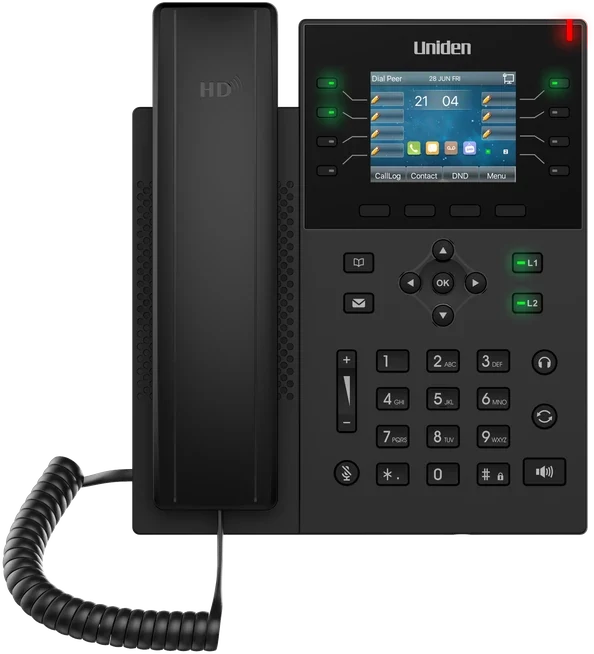
Era Two: Digital ISDN and the On-Premises PBX
From the late 1980s to, in a surprising number of Australian comms cupboards, the 2020s. The Integrated Services Digital Network digitised the local loop, and the private branch exchange moved the intelligence into the building.
Two things changed, and both are still shaping how businesses think about phone systems decades later.
Channels replaced lines
Instead of one physical pair per conversation, a digital service carried a fixed number of channels. More efficient, more manageable, and still a fixed number, which is the seed of the next problem.
Call control moved on-site
The PBX in your building decided what rang where. For the first time a business could design its own call flow rather than order features from a carrier's list. This was genuine progress and it created genuine dependency.
Capacity became a hard ceiling
Your system handled exactly as many concurrent calls as you had provisioned channels for. Call eleven on a ten-channel service did not queue, degrade or cost extra: it failed. Businesses learned to size for their worst hour and pay for it all year.
Every change was a site visit
New starter, moved desk, changed hunt group, different after-hours message: a technician, a booking, an hourly rate and a wait. The cost of change was high enough that businesses stopped changing things, which is its own hidden cost.
The lasting damage of era two is cultural, not technical. A generation of Australian businesses learned that the phone system is a fixed asset you do not touch, that changes cost money and take a fortnight, and that capacity is something you buy once and live with. Those assumptions are wrong now and they are still the default posture in a lot of boardrooms, which is why "we could not change the call flow" is still offered as an explanation rather than treated as an outrage.
Era Three: VoIP, and the Mistake Everyone Makes
From the 2000s to right now, because this is where a very large number of Australian businesses actually sit. Voice became data packets. SIP trunks replaced digital circuits. The bill usually went down.
And here is the part that gets skipped: the PBX often stayed exactly where it was.
A business that put SIP trunks into an existing on-premises PBX in 2014 changed its transport and nothing else. The box in the cupboard still ran the call flow. Changes still needed somebody who understood that box. Capacity was now bounded by bandwidth rather than by channel count, which is more elastic but not elastic. And one entirely new burden arrived that had not existed in either previous era.
Quality became your problem
On analogue and ISDN, call quality was the carrier's responsibility and it was essentially a solved problem. Once voice became packets on a general-purpose network, quality became a function of your internet, your router, your upload headroom and your local network, and when calls broke up, the carrier was entitled to point out that their service was within specification. This is the origin of every jitter, latency and one-way-audio conversation that has happened in an Australian office since about 2008, and it is why upload capacity matters far more than the download figure businesses actually shop on.
Era three is genuinely better than era two. It is also frequently mislabelled, and the mislabelling is expensive. A business running SIP trunks into its own PBX has a single point of failure sitting in a cupboard in one building, on one power supply, on one internet connection. When somebody tells that business it is "on the cloud", the business stops planning for the failure it actually has.
Era Four: Voice over Cloud
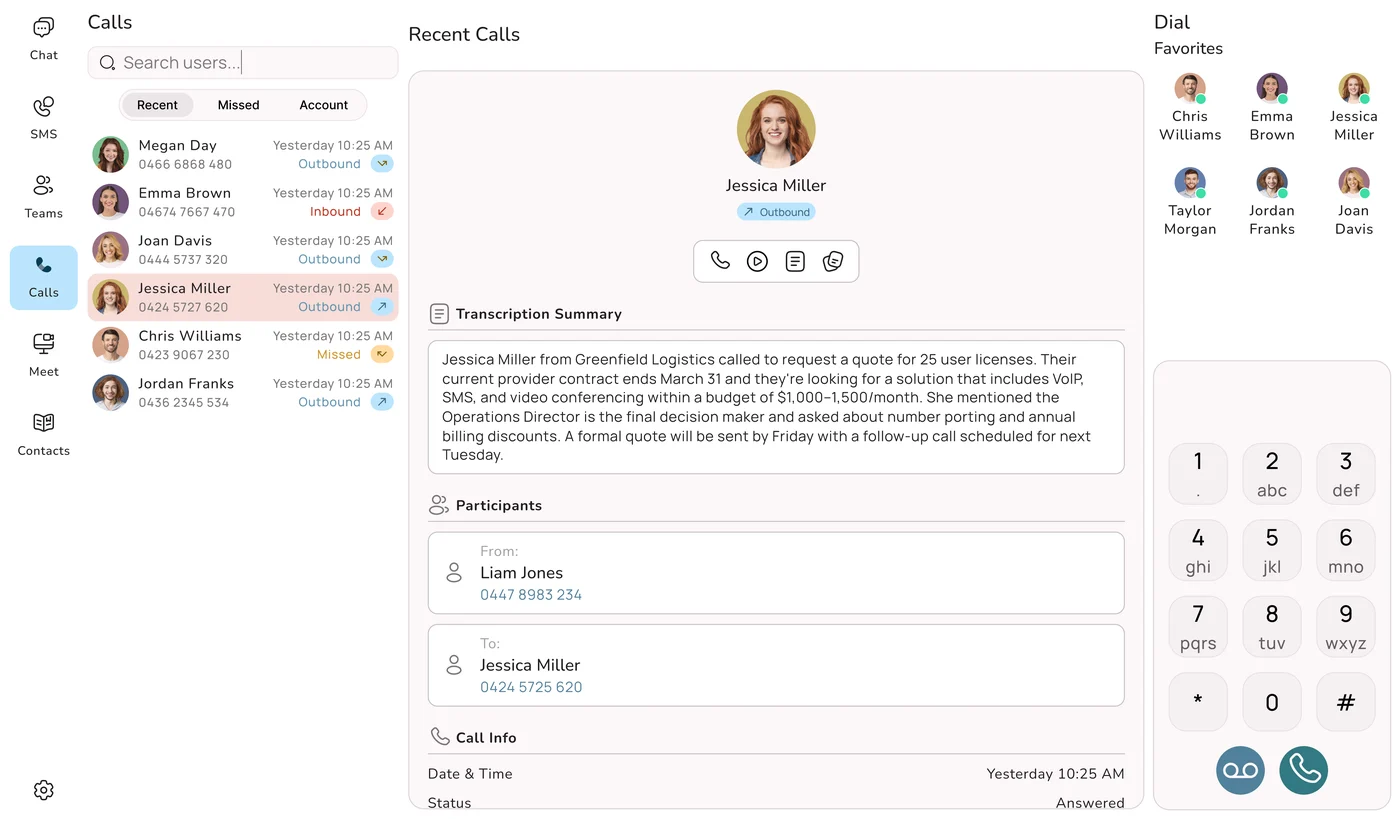
From 2017, when the delivery model acquired a name distinct from the transport that carries it. The defining characteristic is simple: the call control software lives in the provider's data centre, and your phones and apps connect to it over the internet. There is no box.
| What changed | Consequence for a business |
|---|---|
| No box to own | No hardware refresh cycle, no end-of-support cliff, no single cupboard whose flooding takes out the phones, no capital purchase to depreciate. |
| Capacity is elastic | Concurrent call capacity scales on demand rather than being provisioned to a worst-case peak and paid for permanently. The eleventh call is not a failure. |
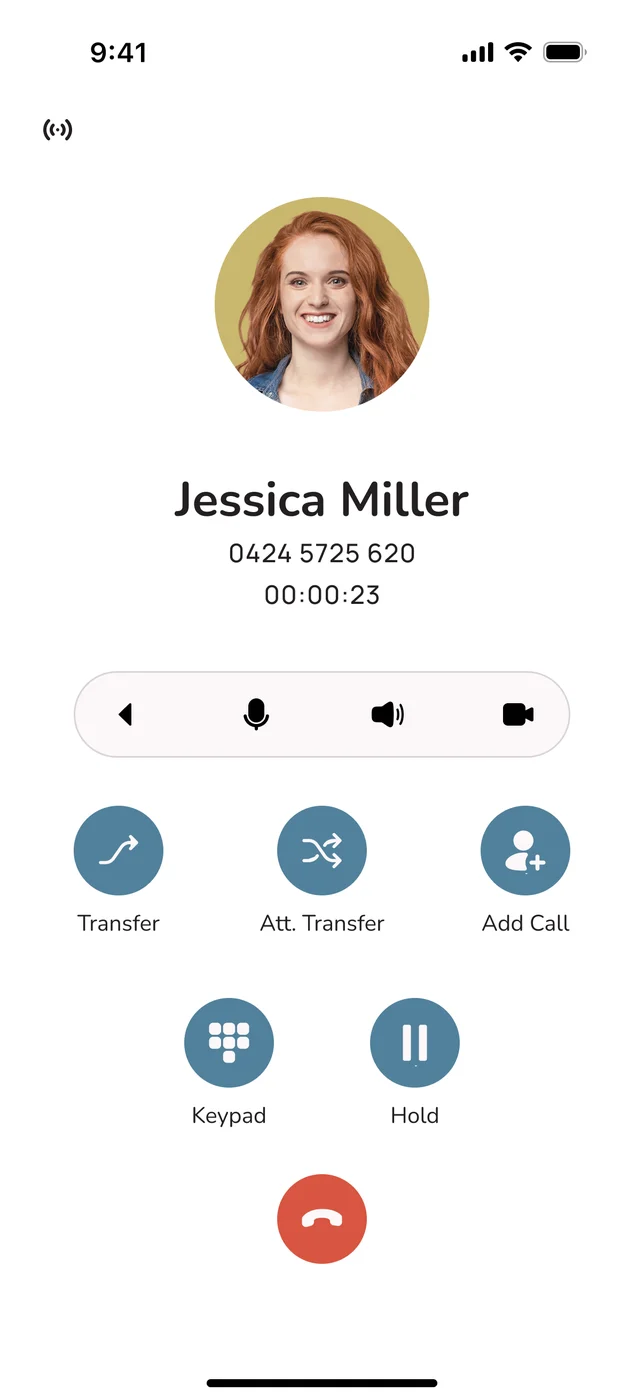
| Any device is an extension | Desk phone, laptop, mobile, browser: the same extension, the same number, the same call flow. Location stops being a property of the phone system. |
| Pay per user, per month | Cost tracks headcount rather than infrastructure. Adding a person is a setting; removing one is a setting. |
| Automatic failover | An outage at one site does not take the number down, because the number never lived at the site. |
| Self-service provisioning | A new user takes minutes in a portal rather than a technician visit. The cost of change collapses, which changes what businesses are willing to try. |
| Continuous upgrades | New capability arrives without a scheduled outage or a version migration project. You do not run version 6.2 of anything. |
| Native AI | Transcription, summaries and AI agents are platform features rather than bolt-on products, because the audio is already in the platform. This is the capability gap era three cannot close. |
That last row is the one that has moved fastest since 2017 and the one that will keep moving. An on-premises system can be given AI features only by exporting audio somewhere else, which means an integration, a second vendor and a data-handling question. A platform that already holds the audio can transcribe, summarise, score and answer calls as ordinary functions. The gap is not that cloud is newer. It is that the audio is in the right place.
Transport Versus Delivery: The Distinction That Costs Money
If you take one thing from this article, take this.
VoIP is a transport technology. Voice over Cloud is a delivery model. VoIP describes how the voice travels, as data packets rather than an electrical signal. Voice over Cloud describes where the system lives, in the provider's platform rather than in your building. They are different axes. You can have one without the other, and a great many Australian businesses have exactly one.
| Configuration | Transport | Where the system lives | Common description | Accurate? |
|---|---|---|---|---|
| ISDN PBX | Circuit | Your cupboard | "Traditional phone system" | Yes |
| SIP trunks into your own PBX | Packets (VoIP) | Your cupboard | "We're on VoIP" / "we're on the cloud" | First one yes, second one no |
| Hosted PBX / cloud platform | Packets (VoIP) | Provider's data centre | "Cloud phone system" | Yes |
| Voice over Cloud | Packets (VoIP) | Provider's platform, elastic, app-first, AI-native | "Cloud phone system" | Yes, and the distinction from a lifted-and-shifted hosted PBX is real |
The commercial consequence of conflating the two is that businesses in row two believe they have the resilience properties of rows three and four. They do not. The single point of failure is still in the cupboard, and the discovery usually happens during an event when nobody has time for a taxonomy lesson.
What Happened to Capacity at Each Step
Concurrent call capacity is the cleanest way to see the four eras, because it is the constraint that shaped every other decision.
| Era | Concurrent calls | To get more you... | What over-provisioning cost |
|---|---|---|---|
| Analogue POTS | One per line | Install another physical line | A permanent line rental for a peak that happens twice a year |
| Digital ISDN | Fixed channel count | Order more channels, wait, pay a site visit | Channels billed monthly whether used or not |
| VoIP | Bounded by bandwidth | Buy more upload headroom | Less, but quality degrades before capacity does, which is worse |
| Voice over Cloud | Elastic, scales on demand | Nothing | Nothing: you are not provisioning it |
The pattern is a hundred and forty years of businesses paying to be ready for their busiest hour, and then one step where that stops being a thing you buy. For a business with genuinely spiky call volume (a clinic on Monday morning, a venue on Friday afternoon, an accountant in July) that single change is worth more than every feature in the platform.
Follow the Call Control
There is a neater way to tell the four eras apart than any specification sheet: ask where the decision about what rings where is actually made.
Era one: the carrier exchange
Somebody else's building, somebody else's software, and you order features from a list. Zero control, zero maintenance.
Era two: your cupboard
Your building, your box, your consultant. Full control, and full responsibility for a physical asset in one location.
Era three: still your cupboard
The transport modernised and the control did not move. This is the era most businesses misdescribe, and it carries era two's risk with era three's bill.
Era four: the provider's platform, controlled by you
The software runs somewhere resilient; the configuration is yours, in a portal, changeable in a minute. Control without custody, which is the actual innovation.
The Australian Context: Copper Is Retiring
None of the above would be urgent if the first two eras were stable. They are not. Australia's copper network is being progressively decommissioned, and PSTN and ISDN services are being retired with it.
That removes the option a lot of businesses were quietly exercising, which was to do nothing indefinitely. It is worth being precise about the pressure, because it is often overstated by people selling and understated by people procrastinating.
| The pressure | What it actually is |
|---|---|
| Copper retirement and forced fibre upgrades | A real, scheduled programme affecting premises progressively. When it reaches your address, the analogue service on that copper ends. This is the hard deadline and it is site-specific. |
| ISDN and legacy product retirement | Carriers have been retiring legacy business products on published timelines. These end dates are real but they are per-product and per-carrier, so check yours rather than a headline. |
| PBX end of support | Softer and often more urgent in practice. A system out of vendor support still works until it does not, and then there are no parts and no patches. |
| "You must move immediately" | Usually a sales position rather than a fact. Verify your own site's date and your own product's end date before accepting a timeline from anyone, including us. |
The one item worth acting on early
Not the phone system: the lift phone, the fire panel dialler, the EFTPOS backup line, the alarm dialler and the fax. Every business that gets caught by a copper cutover gets caught by one of those, not by the desk phones. They are on analogue services nobody has thought about for a decade, they are frequently compliance-relevant, and they need a specific replacement plan rather than an assumption that the phone project will pick them up. Make that list now, whatever else you decide.
Two Migration Paths, and the Seat Count That Decides
Once doing nothing stops being available, there are exactly two paths.
| Path A: SIP trunk the existing PBX | Path B: move to a platform | |
|---|---|---|
| What you do | Keep the box, replace its circuits with SIP trunks | Retire the box, put the call control in the provider's platform |
| What it preserves | The call flow, the handsets, the muscle memory, the sunk cost | Nothing physical: the call flow is rebuilt, usually better |
| What it leaves in place | The single point of failure, the site visits, the end-of-support clock, the version | - |
| Where it genuinely wins | A recent, supported, well-understood PBX with real remaining life; heavy customisation that works; a business that must not change anything this year | Almost everything else, and every case where remote work, elasticity or AI matters |
| The honest risk | You spend money to keep an asset alive and face the same decision in three years with an older asset | A migration project, retraining, and a period of everyone learning new habits |
The seat count that decides. Below roughly fifty seats, keeping a PBX alive on SIP trunks is an expensive way to defer the cloud decision rather than a way to avoid it: the hardware, the support contract and the expertise all have to be funded by a small number of users, and the per-seat maths does not work. Above roughly one hundred seats, owning the platform can start to win again on pure cost, particularly where a business has heavy customisation, in-house expertise and stable requirements. Between those two figures it is a genuine judgement call and it turns on whether you have the expertise in-house, not on the technology. Anybody who gives you a single answer without asking your seat count is not doing the arithmetic.
Which Era Are You In? A Five-Minute Diagnostic
Answer these from observation, not from what you were told when you signed.
| Question | If yes, you are probably in... |
|---|---|
| Is there a physical box in a cupboard that, if it died, would stop the phones? | Era two or three. This one question resolves more cases than the other five together. |
| Does adding a new starter require somebody external, or a wait longer than an afternoon? | Era two or three. Era four is a portal field. |
| Is there a fixed number of calls you can take at once, and does somebody know that number? | Era one, two or three. In era four nobody knows the number because nobody provisions it. |
| Can a staff member take their extension home on a laptop or phone, with the same number? | If no: era one, two or three. If yes, natively and without a VPN: era four. |
| Are call recordings, transcripts and summaries available in the platform without a second vendor? | If no: era three at best. This is the clearest single indicator of era four. |
| When the site loses internet or power, do inbound calls still reach somebody? | If no: era two or three. Era four fails over because the number was never at the site. |
The awkward answer
A lot of businesses answer these and discover they are in era three while believing they were in era four, because a provider modernised the transport and described it as a cloud migration. That is the single most common misdiagnosis in this market. It is also the cheapest to correct, because the hard part, accepting that voice is packets and that upload capacity matters, is already done.
What Comes After Era Four
Predicting a fifth era would be speculation, so instead here is what is observably happening inside era four, which is more useful and less embarrassing to be wrong about.
The AI layer stopped being a feature
Transcription, summarisation, scoring and answering are moving from add-ons to defaults. The interesting question is no longer whether a platform has AI but whose infrastructure it runs on and what happens to the audio.
The phone system stopped being a phone system
Voice, SMS, chat, video and the customer record converge into one queue and one history. The word "phone" is becoming the least accurate part of the product name.
Open interfaces became the differentiator
When every platform has the same features, the difference is whether your own software can reach them. APIs moved from a technical detail to a procurement question.
Where it runs started to matter again
Data sovereignty, latency and regulatory transparency have made "in whose data centre" a live question after a decade of nobody asking. This is the loop closing back to era one, where location was everything.
What to Do About It
The summary
Four eras: copper with one call per line and every feature metered; ISDN with a box in your building and capacity as a hard ceiling; VoIP, where the transport modernised and the box frequently stayed put and quality became your problem; and Voice over Cloud, where there is no box, capacity is elastic, any device is an extension and AI is native because the audio is already in the right place. VoIP is how voice travels. Voice over Cloud is where the system lives. They are two decisions and they get sold as one. Copper retirement removes the option of doing nothing, leaving two paths, and below about fifty seats, keeping the box alive is an expensive way to defer the decision rather than avoid it. Start with the lift phone and the fire panel, not the desk phones.
Related reading: what a cloud phone system is for era four in detail, hosted versus on-premises PBX for the path A versus path B decision with numbers, SIP trunking explained for path A specifically, VoIP versus landline for the era one comparison, and copper disconnection and forced fibre upgrades for the deadline that applies to your address.