

Business phone system
- Business phone systemA complete cloud phone system, set up for you
- Features50+ features: IVR, queues, recording, desktop and mobile apps
- Call flowsDecide exactly how every call is answered and routed
- AI Agents Built inAnswer, book and follow up on calls, day or night
- Time to upgradeStill on an old PBX? Here is what you are missing
Apps and hardware
- Desktop app Live demoCalls, chat, SMS and AI summaries in one window
- Mobile app Live demoYour business number on your iPhone or Android
- Uniden desk phonesThe EVOC2 and a full range of office, DECT and conference phones
- Business NBNNBN set up alongside your phones, on one bill
- Why our internetBuilt for voice, so calls stay clear when the line is busy
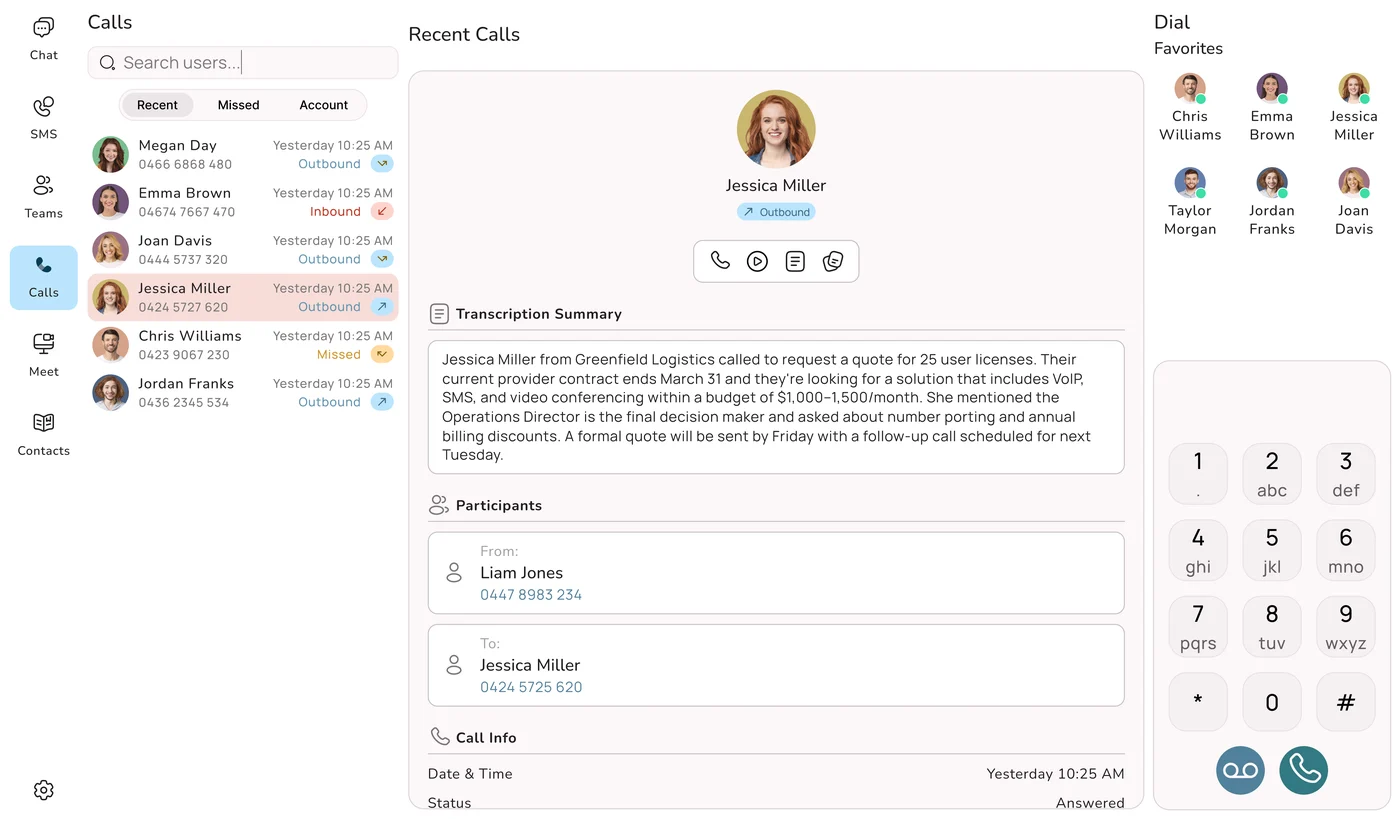
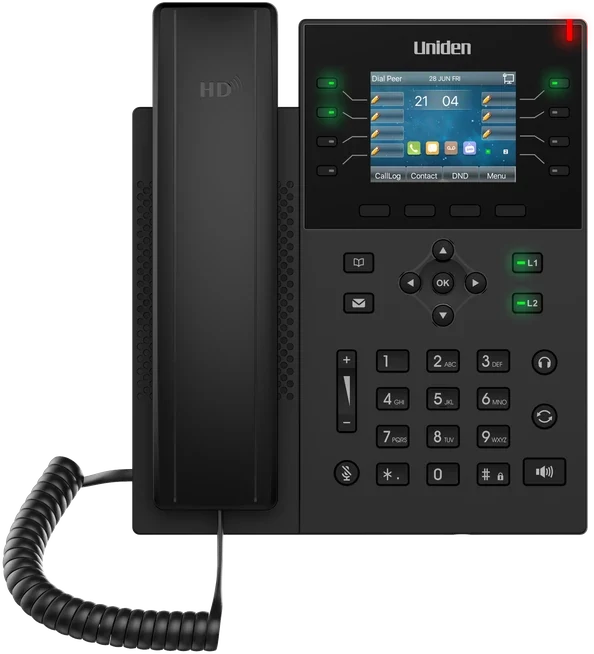
New Try it liveTake the Uniden Voice apps for a spin, right here
Click through working demos of the desktop and mobile apps: calls with AI summaries, team chat, SMS and more. No download, no sign up.
Desktop app demoMobile app demoDesigned, built, hosted and supported in Australia. Uniden desk phones, cloud apps and AI in one system.Book a demoAll features
AI on your phone line
Uniden Voice vs AI receptionists
See every comparisonAI AgentsEvery call answered, day or night
It answers on your own numbers, books the job, sends an SMS and warm transfers to your team when a person is needed.
Meet your AI agentBuilt into your phone system, not bolted on. No second number, no call forwarding.Book a demo
Professional services
Trades, retail and hospitality
Browse all industries Case study · Optical Solutions AustraliaFive branches, five phone systems, now one.5 sites1 systemRead the story
 Case study · Coco's Wealth of HealthWhen every enquiry and phone order matters.Maroubra organic health-food storeRead the story
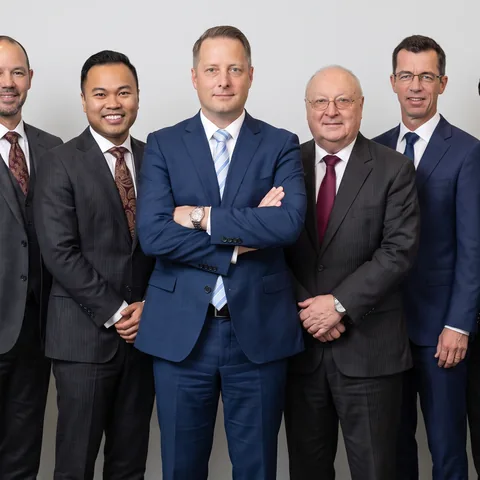 Case study · Shuriken ConsultingFour Sydney offices on one phone system.4 offices1 systemRead the story
 Case study · Carlingford Dental SurgeryEvery call rings the whole team.Dental Carlingford, NSWRead the story
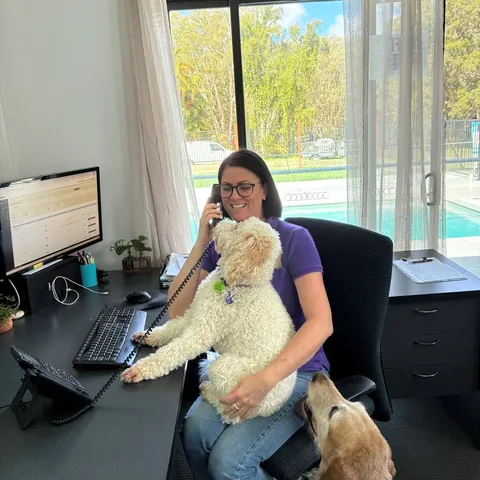 Case study · PTSD Dogs AustraliaA direct line for veterans, answered from anywhere.Charity Sunshine Coast, QLDRead the story
 Case study · Imperial Realtor GroupSales calls to sales, rentals to property management.Real estate Mango Hill, QLDRead the story
 Case study · Good 2 Eat CateringA catering team on the move, on one number.Catering and events Sunshine Coast, QLDRead the story
 Case study · ManolutionsOne number for the firm, a direct line to Paul.Executive advisory Works across time zonesRead the story





Our customersFrom one-person shops to national brands
See how businesses like yours run their phones on Uniden Voice.
Find your industryWorking on your own? A real business number and NBN for sole traders, no lock-in.Sole tradersStartups
Phone plansBusiness phone planfrom$84.90/month3 users included on a 36-month term. Every feature, one simple per-user rate.Free setup and free number portingDesktop and mobile apps includedAI Agents built inSee phone plans![Uniden Voice mobile app on a call]()
![A small team working together at a desk]()
Internet, hardware and more

Bundle and savePhones and NBN from one Aussie team
One provider to call when something needs fixing. No finger pointing.
See NBN plansWe guarantee to beat any competitor's quote. Keep your existing numbers when you move across.Sign up online1300 881 662
Learn and get set up
The library at a glanceBrowse all
180business
guides403kreads
so far
guides403kreads
so far
Guides by topic
- Phone systems67
- AI24
- Industries18
- Costs13
- NBN8
- Security7
- News5
- Other guides38


Need a hand? Our support team is based in Australia.Contact support
Call us on 1300 881 662 or send a message and the team will get back to you.Send a message
Industries / Healthcare
Uniden Voice for Healthcare
Your receptionist is on the phone. There are four patients at the desk.
A practice reception has two jobs happening in the same second: the person standing in front of them and the phone that will not stop. Whichever one wins, somebody has a worse experience of your practice than they should.
Answers 24/7Genuine Australian voicesKeep your numberSolo practice to multi site
Every Monday 9am
Your receptionMon 8:59am
Patient at the desk, mid bookingCannot be rushed, should not be rushed.In person
Fourth caller in the queueWants an appointment this week.12s28s44s61sMissed
Patient cancelling tomorrowWill just not show if nobody answers.06s14s22s31sMissed
One patient booked. One lost, one no show created.
The bit nobody counts
An empty appointment slot is a phone call nobody could reach
Practices measure occupancy and no shows carefully. Almost nobody measures the calls that never got answered, which are the direct cause of both.
1Patients ring around. Somebody who needs to be seen this week rings the next practice on the map rather than waiting on hold.
2Unanswered cancellations become no shows. A patient who cannot get through to cancel simply does not turn up, and you lose the slot with no chance to refill it.
3The 9am wall is predictable and unmanaged. Every practice knows the first hour is unanswerable. Almost nobody has capacity that scales to it.
UNIDEN VOICE · EMPTY SLOT LEDGER
Illustrative only. Put your own numbers in.
Calls to reception, per week420
Answered by reception290
Abandoned or rang out130
Share of those who were
a booking or cancellationx 0.55
Genuine booking calls lost per week72
Average value per appointment$85
LOST PER WEEK$6,120
LOST PER YEAR$318,240
Uniden Voice, per weeka fraction of that
Change the two highlighted lines to your own figures.
The arithmetic is the point, not our example.
The no shows caused by unreachable cancellations are on top of this.
The arithmetic is the point, not our example.
The no shows caused by unreachable cancellations are on top of this.
Six things every practice manager says out loud
You have said at least four of these this month
These are not phone system problems. They are patient access problems that happen to arrive down a phone line.
01
Reception cannot serve two patients at once
The person at the desk deserves attention and the caller deserves an answer. One receptionist, two obligations, and somebody always loses.
The agent takes the routine calls so the desk can look after the person in front of it.
02
The first hour of Monday is unanswerable
Everybody rings when the doors open. Your queue is at its longest at exactly the moment your team is at its busiest checking people in.
Capacity that scales with the queue instead of with your roster.
03
Most calls are the same five requests
Book, reschedule, cancel, opening hours, and where do I park. None of them need clinical judgement.
Handled instantly, without a person, from the rules you set.
04
Cancellations that cannot get through become no shows
A patient who rings twice and gives up does not turn up, and the slot dies with nobody on your waitlist called.
Cancellations always get through, and the waitlist can be called automatically.
05
Results and script calls jam the line
Callers with clinical questions queue in front of people simply trying to book, and both wait.
Separate queues, so clinical calls reach a nurse and bookings never block them.
06
Nobody knows how many patients gave up
You can count the appointments you had. You cannot count the ones that rang out, which is the number that matters.
Every call logged, including the ones that abandoned, so access becomes measurable.
Watch one of them get saved
7:40pm. Reception has gone home. The patient still gets booked.
This is the call that used to reach an answering machine. Here it is being answered by a Uniden Voice AI phone agent, in an Australian accent, from what you told it about your practice.
It sounds like it is from here. Genuine Australian voices, not a call centre accent and not a robot reading a script.
It knows your practice, not medicine. Hours, locations, parking, practitioners, appointment types and fees. It does not give clinical advice, by design.
It books, reschedules and cancels. Real slots, so the patient gets an appointment rather than a promise of a callback.
It escalates anything clinical. Symptoms, results and anything that sounds unwell go to a person, or to the right emergency advice, immediately.
Uniden Voice AI Agent Live on line 100:46
AgentGood evening, you have called Ridgeway Medical. Reception has closed, but I can help with appointments. What did you need?
PatientI need to see a doctor this week. Nothing urgent, it is a follow up about my blood pressure.
AgentI can book that. Have you seen one of our doctors before, and do you have a preference?
PatientYes, Doctor Nguyen usually.
AgentDoctor Nguyen has Thursday at 2:20pm or Friday at 9:40am. Which suits you better?
PatientThursday, thanks. It is Margaret Doyle.
AgentBooked, Margaret, Thursday at 2:20pm with Doctor Nguyen. I have texted you the confirmation and the address. If you feel unwell before then, please call back or contact your nearest emergency department.
What happened after reception went home
- Appointment booked into a real slot with the patient's usual doctor
- Existing patient identified, so no duplicate record was created
- Confirmation SMS sent from the practice number
- Booking and transcript in your system for the morning
One number, several queues
A booking should never queue behind a clinical question
Publish one number. Behind it, bookings are handled without a person, clinical calls reach a nurse, and results and referrals get their own queue.
Live call being routedOverflow and after hours to the AI agent
Demand peaks
Your phone has a winter problem and a Monday problem
Practice call volume is not flat. It spikes every Monday morning, and it climbs through the whole winter respiratory season, which is exactly when your team has the least capacity to answer anything.
An AI agent does not need a roster. It absorbs the Monday wall and the winter season, handles bookings and cancellations without a person, and costs the same in February as it does in July.
Inbound calls across a practice yearshape, not scale
What reception can realistically answer Overflow the AI agent picks up
Illustrative shape based on a typical Australian general practice year. Specialist practices follow a different curve.
It plugs into what you already run
Your phone should know which patient is calling
Uniden Voice connects to more than a thousand apps and offers open APIs, so a call arrives with the patient and their next appointment attached rather than just a number.
SalesforceHubSpotXeroZohoMondaySlackGoogle Business ProfileGoogle DriveMicrosoft OneDriveOpen APIs for the rest
01 · ON THE RING
Screen pops before you say hello
The caller's name, their history and their open appointment appear on the handset or in the app as it rings, so the first thing out of your mouth is their name and not "who am I speaking with".
02 · DURING THE CALL
Click to call from anywhere
Ring a patient straight from the record in your practice management system, without ever typing a number. Fewer wrong numbers, and every call logged against the right file automatically.
03 · AFTER THE CALL
Notes that write themselves
Recording, transcript, AI summary and the next action land in your CRM or your shared drive. Nobody has to remember what was promised on a Friday afternoon.
Why Uniden, and not the other twelve
An Australian phone platform for conversations that must stay in Australia
Patient conversations are among the most sensitive a business handles. Very few platforms keep them onshore end to end, and almost none are backed by a brand Australians have known since 1966.
Onshore, end to end
Designed and built in Australia, hosted in Australian datacentres, and supported by Australians you can actually get on the phone. Your customer conversations do not leave the country.
An accent that lands
The AI answers in a genuine Australian voice. It matters, because a caller who thinks they have reached an offshore call centre hangs up before you get the chance to help them.
Onshore, and that matters here
Calls, recordings and transcripts stay in Australian datacentres, on an Australian owned platform, supported by Australians. Patient conversations never leave the country.
One provider, one bill
Keep your numbers including 1300 and 1800, and take the NBN connection from us too. Fewer vendors to chase when something goes wrong at the worst possible moment.
Straight answers
The questions practices ask us first
Will the AI give clinical advice?
No, and we configure it specifically not to. The agent handles access: bookings, reschedules, cancellations, hours, locations, practitioners, fees and preparation instructions. It does not triage symptoms and it does not interpret results.
Anything that sounds clinical or urgent is escalated straight to a person, and the agent is scripted to direct genuine emergencies to call triple zero or attend an emergency department. You define those boundaries and they do not drift.
Is this appropriate for patient privacy?
It is built for it. The platform is Australian owned, Australian hosted and Australian supported, so calls, recordings and transcripts stay onshore rather than being processed offshore.
You control what is recorded, how long it is retained and who can access it. We would encourage you to run the configuration past whoever handles your privacy obligations, because the settings should match your practice policy rather than our defaults.
Can it book into our practice management system?
Where your system can be reached through an integration or an API, the agent can hold and confirm real appointments, which is what turns a call into an attendance.
Where a live connection is not available, the agent captures the request precisely, offers the times your reception has made available, and queues it for confirmation. Either way the patient gets an answer instead of a ringing phone.
What happens when the AI cannot help?
It hands over, and you decide where. Symptoms, results, medication questions and anything clinical can go straight through to a person, to a specific queue, or to a manager's mobile.
The caller is not asked to repeat themselves either. Whoever picks up gets the context the agent already gathered. Outside hours the agent takes the details, sends an SMS confirmation and queues the callback.
Do I have to change my phone number?
No. Number portability is standard, including 1300 and 1800 numbers, so the number on your practice website, your referral pads and your directory listings and on years of Google results stays exactly as it is.
We port it across and plan the cutover around your hours, not ours.
What happens if the internet drops?
Calls keep flowing. The mobile app keeps working over 4G and 5G, so your people can answer on their handsets while a site connection is down, and call flows can be set to divert to mobiles automatically.
You can also take your NBN service from Uniden Voice, so the connection and the phone system are one provider with one support number, instead of two companies each suggesting the problem belongs to the other.
How long does it take to get running?
A single site can be live quickly, because the apps need no hardware and the handsets arrive ready to plug in. The part worth doing properly is the call flow and the AI agent's knowledge of your business, and we build that with you rather than handing you a manual.
Number porting is the one step with an external timeline, so we usually run your new setup alongside the old line until the port completes. Patients never find your practice unreachable.
Now You're Talking
Look after the patient at the desk and the one on the phone
Book fifteen minutes. Show us how calls reach your practice today, and we will show you the version where reception stops having to choose.
1300 881 662 · info@unidenvoice.com · www.unidenvoice.com