












What the RBA Did on 29 September
The Reserve Bank's Monetary Policy Board lifted the cash rate target by 25 basis points to 4.60% at its September meeting. All nine members voted for the increase. It was the fourth rise this year, after the Board began lifting rates in February from 3.60%, and it leaves the cash rate at its highest level in close to fifteen years.
The reasons in the Board's statement are worth reading in full, because they tell you whether to expect relief soon. The Board said "inflation remains elevated" and that recent outcomes "were stronger than expected". It noted that growth "has slowed" and the labour market has "eased broadly as expected". Commentators have pointed to higher global energy prices as one of the pressures. The key line for planning is the last one: the Board will do what it considers necessary to bring inflation back to target, "including increasing the cash rate target further if needed".
In plain terms, nobody should build a budget on the assumption that rates will fall by Christmas. Plan for rates to stay where they are, or go a little higher, and treat any cut as a bonus.
What a Rate Rise Does to a Small Business
A rate rise reaches a small business in two ways. The first is direct: the cost of anything you have borrowed on a variable rate. The second is indirect, and usually bigger: your customers have less money to spend.
The direct part is simple arithmetic. As an illustration only, if a lender passed on all four increases in full, a variable business loan of $300,000 would cost roughly $3,000 more a year in interest than it did in January, or about $250 a month. An overdraft, equipment finance on a variable rate and the owner's own mortgage all move in the same direction. Your actual figures depend on your lender and your loan, so ring them and ask. Many owners are surprised by how few people do.
The indirect part is harder to measure. When mortgage repayments go up, households trim the extras first: the second coffee, the service that can wait a month, the renovation that becomes a repair. CommBank's economics team, writing on 10 September, expected household spending growth to slow through the end of 2026. For a business, that shows up as fewer enquiries, slower decisions and more customers asking for a quote before they commit.

Why Fixed Costs Come First
When revenue gets harder, most owners think about selling more, which is right, but it takes time. Costs are the part you can move this week. And among costs, fixed monthly ones are the best place to start, for three reasons.
A saving repeats
Cut $80 from a monthly bill once and you save $960 over the year without doing anything else. A one-off saving happens once.
They are easy to find
Fixed costs sit on your bank statement every month with the same name and roughly the same amount. Ten minutes with a highlighter finds most of them.
They rarely touch customers
Removing an unused licence or a forgotten handset rental changes nothing your customers see. Cutting staff hours or marketing does.
The goal is not to strip the business back to nothing. It is to stop paying for things you no longer use, and to stop paying more than you need for the things you do.
Five Costs to Review This Month
Print last month's bank and card statements and work through these five. Most small businesses find something in at least three of them.
- 1
Software subscriptions
Accounting, booking, design, storage, email marketing, the tool somebody trialled in 2024. Check the number of seats against the number of people who logged in last month, and look for two products doing the same job.
- 2
Phone and internet
Often the most overpaid line on the statement, because it is split across providers and nobody has looked at it since it was set up. We cover it line by line below.
- 3
Insurance renewals
Do not cancel cover to save money. Do check that what you are insured for still matches the business, and get one comparison quote before you renew automatically.
- 4
Finance and merchant costs
Ask your lender about your rate and any fee for switching to a different product. And from 1 October 2026 card surcharges on eftpos, Mastercard and Visa are banned, so compare what your payment provider charges you now that you can no longer pass it on.
- 5
Energy
Check whether you are still on the plan you signed up to or have rolled onto a standing offer. The Australian Government's Energy Made Easy site lets small businesses in most states compare plans.
Keep a simple list of what you find and what it is worth per month. It makes the decision easier, and it gives you something to measure against in three months' time.
Your Phone and Internet Bill, Line by Line
Phone and internet deserves its own section because it is where we see the most waste in small businesses, and the fixes are quick. The typical pattern is a business that grew in stages: an nbn service from one provider, a phone system from another, a 1300 number from a third, and mobiles on personal plans that the business reimburses. Nobody planned it. It just happened.
| On the bill | What to check | Typical fix |
|---|---|---|
| Users or lines | Are you paying for staff who left, or for a line nobody answers? | Remove them. Unused seats are pure waste. |
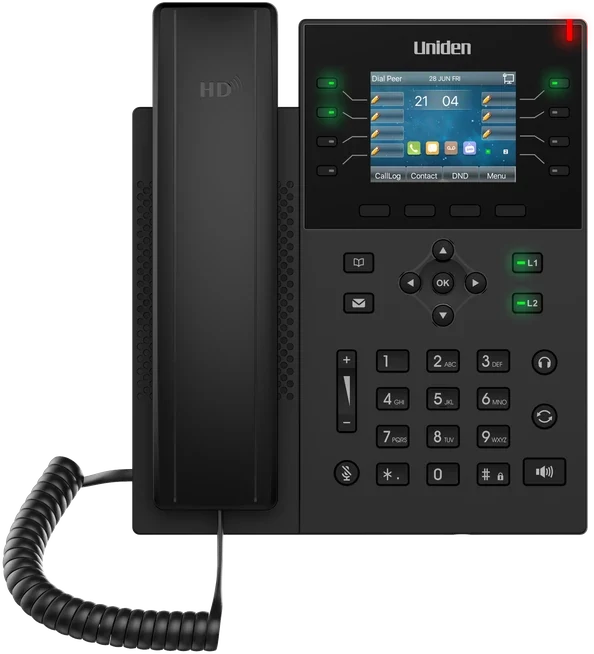
| Handset rental | Are you still paying monthly for handsets you have owned several times over? | Buy out or replace, or use the mobile and desktop apps for some staff. |
| 1300 or 1800 number | Is it on a separate bill, with rental and per-minute charges you have not checked? | Bring it onto your phone system so it is one bill and one set of rates. |
| Call charges | Are you paying per call to mobiles or for calls between your own staff? | Move to a plan with included calls that match how you actually use the phone. |
| nbn plan | Is the speed right for the business, and are you still on a promotional price that has quietly ended? | Right size the plan, and bundle it with your phones for one support number. |
| Add-ons | Call recording, voicemail to email, static IP or other extras you pay for separately. | Keep the ones you use. Many are included in modern cloud plans. |
Our business phone system cost guide has current price ranges, and the cost calculator helps you work out what a business your size should be paying. If you have one number on a separate provider, our article on who owns your 1300 number is worth ten minutes too.
Half Price nbn for Three Months
We emailed our customers about this after the decision. When rates go up, we would rather do something useful than just write about it. So for a limited time, new nbn orders bundled with a Uniden Voice plan on a 12 month contract get 50% off any nbn plan for the first three months.
| Plan | Speed | Months 1 to 3 | From month 4 | You save |
|---|---|---|---|---|
| Home | 500/50 | $44.95 a month | $89.90 a month | $134.85 |
| Business | 250/100 | $49.95 a month | $99.90 a month | $149.85 |
| Business+ | 500/200 | $59.95 a month | $119.90 a month | $179.85 |
| Gigabit | 1000/400 | $74.95 a month | $149.90 a month | $224.85 |
A few details so there are no surprises. The offer is for new nbn orders only, not existing services. The discount applies to the nbn plan, not to Voice plan charges, call usage, add-ons, hardware or installation. Home and Business run at the full speeds shown on FTTP and HFC connections, and at 100/20 and 100/40 on FTTN, FTTC and FTTB. Business+ needs FTTP. Everything is subject to what is available at your address, and you can check that on our nbn plans page.
The discount is the headline, but the lasting saving is usually the bundle itself. One provider for phones and internet means one bill to check, one support number when something is wrong, and no argument between two companies about whose fault a dropped call is. We explain that in more detail in the benefits of bundling your business phone and nbn.
What Not to Cut
Cost cutting done badly makes a slow year worse. When customers are careful with money, the businesses that keep winning work are the ones that stay easy to reach and quick to respond. These are the costs we would protect.
Protect anything that brings customers in
Answering the phone. A caller in a tight year is often ringing three businesses for a quote. The one who answers usually gets the job. Diverting your main number to a personal mobile to save a few dollars tends to cost more in missed calls than it saves. Follow-up. Quotes that get a call back two days later convert better than quotes that get nothing. Your regulars. Existing customers are cheaper to keep than new ones are to find, so do not let service slip for them.
If your worry is covering the phone while you are on the tools or with a client, an AI receptionist can answer, take the details and send you a summary, often for less than the work one missed call would have brought in. Our comparison of AI and human receptionist costs sets out the numbers, and our guide to what missed calls really cost shows why this is the last place to save.
Cash Flow Habits for a Higher Rate Year
Cutting costs buys breathing room. These habits keep it. None of them cost anything, and they matter more when borrowing is expensive, because every week of cash you have is a week you do not have to borrow.
| Habit | Why it helps now |
|---|---|
| Invoice the same day | The clock on payment terms starts when the invoice arrives, not when the job ends. |
| Chase at seven days, not thirty | A friendly call a week after the due date recovers more than a stern email a month later. |
| Keep a 13 week forecast | One simple spreadsheet of money in and money out, week by week, so a tight month is visible early. |
| Talk to your lender before you need to | Options are wider when you ask early. The same goes for the ATO, which can arrange payment plans for tax debts. |
| Review prices, not just costs | If your costs have risen, a modest, explained price rise is usually better than quietly absorbing it. |
If you want to go further, our partner article on saving money with one provider for business communications covers the wider case for consolidating suppliers.
How Uniden Voice Can Help
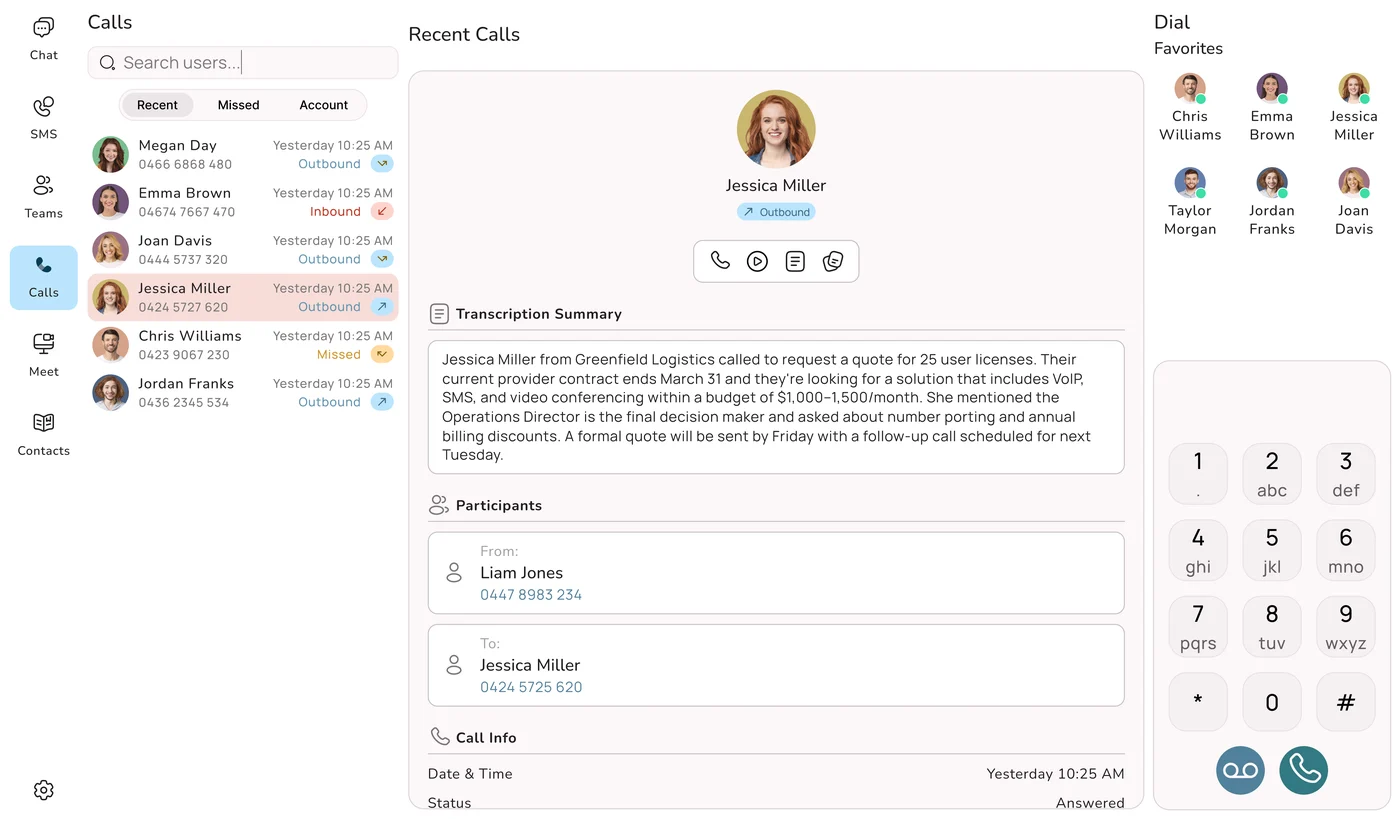
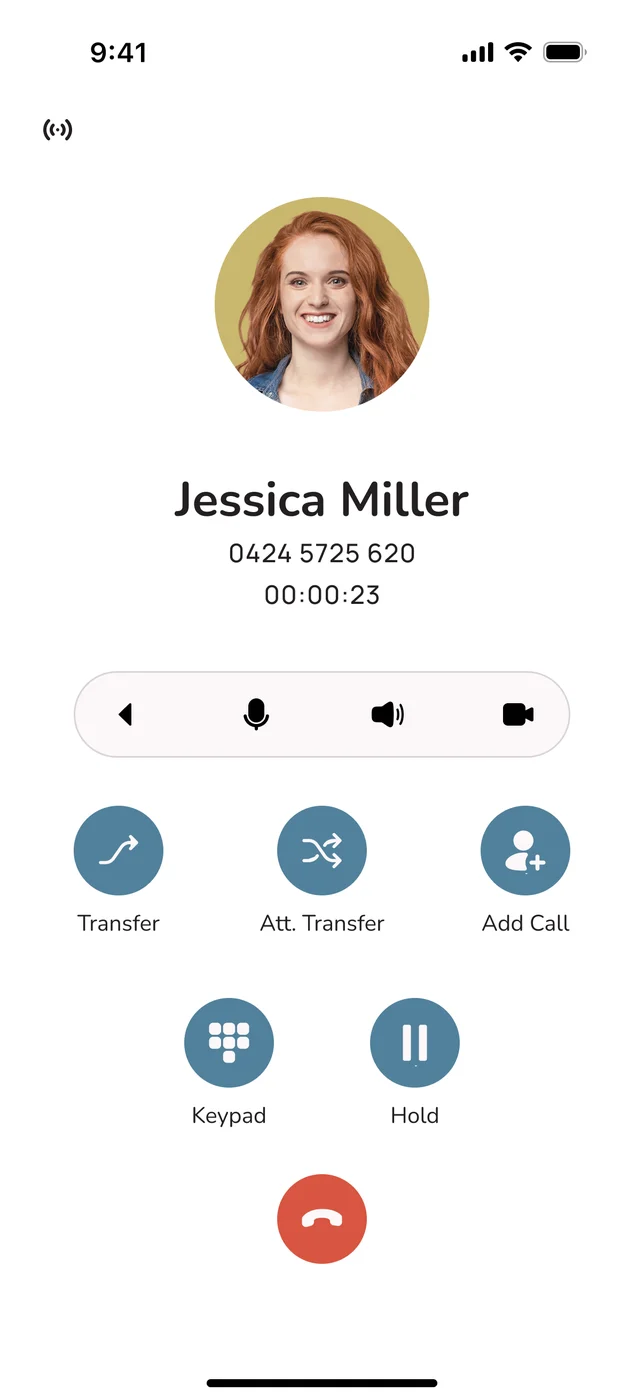
Uniden Voice over Cloud is an Australian owned business phone system, hosted in Australia and supported by an Australian team. We can supply your nbn alongside your phones, so there is one bill and one team to call. If you send us your current phone and internet bills, we will go through them with you, point out anything you are paying for and not using, and tell you honestly whether moving would save you money. Sometimes the answer is that you are already on a good deal, and we will say so.
Your numbers stay yours, including any 1300 number, and we will help you set the system up around how your business takes calls, not hand you a login and walk away. If you are ready to take up the nbn offer, ring 1300 881 662, email