












What the Numbers Are Actually Saying
The word recession has been in the headlines all year, so it is worth being precise. According to the Australian Bureau of Statistics national accounts released in early September, real GDP grew 0.4% in the June quarter 2026. That was slightly better than many bank economists expected, but it only matched population growth, so output per person was flat after a small fall in the March quarter. In other words, Australia narrowly avoided a second quarter of falling GDP per person. It is not a recession, but for many households it feels like one.
Then, on 29 September, the Reserve Bank lifted the cash rate by 25 basis points to 4.60%, its fourth increase this year and the highest level in almost 15 years. The Board said inflation "remains elevated" and left the door open to "increasing the cash rate target further if needed". CommBank's Head of Australian Economics, Belinda Allen, wrote on 10 September that the cyclical slowdown "has arrived", with growth expected to run at around 1.5% for the rest of 2026, unemployment at 4.5% and household spending growth slowing from 1.8% toward 1.1% by the December quarter.
For a small business that translates into three practical things. Customers have less spare money and more reason to compare. Your own costs, including any business loan or overdraft, are going up. And the months between now and Christmas matter more than usual, because a slow start to 2027 is already being forecast. None of that is a reason to freeze. It is a reason to be deliberate.
Customers Get Choosier, Not Absent
Even in a slow economy, pipes still burst, teeth still ache, cars still need servicing and businesses still need accountants. What changes is how people buy. They get more quotes. They ring two or three businesses instead of one. They wait a day longer before they commit. They are quicker to leave a supplier who lets them down, and slower to try someone new unless that business makes it easy.
That is why a downturn reshuffles markets. The total amount of work may shrink a little, but the share each business wins can change a lot. The businesses that grow through hard times are usually not the ones with the lowest price. They are the ones that are easiest to buy from: they answer, they get back to people quickly, they follow up, and they look after the customers they already have. Every move in this guide comes back to that idea.
The one question to ask about every decision this year
Does this make us easier or harder for a customer to buy from? Cutting a subscription nobody uses makes no difference to customers. Cutting the person who answers the phone at lunchtime makes a big one. Sort your options by that question before you sort them by cost.
Move 1: Answer Every Call
When customers are ringing around, the business that answers first usually gets the job. A caller who hears voicemail during a quote-gathering morning rarely leaves a message. They ring the next name on the list. Missed calls are the most expensive thing most small businesses never measure, because a lost call does not show up anywhere. There is no invoice for the job you did not know you missed.
The numbers above are an example, not a measurement, so run your own. Most cloud phone systems, including Uniden Voice, report answered, missed and abandoned calls by hour and by day. Look at the last month. If a meaningful share of calls went unanswered, and especially if they cluster at lunchtime, early morning or late afternoon, that is revenue walking to a competitor. Our article on what missed calls really cost a business goes deeper on working out your own figure.
Fixing it does not usually mean hiring. It means setting up the phone system so calls do not dead-end: ring the whole team or a small group rather than one desk, send overflow to a mobile, and have calls answered by an AI receptionist when nobody is free (more on that in Move 6). The goal is simple. Every caller reaches someone or something that can help them.
Move 2: Be the First to Respond
Answering is half the job. The other half is how fast you get back to the people you could not help on the spot: web enquiries, voicemails, quote requests and messages. In a market where customers contact three businesses, the one that replies in ten minutes often wins before the others have read the email.
A few habits make a big difference:
- Send voicemails to email and to the app, so the right person sees them straight away rather than when they are back at the desk.
- Reply by SMS when a call is missed. A short text such as "Sorry we missed you, we will call back within the hour" keeps the customer from ringing the next business. Our guide to business SMS from your phone system explains how to send it from your business number.
- Set a callback rule the whole team knows, such as every missed call returned within an hour during business hours.
- Follow up quotes after two days. A friendly call asking if there are any questions converts more quotes than any discount.
Move 3: Look After the Customers You Have
Winning a new customer in a downturn costs more, because everyone is chasing the same smaller pool. Keeping an existing one costs less and pays back faster. Research by Frederick Reichheld of Bain & Company, first published in the 1990s, found that small improvements in customer retention could lift profits dramatically, and the principle has held up well since. Your existing customers already trust you. The job this year is to give them no reason to look around.

- Call your best customers before they call you. A quick "how is business, anything coming up we can help with" call often turns up work, and it tells them you have noticed them.
- Remember the history. When a regular rings, whoever answers should be able to see who they are and what you did last time. A phone system linked to your CRM or job software does this automatically.
- Fix complaints fast and personally. A customer whose problem was solved well is often more loyal than one who never had a problem.
- Offer loyalty, not blanket discounts. A priority booking slot or a free check for existing customers protects your margin better than cutting prices for everyone.
Move 4: Keep Marketing You Can Measure
Marketing is often the first thing cut when times get tight, and it is often the wrong cut. When competitors go quiet, the cost of being noticed falls and the businesses that stay visible pick up the share others give away. The sensible version is not to spend more, but to spend only where you can see the result.
For most small businesses that means the phone. Put a dedicated tracking number on each campaign, whether it is a Google ad, a letterbox drop or a sign on the ute, and your call reports will show which one actually makes the phone ring. Keep what works, drop what does not, and move the money. Refresh your Google Business Profile, ask happy customers for reviews and make sure the number on every listing is correct and answered. Our guide on how smart businesses win more customers covers the basics that cost little or nothing.
Move 5: Cut Cost, Not Capability
Every business should look hard at its costs in a year like this. The skill is telling the difference between money that brings customers in and money that just leaks out. Start with the leaks.
Technology is a good place to look because costs creep. Many businesses pay for a phone line, a separate internet service, a mobile plan per person, a conferencing tool, an SMS service and a call recording add-on, each on its own bill. Bringing voice, internet and messaging together with one provider often removes several of those, and it removes the time spent working out which company to call when something breaks. Our article on saving money with one provider shows where the savings usually are, and the phone system cost calculator helps you compare what you pay now. If you are also reviewing internet, Uniden Voice is currently offering 50% off NBN for the first three months when bundled with a Voice plan on our NBN plans page.
What not to cut: the ability to answer, the ability to follow up, and the tools your team uses to serve customers. Saving $40 a month by dropping a feature that catches overflow calls is a poor trade if it costs one job a month.
Move 6: Cover the Phones Without Hiring
The hardest gaps to fill in a small business are the predictable ones: lunchtime, the half hour before opening, after hours, and whenever the owner is on a job or with a customer. Hiring another person to cover them is hard to justify when revenue is uncertain. This is where AI answering has become genuinely useful for small businesses in 2026.
An AI receptionist built into your phone system can answer when nobody is free, in a natural voice, take the caller's details and what they need, answer common questions such as hours and service areas, book an appointment if you allow it, and send you a summary straight away. Calls that need a person are transferred or flagged for a callback. It is not a replacement for your team. It is the part-time receptionist most small businesses could never afford, available at 2pm on a Tuesday and 9pm on a Sunday.
The sums are usually simple. If an AI receptionist saves even one or two jobs a month that would otherwise have gone to voicemail, it pays for itself many times over. For a fuller comparison of costs, our guide to AI versus human receptionists sets out where each fits, and AI voice agent cost and ROI works through the numbers.
Move 7: Protect Your Cash Flow
Profitable businesses still fail when cash runs out, and cash gets tight in a downturn because customers pay later while your own costs rise. A few habits help keep money moving:
| Habit | Why it helps now |
|---|---|
| Invoice the same day | Every day between finishing the job and sending the invoice is a day added to when you get paid. |
| Send friendly SMS reminders | A text a few days before and on the due date gets paid faster than an emailed statement that sits unread. |
| Take deposits on larger jobs | Covers materials up front and filters out customers who were never going to go ahead. |
| Ring overdue accounts | A polite call finds out what is really going on, and often agrees a payment date on the spot. |
| Review fixed contracts | Long lock-in contracts limit your options if you need to change. Month to month gives you room to move. |
| Talk to your bank and accountant early | Options are always better before a problem than after one. |
If cash is already tight, the Australian Small Business and Family Enterprise Ombudsman and the free Small Business Debt Helpline (1800 413 828) can help you work through options confidentially.
Move 8: Watch Five Numbers Every Week
In a steady year you can check the numbers monthly. In a tight one, weekly is better, because small changes show up early and you have time to respond. Pick a handful you can see quickly, write them down every Monday and look at the trend rather than any one week.
| Number | Where to find it | What a change tells you |
|---|---|---|
| Inbound calls and enquiries | Phone system reports, website forms | Demand. Falling calls are often the first sign of a slowdown, weeks before revenue. |
| Missed and abandoned calls | Phone system reports | How much of that demand you are losing. Should be close to zero. |
| Quote conversion | Job or CRM software | Whether you are winning against competitors, or losing on price or speed. |
| Debtor days | Accounting software | Whether customers are paying more slowly. |
| Repeat customers | CRM or sales history | Whether existing customers are staying with you. |
If you run a team that takes a lot of calls, our guide to contact centre metrics explains service level, answer speed and first call resolution in plain English.
How Uniden Voice Helps in a Tight Year
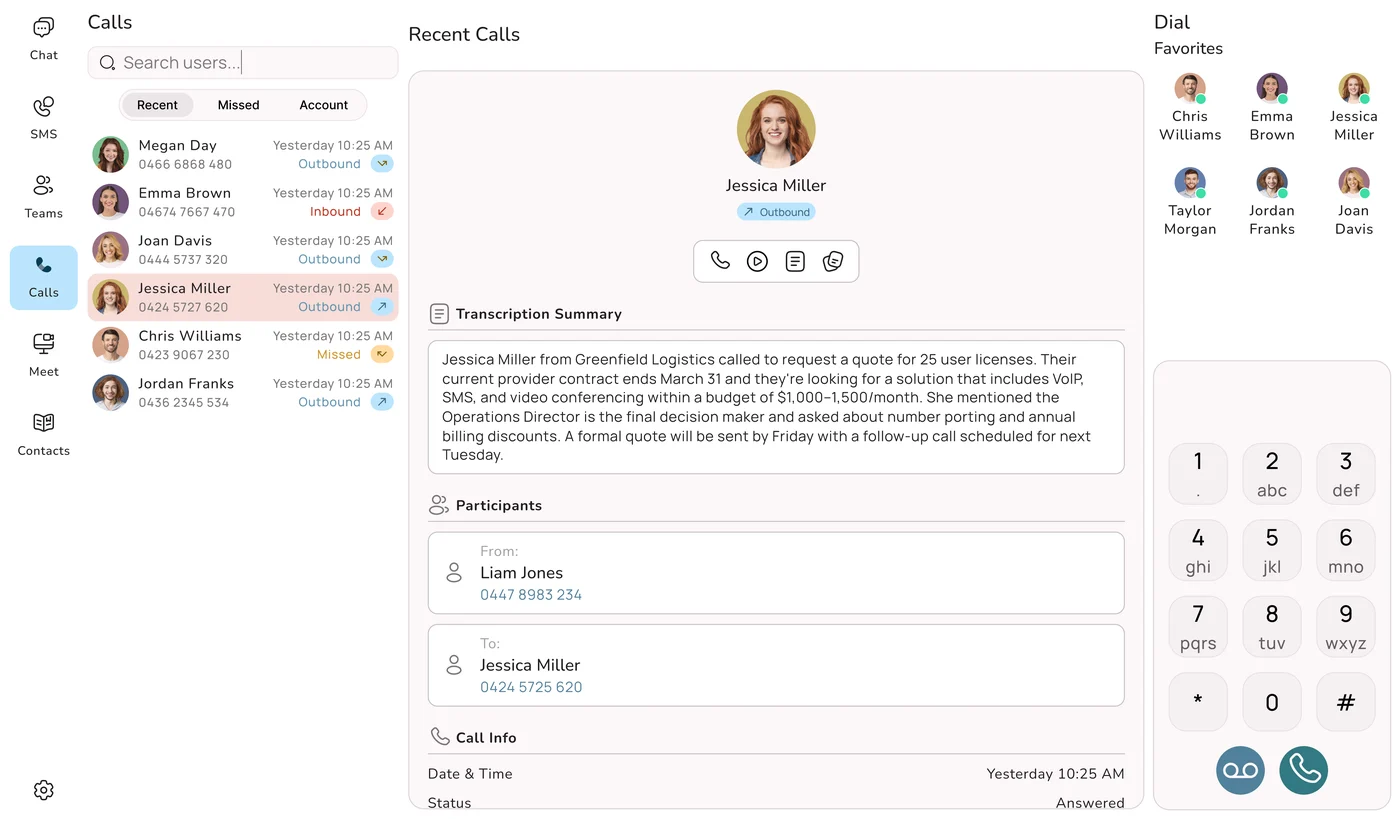
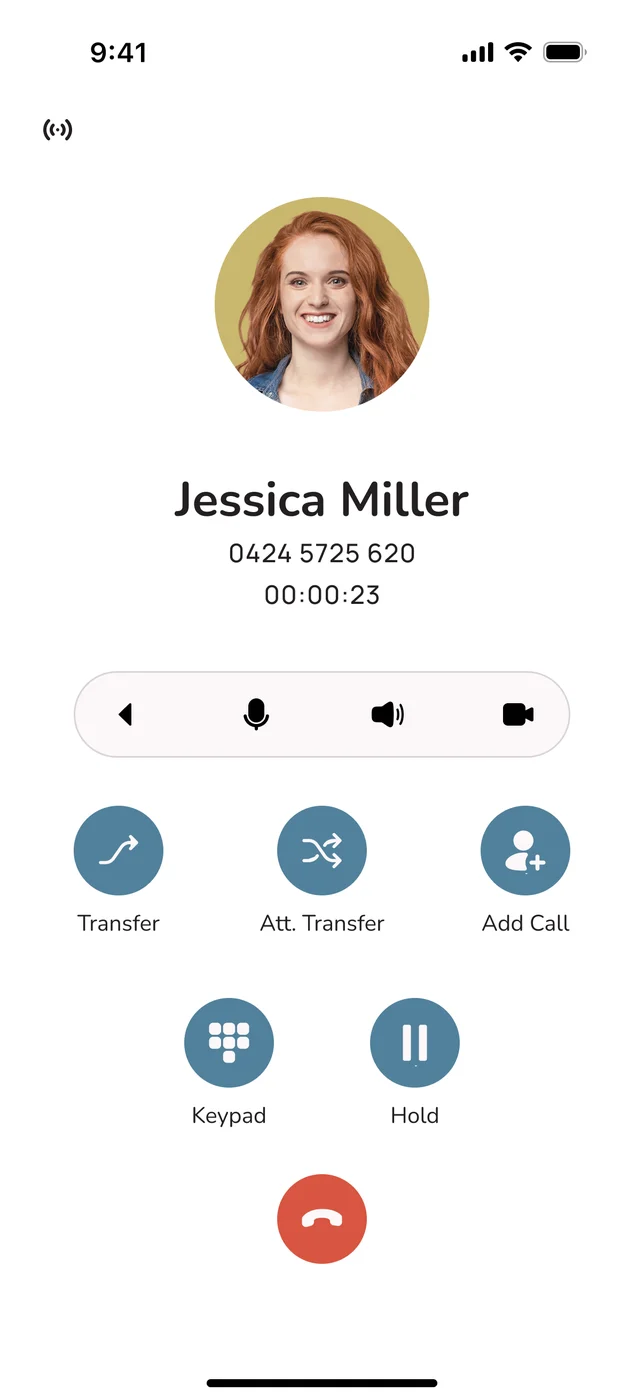
Uniden Voice over Cloud is an Australian owned cloud phone system built for small and medium businesses. It is designed to help with exactly the moves in this guide: ring groups and call queues so calls do not dead-end, the mobile and desktop apps so your business number rings wherever you are, an AI receptionist that answers when nobody is free, business SMS from your own number, call recording and AI call summaries, and call reports that show where calls are being missed. It links with popular CRM and business tools so whoever answers can see who is calling.
There are no lock-in contracts, your numbers stay yours, and our Australian team will help you set things up around how your business actually takes calls. If you want a second opinion on where your phone and internet costs are going, call us and we will tell you honestly what you need and what you do not.