















Your Phones Follow the Lodgment Calendar
Most businesses have busy days. An accounting practice has busy weeks you can mark in a diary a year ahead, because clients ring in the days before something is due. The dates below are from the ATO's BAS due dates page and its registered agent lodgment program for 2026-27, as read on 16 November 2026. Agent dates apply to clients lodging electronically through a registered agent.
| What is due | Lodging yourself | Through a registered agent |
|---|---|---|
| Monthly BAS | 21st of the following month | 21st of the following month |
| Q1 BAS (July to September) | 28 October | 25 November |
| Q2 BAS (October to December) | 28 February | 28 February, no extra time |
| Q3 BAS (January to March) | 28 April | 26 May |
| Q4 BAS (April to June) | 28 July | Late August (25 August in 2026) |
| New clients for the lodgment program | Not applicable | On your client list by 31 October |
| Remaining 2026 tax returns | Not applicable | 15 May 2027, or 5 June 2027 for eligible individuals and trusts that also pay by then |
Online self lodgers may also get an extra two weeks on quarterly BAS. The pattern that matters for your phones: July, when individuals want their refunds; late October, when people realise they need an agent before 31 October; the fortnight before each agent BAS date; and May, when the last returns are chased. Those are the weeks to have overflow, queues and after hours cover in place. The rest of the year, the same setup simply sits there.
Confidentiality Starts on the Phone
Code item 6 of the Tax Practitioners Board Code of Professional Conduct is short: "Unless you have a legal duty to do so, you must not disclose any information relating to a client's affairs to a third party without your client's permission." It binds registered tax and BAS agents, and it is a sensible standard for any bookkeeper who handles client records.
The TPB's guidance on confidentiality makes two points that reach straight into your phone system. A third party includes anyone "maintaining offsite data storage systems (including 'cloud storage')", so where your call recordings and transcripts are kept is a disclosure question, and the TPB expects you to tell clients about those arrangements and get their permission, usually in the engagement letter. It also expects controls against inadvertent disclosure. On the phone, that means a spouse, a bookkeeper from another firm or an adult child asking "has Dad's return gone in?" is a third party until the client says otherwise.
Practical steps: name your phone and recording provider in your engagement letter's outsourcing clause, record on file who each client has authorised to speak for them, and choose a provider that keeps recordings onshore. On Uniden Voice, calls, recordings and transcripts are kept in Australian datacentres.
Verifying Callers Before You Discuss a File
The TPB's client verification guidance requires proof of identity before you act for a new client, and checks "on an ongoing basis to existing clients, as appropriate". It warns that poor identification in practices has led to tax and identity fraud. The ATO's client to agent linking does not do this for you: the TPB says it confirms authority within Online services for business, not the identity of the person who engaged you.
A phone call is the weakest point, because a confident caller with a name, an address and a date of birth from a data breach sounds exactly like a client. A caller name on screen proves nothing either: caller ID can be spoofed. The following protocol is our suggestion, not a TPB rule, but it fits the guidance:
- Separate general from specific. Fees, what to bring and due dates can be discussed with anyone. Anything about a particular client's return, refund, debt or bank details waits until the caller is verified.
- Check something not easily stolen. A client reference number, the amount of last year's fee, or a detail from your last meeting works better than date of birth and address.
- Call back on the number on file for anything high risk: a change of bank account for a refund, a new email address, or a request to send documents somewhere new. Never on a number the caller gives you.
- Treat urgency as a warning sign. "I need it changed before the refund goes through today" is what fraud sounds like.
- Write it down. Note on the file who called, how they were verified and what was discussed.
If your practice provides services now covered by the AML/CTF Tranche 2 reforms, such as setting up companies and trusts, customer due diligence obligations apply on top of this. Our Tranche 2 briefing covers who is in.
ATO Impersonation Scams: Clients and Your Practice
Your clients are prime targets for people pretending to be the ATO, and some scams now pretend to be you. The ATO's verify or report a scam page says phone scammers may spoof caller IDs, including real ATO numbers, and "make fake conference calls with impersonated tax professionals or law enforcement". It lists what the ATO will never do on a call, including:
- threaten arrest or demand you stay on the line
- ask for payment by gift cards, crypto, cash delivery or personal or offshore accounts
- threaten to cancel your TFN, or ask for a fee to release a refund
- prevent you from speaking with your tax agent.
The ATO also says its calls show as No Caller ID, so a call that displays what looks like an ATO number deserves more suspicion, not less. Anyone unsure can ring the ATO on 1800 008 540, and scam emails go to
Turn that into client protection. Put one line in your hold message and email signature: "We will never ask for your bank details or myGov login in an unexpected call or text. If something seems off, hang up and ring us on the number on our website." Tell clients who say "the ATO rang me" to call you before doing anything. For the practice itself, our guide to AI voice cloning and vishing covers calls that imitate a partner's voice, and our customer identity authentication page explains how we verify anyone asking to port or change your own numbers.
Call Recording, File Notes and the Five Year Rule
Since 1 January 2025 for larger practices, and 1 July 2025 for practices with 100 or fewer employees, the Code has included an obligation to keep proper client records. The TPB's guidance lists "key communications and records of discussion with the client" among the minimum, kept for at least five years after the service is complete. Advice given over the phone is still advice.
A recording is useful evidence, but nobody will listen to forty minutes of audio to find what was agreed. What you will use is a short note on the file: date, who, what was asked, what was advised, what happens next. That is where an AI summary earns its keep. Record the call, let the system write the summary, and have the adviser correct and file it. Our guide to call transcription and AI summaries goes further.
Three cautions. Tell callers you record, because federal and state laws on recording differ and notification is the safe practice; our call recording guide explains the rules. Avoid having TFNs read onto a recorded line, since TFN records fall under the Privacy (Tax File Number) Rule 2015; ask clients to upload documents through your portal instead. And plan storage for five years, not five weeks.
When the Partner Is With a Client
The most expensive call a practice misses is the new client who wants to switch accountants, and it usually rings while every partner is in a meeting. The fix is a call flow that sorts calls by value instead of ringing every desk at once:
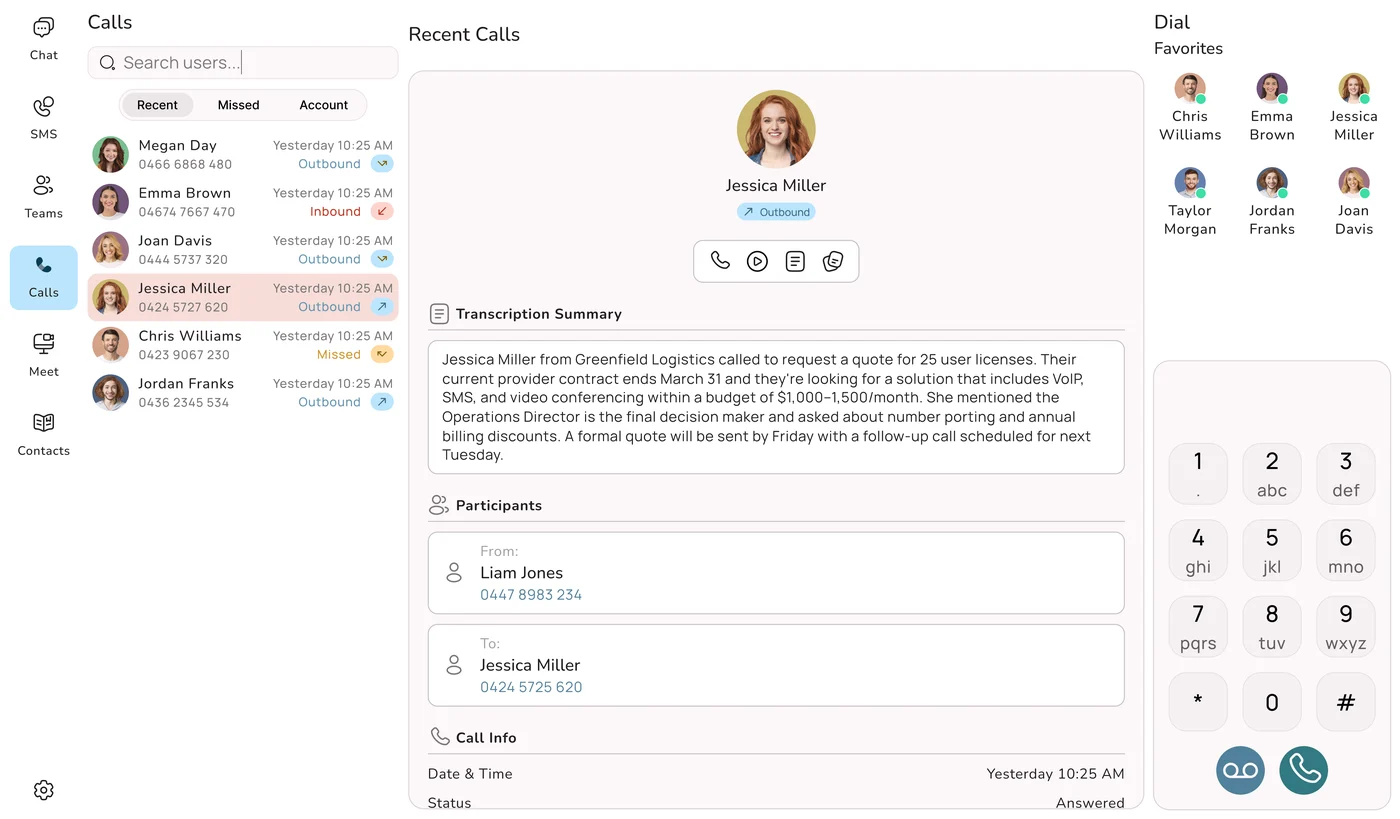
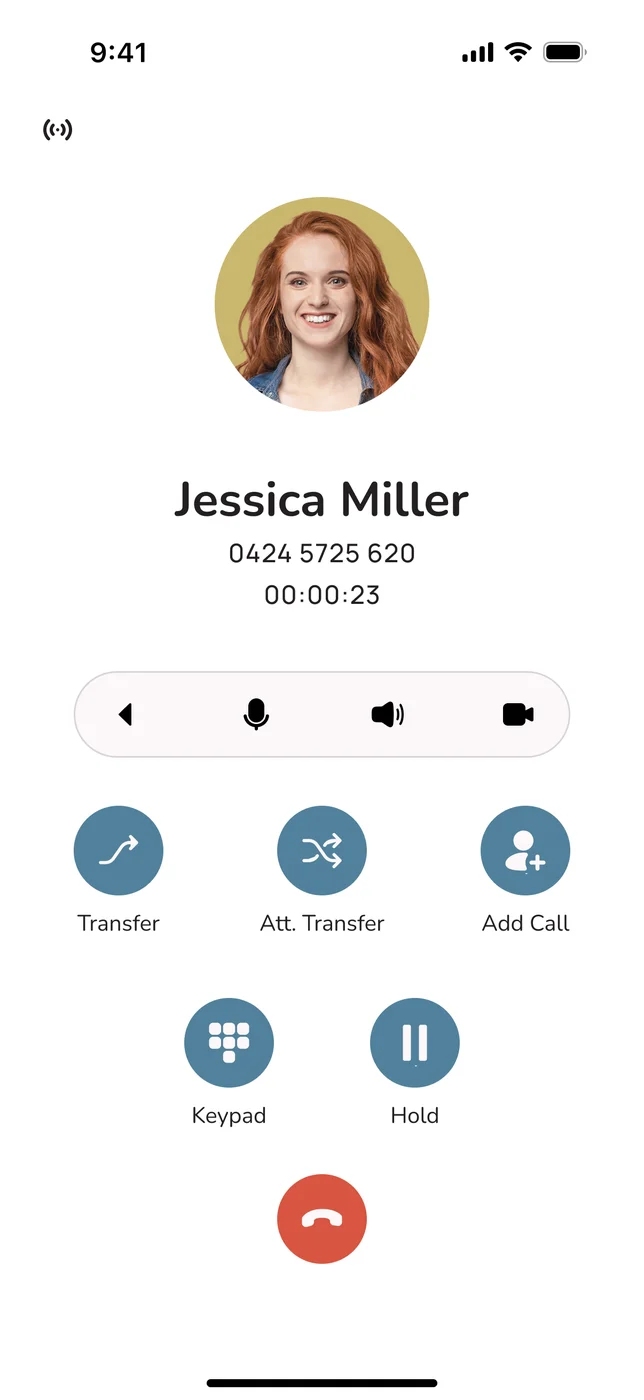
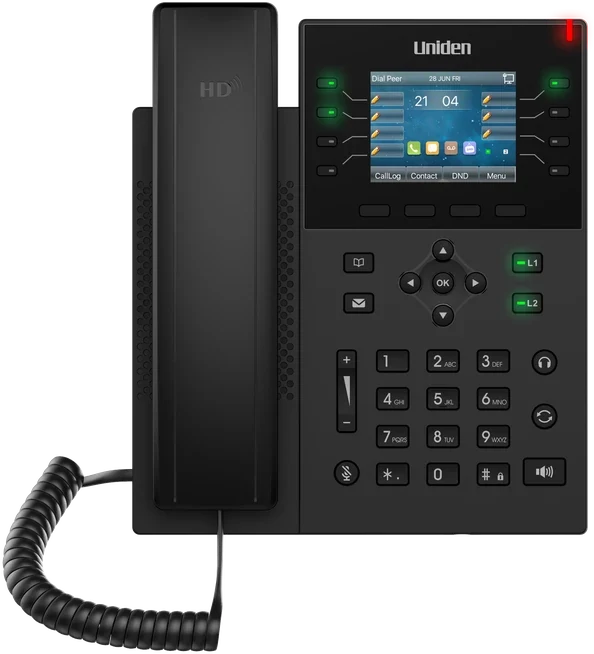
- New clients go to a ring group of the people who can take on work, on a desk phone, the desktop app or the mobile app, then to a short queue, then to an AI agent that books a meeting rather than to voicemail.
- Existing clients go to the client services team, with a queue position announcement during peaks.
- Lodgment and BAS queries get their own queue and greeting in the weeks before a due date, so they do not block everyone else.
- After hours and public holidays are handled by a time condition with your holiday list, so the Christmas close and the Easter break are set once.
A partner coming out of a meeting then reads the AI agent's emailed call summary and the booking it made, rather than a voicemail to transcribe at 6pm. Our guide to call flow design shows how to build one. For a working example, Shuriken Advisory Group, an advisory and accounting firm with more than 30 people across Sydney offices, home and overseas, uses Uniden Voice call routing to pass each client call to the next free team member.
Practice Software: What Actually Connects
Be sceptical of any phone provider that claims to integrate with "all your accounting software". Here is what Uniden Voice lists as available now in the Marketplace in your portal, which you switch on yourself, with pricing per integration:
- Xero contacts as caller ID, so a client's name shows when they ring rather than an unknown number. Useful, but remember it is a convenience, not verification.
- CRM click to call and screen pop with HubSpot, Salesforce, Pipedrive, Zoho, SuiteCRM and Monday, with the call, recording and notes saved against the contact.
- Offsite recording storage in OneDrive or Google Drive, still accessible through the portal.
- Microsoft Teams direct routing and Slack.
- Webhooks and open APIs for call and SMS events, so a practice management system that is not on the list can still be wired in.
If your practice management or document platform is not listed, ask before you sign whether it can be connected through webhooks, and get the answer in writing.
After Hours and Peak Overflow With Vocky
Vocky, the AI agent built into Uniden Voice, answers on your own numbers, holds a natural conversation, books into a calendar, sends an SMS and warm transfers to a person when one is needed. Every call is logged with a recording, transcript, summary and outcome, and the outcome can be posted to your CRM. It will not invent an answer: if a question is outside what you gave it, it says so and follows your fallback rule.
For a practice, draw the line clearly. Let it answer what to bring, fees, opening hours, due dates and how to upload documents, book new client meetings into a partner's diary, and text your secure upload link. Do not let it discuss any individual client's return, refund or account, because it cannot verify identity the way your protocol requires; set its fallback to take a message or book a call back. Outbound, it can work a list of clients with missing records on the schedule you set, with retry rules and a daily call cap, saving someone two days of chasing in May. Your recordings and transcripts belong to your account and are not used to train anyone else's agent. Our guide to which calls to automate helps draw the line.
Worked Example: A Six Person Practice
Take a suburban practice with two partners, two accountants, a bookkeeper and a practice manager. The call figures here are illustrative: say about 40 calls a day most of the year, rising to perhaps double that in the fortnight before an agent BAS date and through July. The prices are Uniden Voice's published prices on 16 November 2026.
| Item | Price | Why the practice wants it |
|---|---|---|
| Business plan, 6 users | $84.90 a month for 3 users, plus 3 extra users at $30.00 each: $174.90 a month on a 36 month term | Every user gets desk, desktop and mobile apps, queues, time conditions and recording |
| Port the existing numbers | Free with a new signup ($65.00 once off otherwise) | Clients keep the number on every letter and invoice |
| 1300 number (optional) | $19.90 a month plus $89.00 once off setup | One national number if clients are interstate |
| Recording storage, 30 hours (optional) | $25.00 a month | Extra cloud storage, or use offsite OneDrive or Google Drive storage |
| Vocky AI agent | From $49 a week, plus the minutes it spends talking; no contract | After hours, peak overflow and document chasing |
| Uniden EVOC2 desk phones (optional) | $249.00 each, once off | For those who want a handset; the apps work without one |
With the 1300 number and extra storage, the phone system comes to $219.80 a month before calls outside the plan and the AI agent. Before the next peak, the practice should do five things: build the four routes above, add the scam warning to the hold message, write the verification protocol into the procedures manual, add the phone and recording provider to the engagement letter, and switch Vocky on for after hours a fortnight before the next agent BAS date, so it is tuned before the rush. Our Uniden Voice for accountants page shows the setup in more detail.
General information, not legal or professional advice
This guide summarises what the ATO and the Tax Practitioners Board publish, as read on 16 November 2026. Due dates and obligations change, and some depend on your client's circumstances. Check the ATO's current lodgment program and the TPB's guidance, or ask your professional body, before relying on it.
Comparing first? See Uniden Voice pricing or the full feature list.