




















Contact Centre Software vs a Phone System With a Queue
Almost every business phone system sold in Australia today can put callers in a queue and play them music. A great many of those systems now describe themselves as contact centre software on the strength of it. The distinction is worth being precise about, because buying the wrong one costs you a year.
A business phone system is organised around people. It exists to make sure a specific human can be reached: extensions, transfers, voicemail, hunt groups, presence. Success means the right person got the call.
A contact centre platform is organised around work. It assumes an interaction belongs to a team, not a person, and its job is to distribute that work fairly, measure what happened, and make next week better than this week. Success means the queue was cleared, the outcome was recorded, and management can see why the numbers moved.
The two-question test
Ask any vendor: (1) Can a supervisor see live queue state and coach an agent mid-call without the customer hearing? (2) Can I review, score and report on interactions after the fact, at scale? If either answer is no, you are looking at a phone system with a queue feature, which may be all you need, but do not pay contact centre prices for it.
The Real Threshold: You Need This Sooner Than You Think
For thirty years the conventional wisdom was that contact centre software started making sense somewhere around twenty seats. That number was never about need: it was about economics. Legacy platforms carried licence minimums, on-premise hardware and professional services bills that made anything smaller absurd.
That constraint is gone. Cloud platforms bill per seat per month with no hardware and no six-figure implementation, which means the threshold is now set by the problem rather than the price list. The honest threshold in 2026 is roughly three to five people.
3+
Staff sharing one inbound number: the point at which routing and measurement start to matter
100%
Share of interactions AI can now review for compliance and sentiment, versus a 1 to 2% human sample
~31%
Reduction in first-resolution times reported for integrated omnichannel operations
1966
The year the Uniden name started standing behind communications equipment
You have a contact centre problem, regardless of headcount, if any of these are true. Calls to your main number are answered inconsistently depending on who happens to be free. Nobody can tell you how many enquiries came in last Tuesday. Customers get transferred more than once. Your busiest hour is a matter of opinion rather than record. Or a staff member left and took the context of forty relationships with them.
The Eight Capabilities That Actually Matter
Feature lists are useless because everybody's has three hundred items. These eight are the ones that determine whether the platform improves your operation or just relocates it.
1. Routing intelligence
Skills-based routing, priority for key accounts, time-of-day and holiday logic, overflow to a second team, and callers recognised from their number so a repeat caller reaches whoever handled them last. Round-robin is not routing.
2. Real-time supervision
A live wallboard showing calls waiting, longest wait, agent state and abandon rate, plus monitor, whisper and barge so a supervisor can coach silently or step in. Without this you manage yesterday, not today.
3. Quality assurance coverage
Recording, transcription and scoring across every interaction, not a sample. Automatic flagging of compliance phrases, sentiment dips and script adherence. See the section below: this is the biggest 2026 change.
4. Omnichannel in one queue
Voice, SMS, web chat, email and messaging apps arriving in the same queue with the same history, not four separate inboxes that each pretend to be the whole customer.
5. AI included, not bolted on
Voice agents, transcription, summaries, sentiment and agent-assist as part of the platform. When AI is a separate SKU it gets rationed at budget time, and rationed AI delivers nothing.
6. Integration depth
Screen pop during the ring, click-to-dial from the CRM, two-way sync, plus open APIs and webhooks for everything else. An agent alt-tabbing between systems is a handling-time problem you are paying for on every call.
7. Reporting that answers questions
Not "how many calls": "why did abandonment rise on Thursdays", "which enquiry type takes longest", "is Wednesday's roster wrong". Historical, comparable, exportable, and available without raising a ticket.
8. Where your data lives
Recordings and transcripts are personal information. Onshore hosting removes a category of cross-border risk, cuts latency, and means the people who can fix a Friday-afternoon problem are awake.
What Agentic AI Changed in 2026
The 2024 conversation about AI in contact centres was mostly about chatbots and transcription. The 2026 conversation is materially different, and if your last look at this market was two years ago your mental model is out of date in two specific ways.
From automating tasks to completing workflows
The phrase the industry has settled on is agentic, and the distinction is real. A 2024 AI transcribed a call. A 2026 AI agent answers it, verifies who is calling, looks the account up, completes the booking or the change, writes the notes, sets the follow-up, and escalates cleanly to a person when it hits something it should not handle. It is the difference between a tool that helps an agent and a colleague that clears work off the queue.
The corollary is that the interesting question stopped being "can AI answer the phone" and became "which calls should it answer": a decision framework we set out in detail in our guide on which calls to automate and which to keep human.
Agent assist became ordinary
The less photogenic half of the AI story is what happens on the agent's screen while a human is on the call: live suggested answers pulled from your own knowledge base, sentiment shown as it shifts, compliance prompts when a required disclosure has not been made, and the wrap-up summary written before the agent has finished saying goodbye. Industry reporting through 2026 credits these agent-assist tools with productivity gains in the order of low double-digit percentages for service teams.
That is a less exciting headline than a robot receptionist, but it is where most of the measurable value has actually landed, and it is available to a five-seat team, not just an enterprise.
The Quiet Revolution: QA on 100% of Calls
Here is the change that deserves more attention than it gets, because it alters something structural about how service organisations are run.
Traditional quality assurance is a sampling exercise. A team leader listens to a handful of recordings a week, scores them against a rubric, and holds a coaching conversation. In most operations that means somewhere between one and two percent of interactions are ever reviewed by anyone. Ninety-eight percent of what your business says to its customers has never been looked at, and, importantly, the sample is not random, because people tend to review the calls that got complained about.
AI removes the sampling constraint entirely. Every call is transcribed, scored against your criteria, and flagged when something needs a human's attention. The practical outputs are worth spelling out:
Compliance coverage becomes complete
If a required disclosure has to be made (recording notification, a financial or clinical caveat, a cooling-off statement) you can verify it happened on every call rather than hoping. For regulated industries this changes the risk profile of the whole operation.
Coaching gets specific and fair
Instead of "you need to build more rapport", a team leader can point to a pattern across sixty calls with timestamps. Agents accept feedback grounded in their whole body of work far more readily than feedback drawn from the two calls that went badly.
Emerging problems surface early
When forty callers in a week mention the same confusing invoice line, that pattern is visible in the data long before it shows up as a complaint or a churn number. This is the closest thing to an early-warning system most businesses will ever have.
Training material writes itself
The best handling of a difficult enquiry type is somewhere in your recordings. Being able to find it is what turns your own best practice into a training asset rather than tribal knowledge.
The reframe
Stop thinking of QA as a compliance chore performed on a sample and start thinking of it as a complete, searchable record of everything your business promised its customers. That record is also, not incidentally, the most valuable training data any AI you deploy later will have access to.
The Scorecard: Score Any Vendor Out of 40
Take this into every vendor meeting. Score each capability 1 to 5 based on what they demonstrate, not what the brochure claims. Anything under 28 out of 40 will frustrate you within a year.
| Capability | What a 5 looks like | What a 2 looks like |
|---|---|---|
| Routing | Skills, priority, time-of-day, overflow, caller recognition: all self-service in the admin console | Round-robin and a business-hours toggle; changes require a support ticket |
| Supervision | Live wallboard, monitor / whisper / barge, agent state visible in real time | A report you can run tomorrow morning |
| Quality assurance | 100% transcribed and auto-scored, with flagging and searchable transcripts | Recordings you can download and listen to manually |
| Omnichannel | Voice, SMS, chat, email in one queue with one shared history | Voice here, a separate inbox there, no shared context |
| AI | Voice agents, summaries, sentiment and agent assist included in the platform | Available, as a separately licensed module, per user, per month |
| Integration | Screen pop during the ring, two-way CRM sync, open API and signed webhooks | A nightly CSV export, or Zapier only |
| Reporting | Self-service, comparable across periods, exportable, answers "why" | Fixed reports that answer "how many" |
| Data & support | Onshore hosting, local support you can reach, clear export on exit | Offshore hosting, follow-the-sun ticket queue, vague exit terms |
Why Uniden Voice Leads in Australia
We will be direct, and we will keep it to things you can verify in a demonstration rather than adjectives.
The AI is included, not rationed
AI voice agents, transcription, summaries and QA are part of the platform rather than a separately licensed module. This sounds like a commercial detail and is actually an operational one: when AI is a per-user add-on, it gets rolled out to a subset of the team at budget time, which means your QA coverage is partial, your data is patchy, and the benefit never compounds. Included AI gets switched on everywhere, which is the only way any of the numbers in this article materialise.
100% Australian infrastructure and Australian support
Calls, recordings and transcripts stay onshore, which keeps your Privacy Act and Australian Privacy Principles position simple and keeps latency low enough that conversations feel natural. Support is Australian-based, which matters most in the specific moment it always matters: something behaving oddly at 4pm on a Friday, with a Monday morning coming.
Australian voices on the AI agents
This is a market-specific point that global platforms consistently underweight. Australian callers hang up on obvious offshore accents; it is a reflex built by two decades of offshore call centres. An AI agent inherits that reflex, and a hung-up call is a lost customer no matter how sophisticated the model behind it. Our AI agents speak and understand in genuine Australian voices, with local place names and phrasing.
One platform, not a suite of acquisitions
Voice, video, SMS, AI agents, queues, recording and reporting are one system with one admin console and one bill. Several of the larger platforms in this market arrived at their feature set through acquisition, which tends to show up as separate consoles, inconsistent reporting and integration seams that leak. Everything measured in one place is worth more than everything measured well in four.
A hardware name older than most software companies
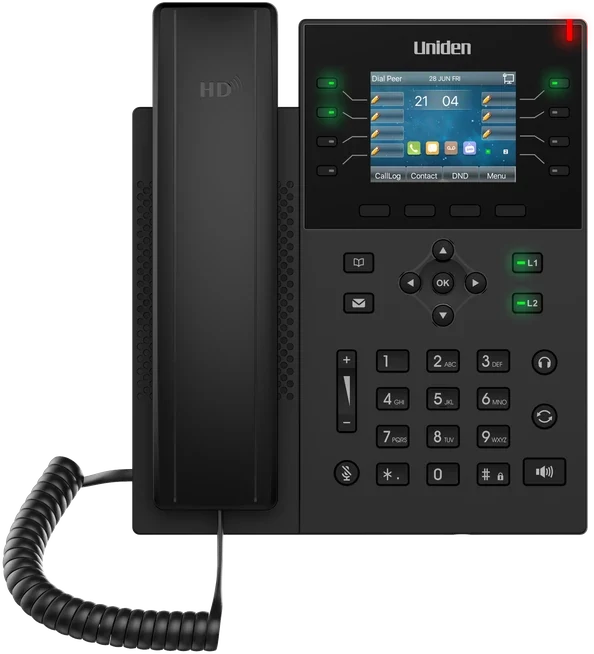
Uniden has stood behind Australian communications equipment since 1966. That is not a feature, but it is a reasonable thing to weigh when you are choosing who to trust with the number your customers ring: particularly against vendors whose Australian presence dates from their last funding round. We wrote about that track record in Uniden: The Brand Australians Have Trusted Since 1966.
Where the Global Platforms Fit
An honest guide has to say this: the large global contact centre platforms are genuinely good software, and for some organisations they are the right answer. It is worth being clear about which organisations.
The global enterprise platforms are typically the better fit if you are running many hundreds or thousands of seats across multiple countries, need workforce management at a level that includes forecasting and shift optimisation as first-class products, have a dedicated in-house team to administer the platform, and can absorb an implementation measured in quarters. They are built for that, and they are built well for it.
They tend to be the wrong fit for Australian businesses between five and a few hundred seats, for reasons that are structural rather than a criticism of the software. Feature sets are modularised, so the capability you assumed was included is frequently a separate line. Implementation and administration usually assume a partner or an internal specialist. Configuration changes that should take a supervisor two minutes often route through a professional services request. And support follows the sun rather than the Australian working day, which is a small thing until the afternoon it isn't.
The question that exposes the difference
In the demonstration, ask: "Show me a supervisor changing the routing on this queue, right now, without a support ticket." Then ask what the annual cost is with AI, QA and omnichannel all switched on for every seat, not the entry-tier per-user figure. Those two answers tell you more about your next three years than any feature matrix.
We go into the head-to-head detail in The Australian RingCentral, 8x8 & Aircall Alternative Your Business Actually Needs.
Sizing: Five Seats to Five Hundred
The same platform should serve all three of these, but what you switch on differs enormously.
Three to ten seats: the shared-number team
One or two queues, simple skills routing, recording and transcription on, an AI agent covering after-hours and overflow, screen pop into whatever system the team already has open. Skip workforce management entirely. Realistic setup: days, not weeks.
Ten to fifty seats: the real service desk
Now you need a live wallboard, supervisor whisper and barge, wrap-up codes that feed reporting, an AI agent handling the repetitive front end, and QA scoring across all interactions. This is where reporting stops being interesting and starts driving rosters.
Fifty to five hundred seats: the operation
Multiple queues and sites, priority routing for key accounts, omnichannel in one queue, full QA and coaching workflows, API-fed dashboards and warehouse integration, and disciplined change control on routing. The technology stops being the hard part; process and coaching become the constraint.
Migrating Without Dropping Calls
Nobody's customers care about your migration. The only acceptable outcome is that they never notice. Five rules make that likely.
- Document the routing honestly first. Including the exceptions somebody configured in 2019 that nobody has admitted to. This always takes longer than building the new configuration and is always the thing that bites.
- Start porting numbers early. Porting has fixed regulatory timeframes that cannot be compressed by enthusiasm. Begin it the week you decide, not the week before cutover.
- Move one queue at a time, lowest volume first. Learn on a queue where a mistake costs you an apology rather than a contract.
- Overlap for a fortnight, not an afternoon. Keep the old platform live as a fallback after each move. The cost of a month's parallel running is trivial next to the cost of a week of lost enquiries.
- Train on the new system before cutover, not on the day. Agents who first meet the interface during a Monday morning peak will conclude the platform is bad, and you will never fully undo that impression.
The Six Metrics Worth Watching
Contact centre reporting can produce hundreds of figures. These six are the ones that change decisions.
| Metric | What it really tells you | The trap |
|---|---|---|
| Abandonment rate | How much demand you are losing before anyone speaks to it | Improves if you make the queue message longer: check answer time too |
| First-contact resolution | Whether customers have to chase you a second time | Easy to game by closing interactions optimistically |
| Average speed of answer | Whether your roster matches your actual demand curve | An average hides the 8:45am spike that does all the damage |
| After-hours and missed volume | The size of the opportunity an AI agent would recover | Usually invisible until you start measuring it deliberately |
| Transfer rate | Whether your routing understands why people ring | A low rate can mean agents are guessing rather than transferring |
| QA coverage | What proportion of your customer promises anyone has checked | If it is 1 to 2%, every other quality number is an assumption |
Frequently Asked Questions
What to Read Next
This is the buyer's guide. These go deeper on the pieces inside it.