



















Why plan the first month at all?
Most people who decide to go out on their own lose the first few months to the wrong jobs. They spend weekends on a logo, a long website and a stack of software trials, and then realise they still have no paying customers and no clean way for anyone to contact them. A short, ordered plan stops that from happening.
The order matters more than the speed. Registering a company before you know anyone will buy is wasted money. Printing business cards with your personal mobile on them creates a problem you will have to undo later. So this guide runs as four weeks, each one finishing a job the next week depends on. You can compress it if you are keen, or stretch it around a day job, but try to keep the sequence.
$0
What the government charges for an ABN
$75,000
Expected turnover at which GST registration becomes compulsory
Since 1966
How long Uniden has been an Australian household name
Week 1: Get proof someone will pay
Before you lodge a single form, find out whether strangers will hand over money. Friends and family will tell you the idea is great because they like you. That is not evidence. What counts is a deposit, a pre-order, a signed quote or a booked job.
Take a mobile dog groomer planning to work the suburbs around Geelong. A sensible first week looks like this: post in three local community groups offering a launch price, ask for bookings by message or phone, and do the first handful of jobs by hand with gear she already owns. If the bookings come in, she has a business. If she gets likes and no bookings, she has saved herself the cost of a van fit-out.
Pay attention to how those first enquiries arrive. Some people will message, some will fill in a form, and a lot of them, especially older customers and trade buyers, will simply ring. That tells you what your contact setup in week four needs to handle.
A simple week-one test
Write down a number before you start, for example "five paid bookings in seven days". Talk to at least twenty potential customers, not two. If you hit the number, move on to week two. If you miss it badly, change the offer, the price or the audience and run the test again before you register anything.
Week 2: ABN, business name and GST
The Australian paperwork is quicker than its reputation. Most of it is online and the ABN plus business name can usually be done in under an hour. The decision that needs the most thought is your structure.
A sole trader setup is the cheapest and simplest way in, and it suits plenty of freelancers, consultants and tradies working alone. A company gives you limited liability and can carry more weight with larger clients, but it costs more to set up and run and comes with extra reporting. A common path is to start as a sole trader and move to a company once the numbers justify it. Because the choice affects your tax and your personal exposure, have a short conversation with an accountant before you lock it in.
| Item | Who needs it | Rough cost | When to do it |
|---|---|---|---|
| Australian Business Number (ABN) | Almost every new business | Free | Week two, first job |
| Business name registration with ASIC | Anyone trading under a name other than their own | A modest annual fee | Straight after the ABN |
| Company registration | Founders who choose a company structure | A few hundred dollars | Only after advice from your accountant |
| GST registration | Compulsory once you expect $75,000 or more in turnover, optional below | No registration fee | When you expect to cross the threshold, or earlier if it suits your customers |
| Licences, permits and insurance | Depends on your industry (public liability, professional indemnity and so on) | Varies | Before your first paid job |
While you are here, lock down your name everywhere it matters: the domain, a business email address and the social handles. Then add one more item to the list that most checklists leave off: the phone number you will put on all of it. That is week four, but you want to know it is coming before you print anything.
Week 3: Bank account, books and a lean kit
Open a separate business bank account and run every dollar of business money through it from the start. Mixing personal and business spending is the fastest way to a painful tax time. Connect accounting software such as Xero, and set up a way to send invoices and get paid on the spot.
Then stop. New owners tend to sign up for a project tool, a CRM, a scheduling app, a design suite and three marketing platforms in the first month, and most of them go unused. A short kit you actually use beats a long one you pay for and ignore. Add software only when a real bottleneck shows up.
The rule that will protect you through year one is keep fixed costs low and predictable. Before you sign anything, check three things: what it costs each month, whether there is a minimum number of users or a long contract, and what happens to the price as you add staff. Cash flow is what kills new businesses, and a handful of creeping subscriptions can eat it quietly.
- Business bank account. Separate from your personal account, set up before your first sale.
- Accounting software. Xero or similar, linked to the bank feed from day one.
- Invoicing and payments. Something that lets customers pay quickly, ideally on the spot.
- A basic website or profile. Enough to show who you are, what you do and how to reach you.
- A business phone number and answering. Covered properly in week four, because it shapes first impressions more than anything else on this list.
Week 4: Put a front door on the business
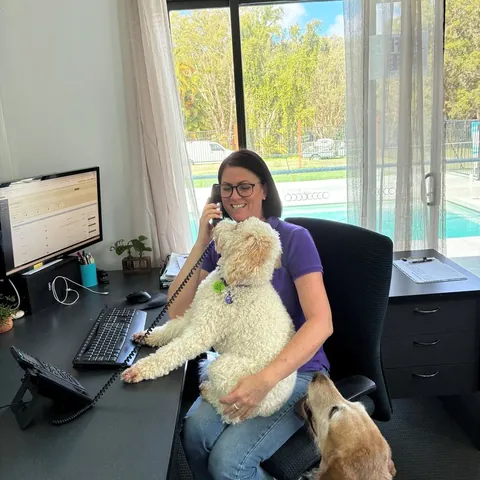
Think about the first time a stranger rings your business. If they hear your personal voicemail, or the phone rings out because you are halfway up a ladder or in a client meeting, they will ring the next name on the list. You will never know they called. In the early months you are the salesperson, the receptionist and the person doing the work, so this happens far more often than founders expect.
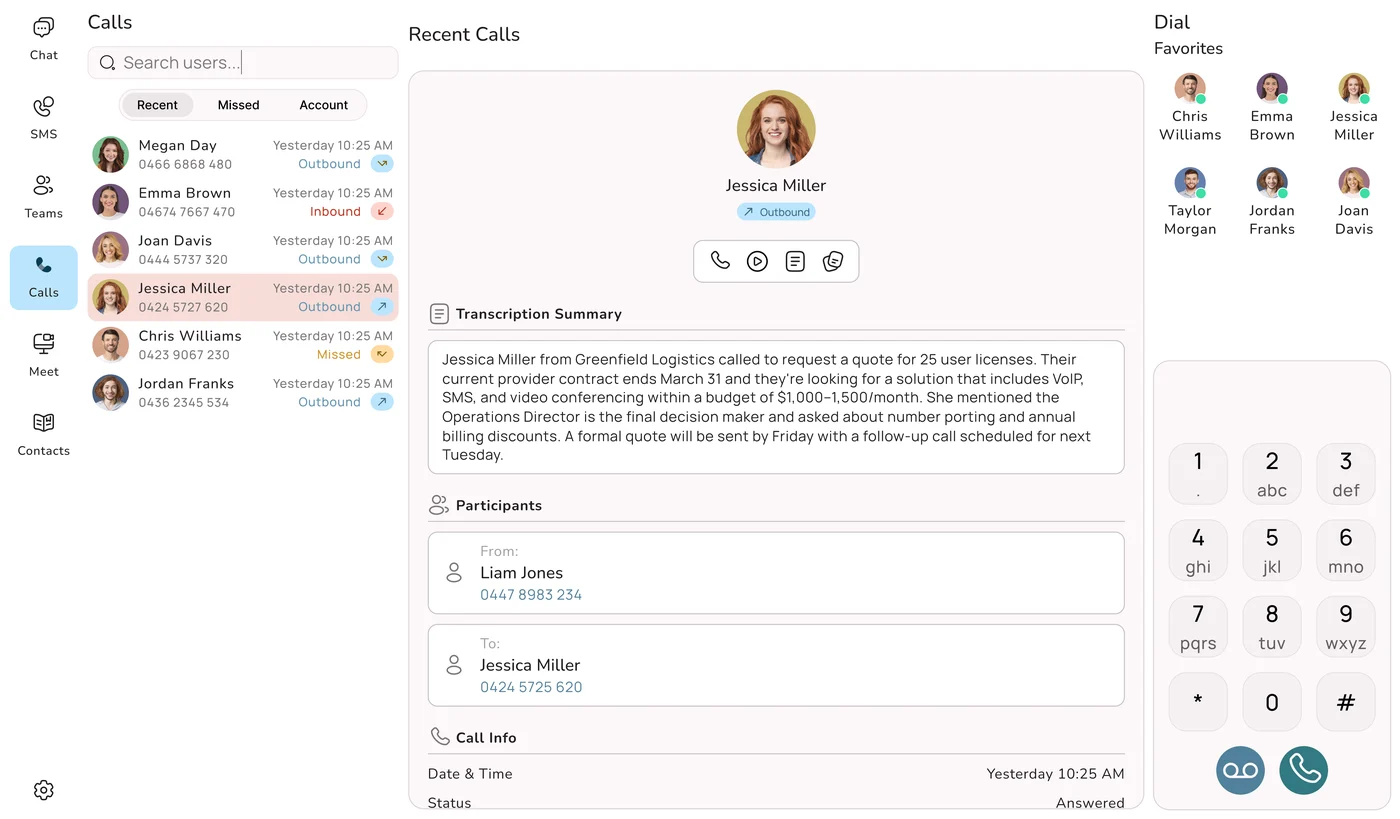
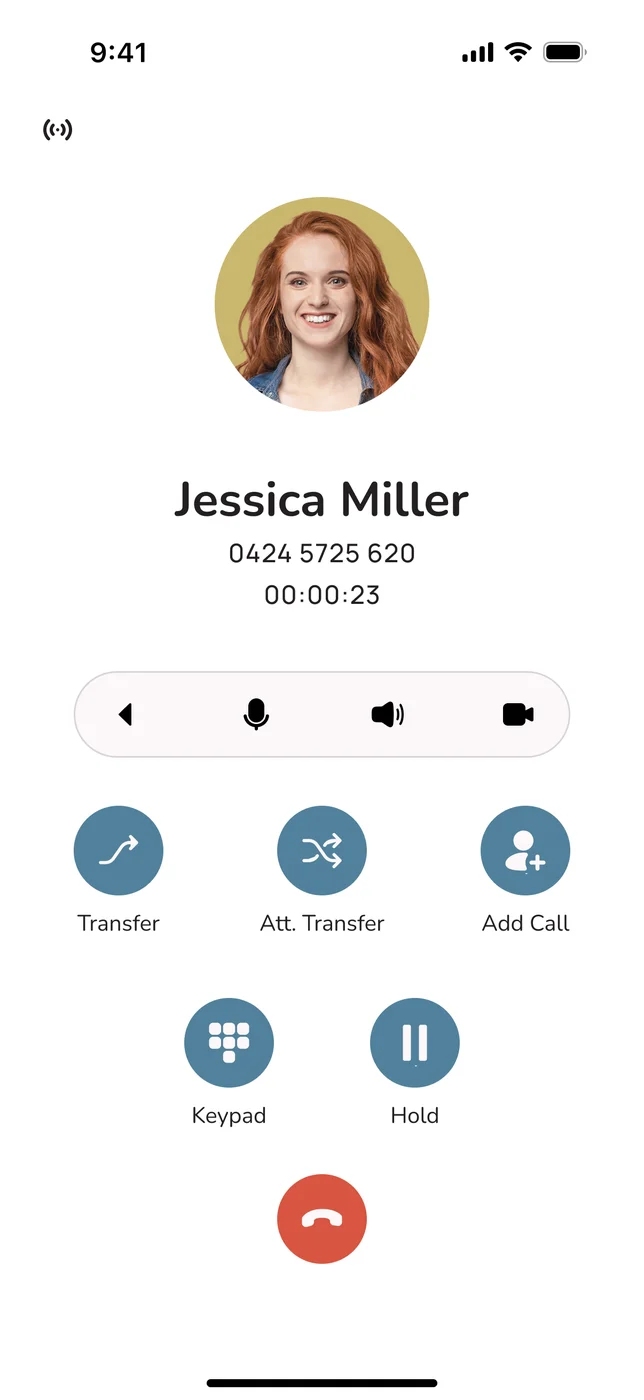
A cloud phone system fixes that before it starts, and it is the job Uniden Voice Over Cloud was built for. Uniden has been a familiar name in Australian homes since 1966, and Uniden Voice Over Cloud brings that brand to business calling. It is Australian hosted and supported by a local team on 1300 881 662.
A number that belongs to the business
Choose a local or 1300 number, or port the one you already have. It rings on your mobile and computer, so customers never get your personal number and you keep the number as you hire.
Someone always picks up
AI Agents answer around the clock in an authentic Australian voice, book the appointment, sort out what the caller needs and pass the details to you.
Real hardware if you want it
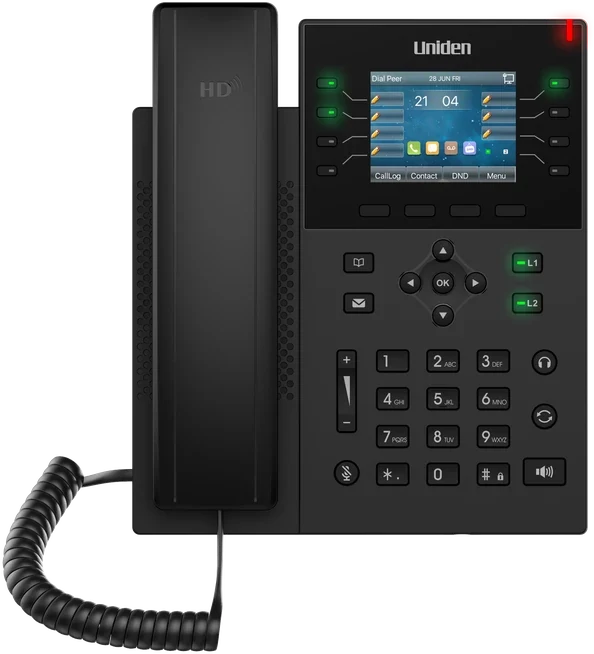
Prefer a proper desk phone? The Uniden EVOC2 HD handset, conference phones and headsets are available, and the phone in a box option arrives ready to plug in.
Text and video in the same place
Two-way business SMS and HD video meetings are included, along with more than 50 features and no minimum user requirements, so you are not paying for seats you do not need.
If you are setting up an office or a workshop, you can also take a business nbn bundle with your phones, so the internet connection and the calls come from one provider with one bill. That is one less account to manage in a month that already has plenty of them.
Why a name customers already know helps a brand-new business
A new business has no track record, so it borrows trust wherever it can. Answering on a business number, with a Uniden handset on the desk and an Australian voice picking up after hours, tells callers they are dealing with a setup that is here to stay. And if you work with an IT provider or MSP, they can supply and look after it for you through the Uniden Voice dealer and partner program.
Opening day and the weeks after
Opening day does not need a party. It needs customers to be able to find you and reach you. Let your network know, set up your listing in the places locals search, and ask every early customer for a review while the job is fresh in their mind.
Then compete on speed. A new business rarely wins on price or reputation in its first year, but it can win on response time. If you ring back within five minutes and the established competitor takes two days, you usually get the job. With every call answered and logged, including the ones that arrived while you were busy, you can see which ads, listings and referrals actually produce work and spend accordingly.
✔
Put the business number on everything from day one. Your website, invoices, van, quotes and listings. Changing it later means reprinting and losing callers who saved the old one.
✔
Let the AI agent take calls when you can't. Your growth should not depend on whether you happen to be free when the phone rings.
◑
Add tools one at a time. Wait until a real problem shows up, then pick the tool that fixes it, with clear monthly pricing.
✘
Don't run the business off your personal mobile. It mixes work with home life, it looks less professional, and the number stays with you, not the business, when you hire or sell.
"We ported our number, switched on the AI receptionist and suddenly a two-person startup answered like a company ten times the size. We haven't missed an enquiry since."
A new Uniden Voice Over Cloud customer
Founder Questions, Answered
What order should I do the setup steps in?
Prove demand first, then register, then set up the money side, then sort out how customers contact you. In practice that means testing the idea with real customers, applying for your ABN, registering a business name with ASIC if you are not using your own name, deciding on GST, opening a business bank account and accounting software, and then getting a business phone number before you print or publish your contact details anywhere.
Is it expensive to register a business here?
Not really. The ABN is free. Registering a business name with ASIC is a modest annual fee, and setting up a company costs a few hundred dollars. Insurance, tools and marketing are usually the bigger early costs, which is why it pays to choose services with predictable monthly pricing and no minimum user requirements.
Should I start as a sole trader or a company?
Many people start as a sole trader because it is the cheapest and simplest option, and switch to a company once the business grows. A company gives you limited liability and can look more established to bigger clients, but it costs more to run and comes with more reporting. Your accountant can tell you which suits your tax and liability position.
When do I have to register for GST?
Registration is compulsory once you expect your turnover to reach $75,000 or more. Below that it is optional, and some businesses register early because their customers are GST-registered businesses themselves. Ask your accountant whether that applies to you.
Can I just use my mobile number for the business?
You can, but it causes problems later. Customers get your personal number for life, work calls follow you into evenings and weekends, and the number stays with you rather than the business if you hire staff or sell. A business number on Uniden Voice Over Cloud rings your mobile anyway through the app, so you keep the convenience without those downsides, and an AI agent can answer when you are busy.
Do I need a desk phone, or are apps enough?
Plenty of new owners run entirely on the mobile and desktop apps. If you work from an office, a shopfront or a reception desk, a handset such as the Uniden EVOC2 HD is often more comfortable for long call days, and conference phones and headsets are there as you grow. You can start with apps and add hardware later on the same number.