

















The Phone Question Already Lands on Your Desk
Ask any IT provider who looks after small and mid-sized Australian businesses and you will hear the same story. The client rings about a printer, a laptop or a Microsoft 365 licence, and then, almost as an afterthought: "While I have you, our phones keep dropping out. Who should we be with?" Clients see the phone system as part of "the IT", and expect the people who run their network to have an opinion.
Many providers answer it by pointing the client to a telco or an overseas VoIP app. The client is grateful, the call ends, and a service worth money every month for years goes to someone else. Worse, when call quality suffers because of the network, you get the support call anyway, without the revenue that should come with it.
This article looks at answering it differently, and at the money involved: revenue per client, how seats accumulate, churn, business value and what the partner program takes off your hands.
~360
recurring seats after a year at three ten-seat clients a month
Monthly
margin on every seat, for as long as the client stays
Since 1966
Uniden has been a household name in Australia
$0
switches, servers or stock you need to buy to start
Project Income vs Seat Income
Project work and hardware pay well, but once; when the job ends the meter resets. Managed services and connectivity pay a little every month. A phone seat belongs in the second group, with a few habits that make it better than most recurring lines:
Clients hardly ever leave
Once a business's phones work well, it does not go shopping for new ones. A phone system is one of the least churned services a small business buys.
It grows on its own
Every new hire needs an extension. Your monthly figure rises as the client grows, with no new sale required.
Every client is a prospect
There is not a business on your books without a phone number, and copper's retirement has put plenty of them in the market.
It runs on what you already manage
Voice travels over the internet you supply and the network you look after, so it fits straight into your existing service.
You become harder to replace
The provider who runs a client's phones is part of how that business operates every day, not just an IT supplier.
Margin on both ends
Recurring margin on each seat, plus margin on handsets, number porting and setup when the deal closes.
How the Seats Stack Up Over a Year
The appeal of seat income is that it builds on itself. Take a modest pace: three new phone clients a month, averaging ten users each. That is 30 new seats every month.
Because phone systems so rarely churn, almost every one of those seats is still billing at the end of the year. Here is how the base looks quarter by quarter.
| End of | Clients signed so far | Seats billing each month | What it feels like |
|---|---|---|---|
| Quarter 1 | 9 | ~90 | A useful new line on the invoice run |
| Quarter 2 | 18 | ~180 | Predictable monthly income you can plan around |
| Quarter 3 | 27 | ~270 | A base that grows even in a slow sales month |
| Quarter 4 | 36 | ~360 | An annuity that keeps paying into year two |
Illustrative volumes only, to show how seats accumulate. Your margin per seat is set out in your partner agreement.
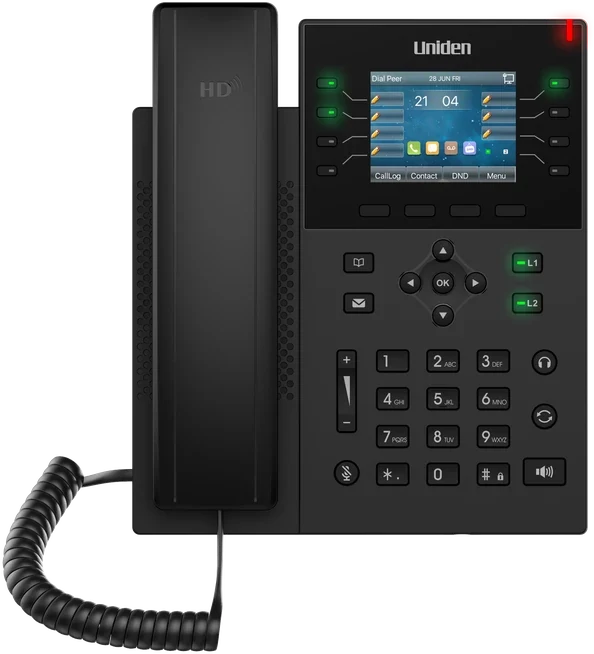
On top of that, each new client buys hardware (Uniden EVOC2 HD handsets, conference phones, headsets), number porting and call-flow setup, which pay at the point of sale. And the table assumes nobody hires; in practice clients add extensions and sites, so the line climbs faster.
Why a Known Brand Shortens the Sale
The hardest moment in reselling an unknown VoIP platform is when the client asks, "Who are they? I've never heard of them."
That conversation is much shorter with Uniden. Owners and office managers have had Uniden phones on their kitchen benches and reception desks for decades; the brand has been in Australia since 1966. Uniden Voice over Cloud is that brand's business phone system, so when you put it on the table you are starting from trust, not from scratch.
- Physical hardware clients recognise. The EVOC2 HD handset carries the Uniden name, and a phone in a box option makes small installs simple.
- Australian hosting and Australian support. Easy to explain, and an answer to the "where is my data?" question many clients now ask.
- AI built in. AI call agents are part of the platform, which gives you a modern story to tell and an upsell path with Uniden AI Agents.
Where Voice Fits in Your Existing Offer
The easiest phone sale is the one that rides along with something you already provide. Each type of IT business has an obvious place to slot voice in.
| If you are a... | Start the conversation with | What ends up on one invoice |
|---|---|---|
| Managed service provider | The next managed services agreement review | Managed IT, Microsoft 365, security and voice |
| Internet provider | Every new business nbn connection | Business internet and phone system from one Australian provider |
| Computer or IT store | Office fit-outs and hardware refreshes | Hardware, setup, support and a recurring phone plan |
| Cabling or security installer | The structured cabling quote for a new site | Cabling, CCTV, access control and the phones on top |
| POS or business software vendor | Clients who want caller ID in their software | Software plus voice with integrated caller ID |
One local provider, one bill
Small businesses are sick of the blame game: the overseas VoIP app says it is the internet, the internet provider says it is the router, and the IT company says it is the phones. Being the single local provider for internet, IT and voice solves that for them, and it is a strong reason for the client to stay with you. If you also sell Uniden business nbn plans, the whole chain from the line to the handset sits under one roof.
Churn, Cash Flow and Exit Value
Every extra service makes leaving harder
A client who buys only break-fix support from you can switch providers with one phone call. A client who relies on you for internet, managed IT and their phone system would have to move all three, port their numbers and retrain staff. Each critical service you add raises the cost of leaving, and voice is one of the most effective because a working phone system is so rarely replaced.
Smoother months
Project income comes in lumps. Seat income arrives every month whether or not you closed a deal, which makes hiring and planning easier.
A business worth more when you sell it
This is the point many owners miss. People who buy IT businesses value predictable, recurring income far more highly than one-off project or hardware revenue. So a phone seat is worth more than the margin it earns each month: it also lifts the multiple a buyer will apply to your whole business.
The hardware sale ends the day you install it. The phone seat pays you every month for years, and makes your whole business worth more when you sell it.Why IT providers move into voice
Who Does What in the Partner Program
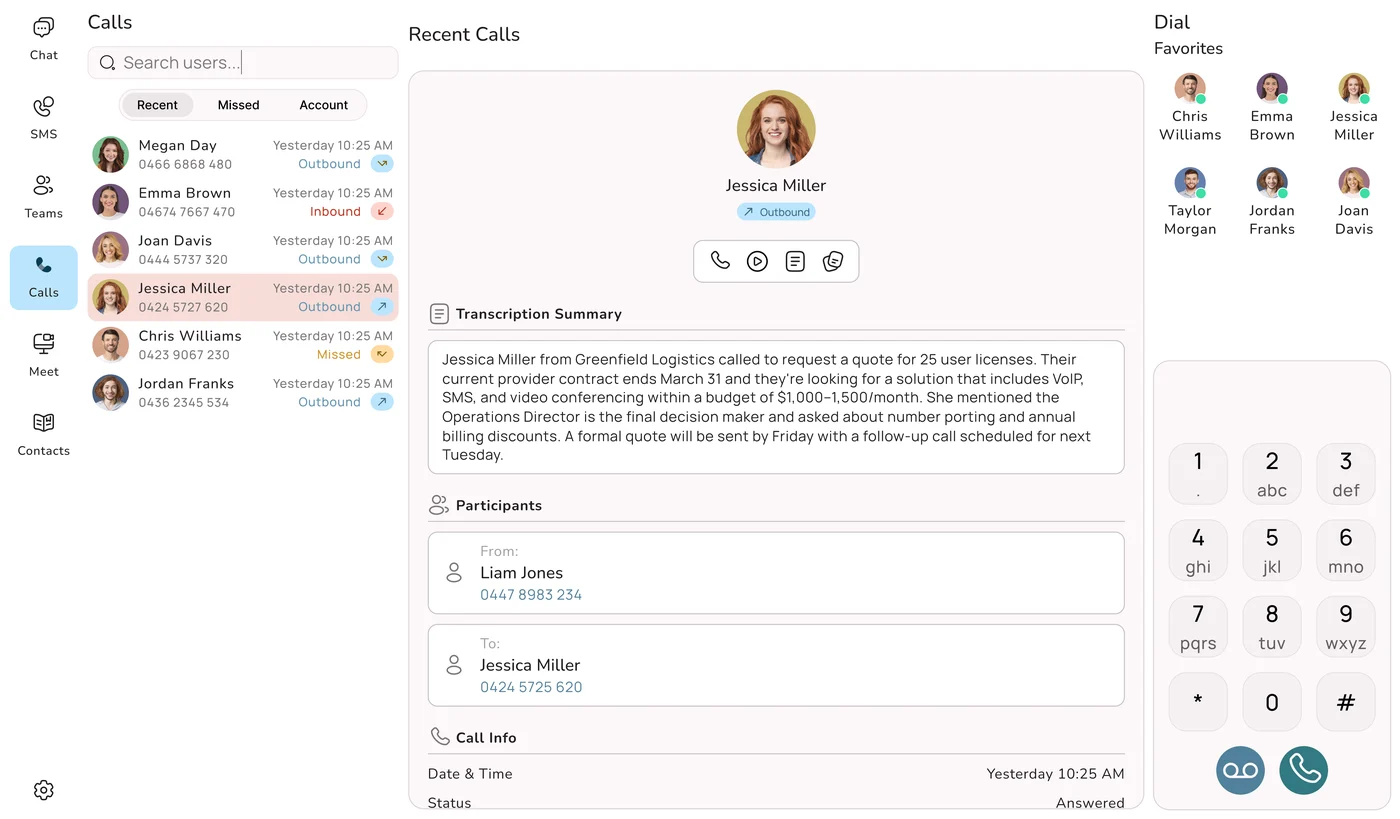
Not long ago, selling phones meant becoming a telco: carrier registrations, a softswitch in a data centre and staff who understood SIP. The Uniden Voice partner program splits the work so you keep the client relationship and the platform work stays with Uniden.
| Task | Uniden Voice handles | You handle |
|---|---|---|
| Platform and infrastructure | Fully managed Australian cloud platform; no softswitch, SBCs or servers for you | Nothing to build or host |
| Carriage, numbers and compliance | Supplied by Uniden Voice, so you need no carrier licence | Introduce the client and their numbers |
| Provisioning | Partner portal for setting up users and call flows | Set up the client in the portal |
| Hardware | EVOC2 HD handsets, conference phones and headsets, ordered as needed | No stock to hold |
| Pre-sales and technical support | Australian pre-sales and 24-hour tier-2/3 support behind you | First-line contact and local service |
| The client relationship | Backs you up | Yours, with the recurring margin that comes with it |
Your First 90 Days
You do not need a new sales team or a marketing budget. Your existing client list is the pipeline. A practical way to start:
- Weeks 1 and 2: get set up. Join the program, get access to the partner portal, wholesale pricing and a demo account, and get comfortable with the demo account so you can show the system working.
- Weeks 3 and 4: sort your list. Go through your clients and flag the ones with a phone contract renewal coming up, an old on-premise system, an ageing 3CX setup or regular complaints about call quality.
- Month 2: have the conversations. Raise phones at every scheduled review and every new nbn or fit-out job. Lead with the problem the client already has, not with features.
- Month 3: close, port and repeat. Provision the first clients, port their numbers, deliver the handsets and use those installs as references for the next ones.
Partner Questions
Is reselling phone systems worth it for a small MSP?
Yes, and often more so for a small MSP than a large one. Your clients already trust you with their network, internet and computers, and the phone system is usually the one critical service they still buy somewhere else. Adding it lifts revenue per client, makes you harder to replace and reduces churn, because a client who gets internet, IT and voice from you has three reasons to stay.
What does a realistic first year of seat growth look like?
It depends on your client base, but a modest pace adds up quickly. Three new clients a month at around ten users each gives you roughly 30 new seats a month and about 360 recurring seats by the end of the year, as long as clients stay, which with phone systems they usually do. Hardware, porting and setup margin come on top.
Do my clients need to have heard of the provider?
It helps a lot. Small business owners are cautious about who runs their phones, and an unfamiliar VoIP brand can stall a deal. Uniden has been a household name in Australia since 1966, and Uniden Voice over Cloud is its business phone system, so most clients recognise the name before you start.
Do I need a carrier licence or voice engineers to sell Uniden Voice?
No. Uniden Voice provides the platform, carriage, numbers, AI and compliance, and backs partners with Australian pre-sales and 24-hour tier-2/3 support. You bring the client relationship and local service.
How do I bundle voice with internet or managed services?
Add it to what you already sell. An internet provider can include a phone system with each business nbn connection, an MSP can make voice part of the managed services agreement, and a computer store can attach it to fit-outs and support. The client gets one local provider and one bill.
Will adding voice create a lot of extra support work?
Less than most providers expect. The platform is fully managed, so there are no servers, trunks or softswitches for you to maintain, and Uniden Voice provides 24-hour tier-2/3 support behind your team. Your role is first-line contact and the local relationship. Since you already manage the network, you can keep call quality good from the start.
How fast can I get my first client live?
Quickly. There is no stock to buy and nothing to build, so most partners are quoting and provisioning their first client within days of joining. You get the partner portal, wholesale pricing, demo accounts and sales material from the start.