

















Do You Need a Licence for On Hold Music?
If the music your callers hear is protected by copyright, yes, you need permission from the people who own it. Under Commonwealth copyright law, playing a song down a phone line to the public is a use the owners control, in the same way as playing it in a shop. There are usually two sets of owners: the songwriters and publishers, whose rights are administered by APRA AMCOS, and the record labels and artists who own the recording, whose rights are administered by PPCA.
Those two bodies license businesses through one joint initiative, OneMusic Australia. Its Workplace and Telephone On Hold Music licence covers music "on their external telephone system, when a caller first dials in, when the receptionist transfers the call or on after-hours messages", along with music in staff areas, presentations and office functions. The government's business licence finder lists it as the licence you need to use copyrighted music as telephone on hold music.
Three points catch businesses out:
- Overseas music is not exempt. OneMusic's repertoire covers the vast majority of commercially released music from around the world, not just Australian artists.
- An old song can still be in copyright. OneMusic's guide uses the example of a composition from 1678 recorded by an orchestra in 2004: the score is in the public domain, but the 2004 recording is not, so the recording still needs a licence.
- A venue licence may not cover the office. OneMusic says that where a business's hold music is covered under another scheme, such as a hotel licence, that cover does not extend to head and branch offices, which need this licence.
General information, not legal advice
This guide summarises what OneMusic and the Australian Government publish, as read on 5 November 2026. Licence terms and fees change. Before you rely on any of it, check with OneMusic Australia (1300 162 162) or a copyright adviser. The Australian Copyright Council also publishes free independent information.
Radio, Streaming, Royalty Free or Built In: What Each Needs
The licence you need depends less on the song than on where the music comes from and whether a copy was made. OneMusic's July 2026 information guide splits it into two levels of cover: communication only, for simply playing music to callers, and communication and reproduction, for when a copy of the music has been made to put it on the phone system.
| Where the hold music comes from | OneMusic licence? | Which cover |
|---|---|---|
| A radio station re-transmitted down the line, talkback included | Yes | Communication only. Note you also play the station's ads, including your competitors'. |
| A purchased CD played directly | Yes | Communication only |
| Music copied to a hard drive or uploaded as a file | Yes | Communication and reproduction |
| A personal streaming service or download | Yes | Communication and reproduction. OneMusic warns that its licence does not override the streaming service's own terms, which may not allow business use at all. |
| A message track made by an on hold agency, using commercial music | Yes | Communication only, according to OneMusic's example of an agency supplying your messaging |
| Genuinely royalty free or production music licensed for on hold use | No OneMusic licence, per OneMusic's guide | You rely on the track's own licence, so keep a copy of it |
| Music that came with the phone system | Depends on the music | OneMusic says the onus is still on the business to make sure what is played is licensed |
| Your own jingle or commissioned music | Possibly not | Not if you hold a direct licence from every rights owner; otherwise partial cover may apply |
| No music: messages or silence with a tone | No | Nothing to license |
"Royalty free" is a description, not a guarantee. Some royalty free libraries allow use in videos and podcasts but say nothing about public performance or telephone systems. Before you upload a track, read its licence for words like "on hold", "telephony" or "public performance", and save the licence with your records.
Caller Capacity on a Cloud Phone System
The on hold fee is set mainly by caller capacity, which OneMusic defines as how many lines playing music the business can place on hold at any one time. That made sense when a PABX had a fixed number of lines. A cloud phone system has no physical lines, so OneMusic's fee methodology guide sets a separate rule: "Where a business uses VOIP or a Cloud based telephone system, caller capacity is the number of maximum simultaneous users across all locations."
In practice, work out the most people in your business who could be on calls at the same moment, across every site. A clinic with three reception staff and a practice manager who all take calls would count four. A business with two offices of five call takers each would count ten, and would also fall into the multiple locations column. If you are unsure, ask OneMusic how to count your setup rather than guessing low. The other two factors in the fee are whether you have one location or several, and whether you need reproduction cover as well as communication.
What the Licence Costs in 2026 and 2027
These are the annual telephone on hold fees from OneMusic's information guide dated July 2026, which states that its examples apply to licences taken out between 1 September 2026 and 31 August 2027. Fees include GST and are reviewed by CPI on 1 September each year. The table shows the smaller bands; larger bands continue up to 400 and beyond, and on hold fees are capped at $97,776.23 per client per year.
| Caller capacity | Single location, communication only | Single location, with reproduction | Multiple locations, communication only | Multiple locations, with reproduction |
|---|---|---|---|---|
| 1 to 2 | $293.33 | $366.66 | $391.11 | $488.88 |
| 3 to 5 | $384.99 | $476.65 | $562.21 | $702.77 |
| 6 to 10 | $574.43 | $721.10 | $867.77 | $1,087.76 |
| 11 to 25 | $953.32 | $1,191.65 | $1,442.20 | $1,802.75 |
| 26 to 50 | $1,808.86 | $2,261.07 | $2,859.96 | $3,568.84 |
Two reductions are worth knowing. If you need only one of the two sets of rights, for example because you use a recording you licensed directly from the label, or a public domain composition in a modern recording, OneMusic applies a partial rights reduction (48.25% in the guide). Music in staff areas, presentations and office functions is a separate part of the same scheme, priced per full time equivalent employee with a minimum fee, so ask OneMusic to quote only the uses you actually have.
$293
a year for 1 to 2 simultaneous users, one location, communication only (incl. GST)
2
sets of rights in most songs: the composition and the recording
$0
OneMusic fee for genuinely royalty free music or messages only
Choosing Between Licensed, Royalty Free and Silence
Each choice is reasonable. What matters is that it is a choice, not an accident.
- Licensed commercial music suits a brand where the sound is part of the experience, such as a salon, a gym or a venue that already plays a particular style in store. Budget for the licence each year and keep it current when you add staff, because caller capacity grows with you.
- Royalty free music licensed for telephony suits most offices, clinics and trades. It is cheaper over time and avoids an annual renewal, provided the licence on the track genuinely covers on hold use.
- Messages over a quiet bed, or a soft tone suits businesses where holds are short and callers mostly want to know they have not been forgotten. It is also the right choice where music would be out of place.
Whatever you pick, avoid two things: dead silence, which callers read as a dropped call, and a radio station, which hands your callers to someone else's advertising.
What Callers Should Hear: Building the Hold Loop
Your hold loop is the recording that plays from the moment a caller waits to the moment someone picks up. Think of it as a short, repeating programme.
- The first few seconds: confirm they reached the right place and that someone will be with them soon. Nothing else.
- Every 30 to 45 seconds: a short message, no longer than about 15 seconds, then back to the music. Long gaps feel like being forgotten; constant talk feels like being sold to.
- Rotate three to five messages so a caller waiting two minutes does not hear the same one four times.
- Offer a way out after a minute or two: press a key for voicemail, or a callback where your system supports it. Our guide to professional voicemail greetings covers what they should hear when they get there.
- Keep the whole loop to about two or three minutes before it repeats. If callers regularly hear it twice, the problem is staffing or routing, not the recording.
Write messages that answer the questions people are calling about: opening hours, where to park, what to have ready, how to book online. Every question the recording answers is one your staff do not have to. Keep prices and dates out of it unless you will remember to change it, because a hold message announcing last winter's special is worse than none.
Queue Position and Wait Time Announcements
A position announcement, "you are caller number three", tells callers the line is moving. It works best when waits are long enough to need reassurance and short enough that the number is encouraging. If callers routinely hear "you are caller number eleven", many will hang up, which may be the most honest outcome, but then give them a better option than ringing back later: an online booking link sent by text, a callback, or voicemail that someone clears before lunch.
Estimated wait times are more useful than positions, and riskier. An estimate that is wrong by three minutes damages trust more than saying nothing. If you use them, round up. For the numbers to watch when you set queue targets, such as service level and average speed of answer, see our guide to contact centre metrics.
On Hold Message Scripts by Industry
Adapt these to your business and read them aloud before you record them. Each one is short enough to sit between stretches of music. Replace anything in square brackets.
Medical, dental and allied health practices
- "Thanks for holding. If this is a medical emergency, please hang up and call triple zero."
- "You can book, change or cancel most appointments online at [website], any time of day."
- "If you are calling about test results, please have your date of birth ready so we can find your file quickly."
- "Running late for your appointment? Stay on the line and let us know, and we will do our best to fit you in."
Trades and home services
- "Thanks for calling [business]. Our team is on site right now, and the next person free will take your call."
- "If water, gas or power is a danger right now, tell us as soon as we answer and we will treat it as urgent."
- "To speed things up, have your address and a quick description of the job ready. Photos help, and we can text you a link to send them."
- "Prefer not to wait? Press [key] to leave your name and number and we will call you back today."
Real estate agencies
- "Thanks for calling [agency]. If you are a tenant with an urgent repair, such as a burst pipe or no hot water, please tell us first so we can act straight away."
- "Open home times for all our listings are at [website], updated daily."
- "Thinking of selling? Ask us about a free market appraisal when we answer."
Accountants and bookkeepers
- "Thanks for holding. You can upload documents securely through [portal], so there is no need to email them."
- "We will never ask for your bank details or tax file number in an unexpected call or text. If something seems off, hang up and call us back on the number on our website."
- "Have your client reference or ABN ready and we will find your file faster."
Retail
- "Thanks for calling [store]. We are open [hours], and you can check stock and order online at [website]."
- "Calling about an order? Have your order number ready. It is in your confirmation email."
- "Ask us about click and collect, ready in [time] from our [suburb] store."
Cafes, restaurants and venues
- "Thanks for calling [venue]. You can book a table any time at [website]."
- "Planning a function? Our functions menu is online, and we are happy to talk you through it."
- "Ringing about allergies or dietary needs? We are happy to help, just let us know when we answer."
Notice what none of these do: apologise for "unusually high call volumes" every day of the week, or say "your call is important to us". Callers have heard both so often they register as noise. A useful fact is better than a reassurance.
The Better Fix: Shorter Holds
The best on hold experience is one the caller barely has time to notice. Before spending an afternoon on music and scripts, check why people are waiting at all. Often it is routing: every call rings one person, the menu has an option nobody needs, or after hours calls queue for a team that has gone home. Our guide to call flow design walks through the common fixes, and our piece on replacing phone menus with AI covers the newer option.
An AI agent can answer routine calls straight away, such as opening hours, bookings and simple enquiries, and pass the rest to a person with a summary. That takes pressure off the queue at the busy times when holds are longest. If you are deciding which calls to hand over, start with our guide to which calls to automate.
Setting It Up on Uniden Voice
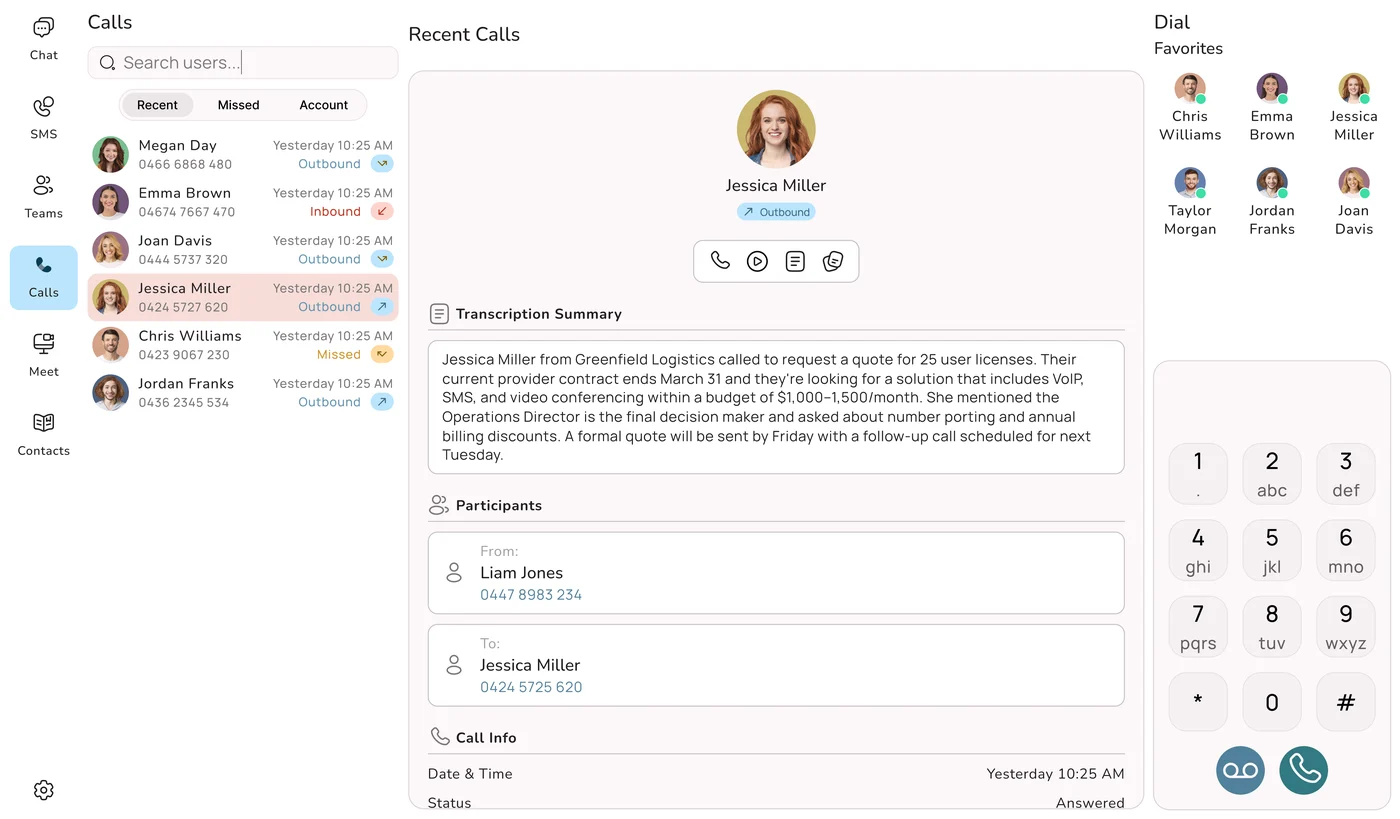
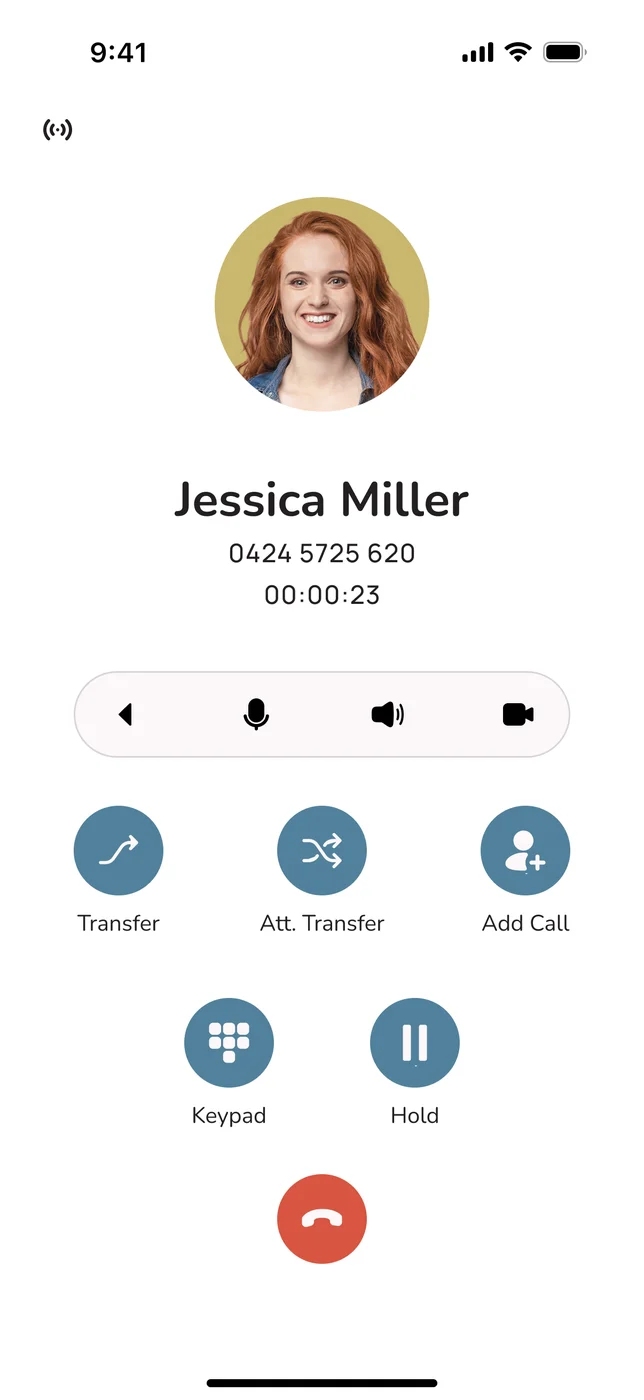
On Uniden Voice, hold music and messages are part of the call flow you design, and the features are in the plan. Callers can join a call queue with your own greeting, your hold music and a position announcement, instead of hearing an engaged tone. A time condition checks the hour, the day and your holiday list, so after hours callers get a different message, rather than waiting in a queue nobody is watching. If nobody answers in time, voicemail to email sends the message to the right inbox as an audio file.
You do not need a recording studio for the messages. Type your greeting and prompts and the system reads them out in a natural voice, in a choice of languages, so changing a message for the Christmas closure takes minutes. If you upload your own music, the licence rules above apply to what you upload, so keep the track's licence or your OneMusic licence on file.
AI Agents are built in as well, for the routine calls that do not need to wait for a person at all. Everything is designed, built, hosted and supported in Australia, with support on 1300 881 662, Monday to Friday, 9am to 5pm AEST.
Want the full feature list first? See the Uniden Voice business phone system.