














The Phone on the Kitchen Bench
Most brands have to introduce themselves. Uniden mostly does not, at least not to Australians of a certain age. It was the cordless handset on the bench that everyone fought over when the call was for them, the phone carried down the hall so the conversation could happen behind a closed door, and the one that lived in the charger for so many years it outlasted the fridge.
That is not just nostalgia. Uniden says it has been Australia's number one brand in cordless phones for more than twenty years, citing GfK retail data, on its Australian company page. Two decades at the top of a category that every household bought into adds up to a very large number of Australian homes with a Uniden in them. The people who grew up answering those phones are now the ones signing the contracts for a business phone system.
1966
the year Uniden began, with CB and marine radios.
1989
Uniden Australia and New Zealand established.
20+
years as Australia's #1 cordless phone brand, per Uniden citing GfK.
When a business owner tells us they chose Uniden Voice because "we always had a Uniden at home", it can sound like a small reason. It is not. A brand you have used for years without thinking about it is a brand that has not given you a reason to think about it, and with a phone, that is the whole job.
A Record of Hardware That Kept Getting Better
Familiarity only becomes trust if the products earned it. The Uniden record is a long run of practical hardware, improved one generation at a time rather than reinvented every year. These milestones come from Uniden's own timeline and from the public record of the company.
| Year | Milestone | Why it mattered |
|---|---|---|
| 1966 | Uniden founded in Japan by Hidero Fujimoto, starting with CB and marine radios. | The company began in radio, where equipment has to work every time it is keyed. |
| 1970s | Millions of CB radios built and sold, many under other brands. | Scale and manufacturing discipline that later went into phones. |
| 1980s | Grew into the world's largest maker of cordless telephones. | The cordless phone became a household item, and Uniden made a large share of them. |
| 1989 | Uniden Australia and New Zealand established. | A local business choosing products for Australian homes, cars and boats. |
| 2003 | 5.8GHz digital spread spectrum cordless phones. | Clearer calls and less interference in crowded suburbs. |
| 2006 | Australia's first waterproof cordless phone, per Uniden. | A phone for the verandah, the shed and the pool, not just the hallway. |
| 2017 | UHF radio partnership with Toyota Australia. | Radios chosen for the vehicles that cover the bush, the mines and the farm. |
| 2018 | The world's first 4K dash cam, according to Uniden. | Still pushing on the hardware, half a century in. |
Uniden describes itself today as making more than two million wireless products a month. You do not need to remember any of that to trust the name, which is rather the point. The cordless phone, the UHF in the ute, the baby monitor and the dash cam all taught the same lesson: Uniden gear tends to work, keep working, and not cost the earth. Our earlier piece on the brand Australians have trusted since 1966 tells that story product by product.
From the Home Phone to the Business Phone
The way businesses make calls has changed completely. The copper network that carried those kitchen bench calls has been switched off in favour of the nbn, and business calls now run over the internet as a cloud phone system. The job has not changed: when a customer rings, the call has to connect, sound clear and reach the right person.
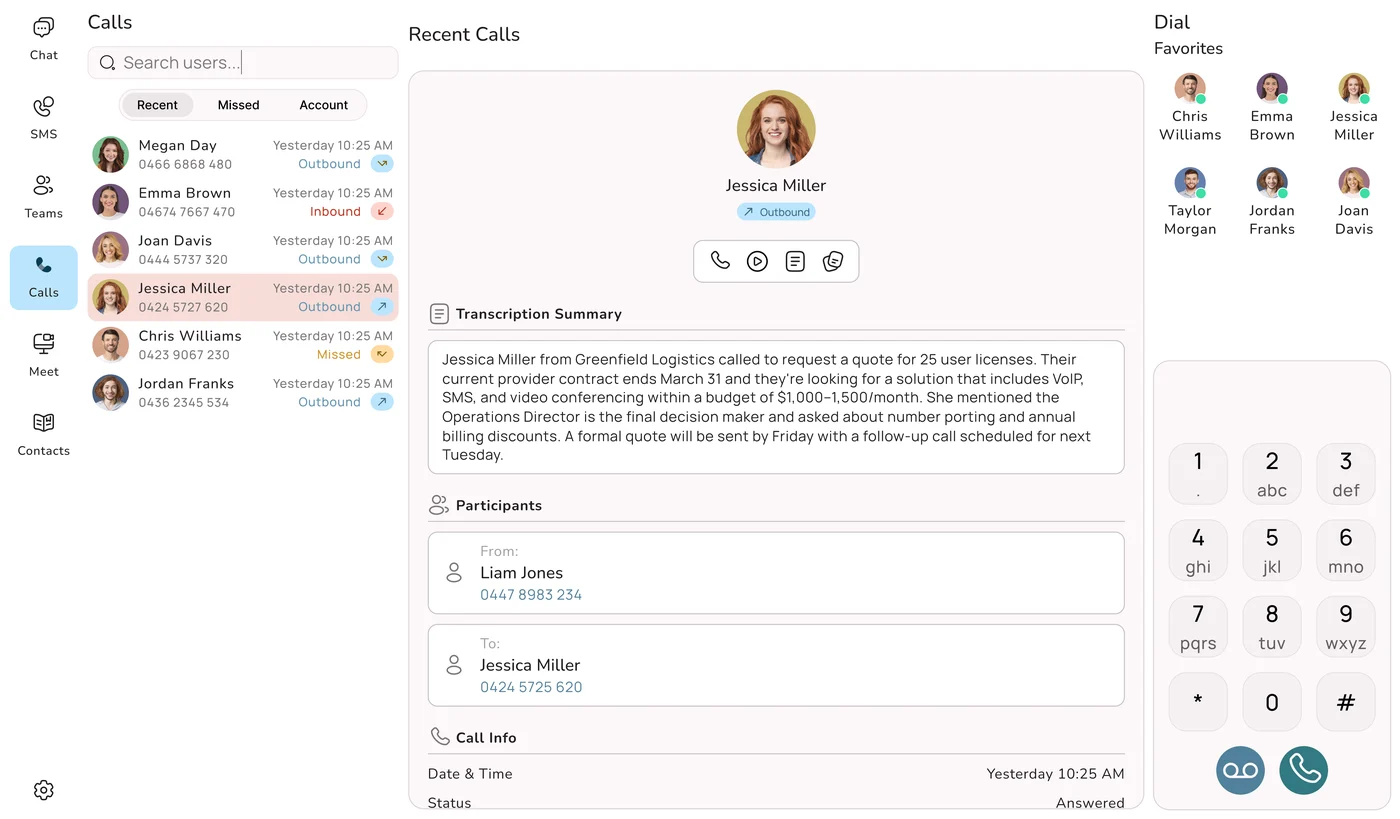
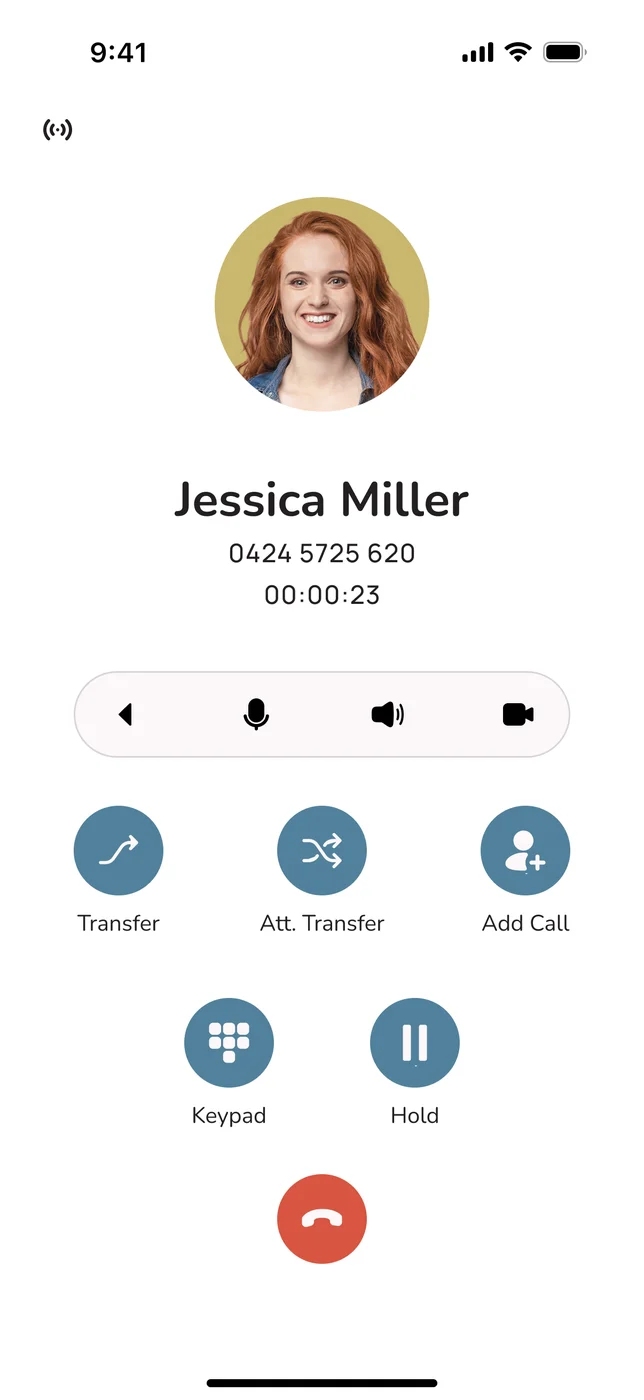
Uniden Voice is the Uniden name doing that job for business. It is a full cloud phone system with call menus, queues, ring groups, recording, voicemail to email and more than 40 features in the plan, plus apps for iOS, Android, Windows, macOS and Linux so the business number rings on a laptop or a mobile as easily as on a desk. AI Agents are built in to answer, book and take messages when the team cannot.
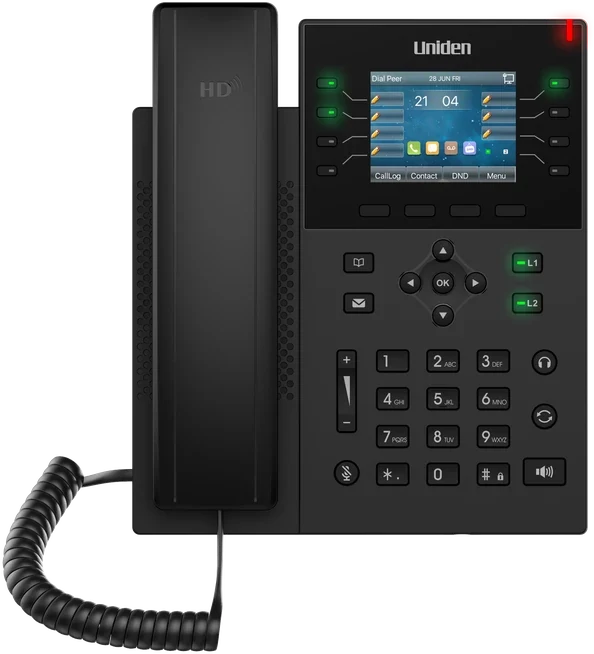
And because it is Uniden, hardware is part of it rather than an afterthought. The Uniden EVOC2 desk phone, $249 with Bluetooth, arrives already set up for your account. Plug it in and it rings. The handset, the software and the support all come from one place, which is the same promise the cordless on the bench made: you should not have to think about it. If you already have other Uniden gear in the business, our guide to connecting Uniden products to Uniden Voice shows how they fit together.
Being straight about where the name comes from
The Uniden brand was founded in Japan in 1966 and has had an Australian business since 1989. Uniden Voice, the business phone service, is Australian owned and operated, and it is designed, built, hosted and supported in Australia. We think trust starts with being clear about exactly that.
What Australian Owned and Operated Actually Means
"Australian" is printed on a lot of phone system websites. Sometimes it means an Australian sales team reselling a platform that is owned, built and run somewhere else. For Uniden Voice it means four specific things, and each one has a practical effect on your business.
Owned here
The decisions about price, features and how customers are treated are made by an Australian owned business that answers to Australian customers, not to a head office in another time zone.
Built here
The platform is designed and built in Australia, around how Australian businesses trade: 1300 and 1800 numbers, local numbers by area, nbn on the same bill and Australian rules on things like sender IDs and triple zero.
Hosted here
Calls, recordings and the details that go with them are hosted in Australia. That is shorter distances for the voice path and a simpler answer when a client asks where their information is kept.
Supported here
When you ring 1300 881 662, the people who answer are in Australia, on Australian hours, and they can see your account.
The infrastructure side of this, from carriers to data centres, is covered in detail in our piece on Australian owned network infrastructure. This article is about why the ownership matters at all.
The Problem With Platforms Run From Offshore
Many of the best known business phone platforms sold in Australia are global products from very large overseas technology companies. Some are excellent software. The issue is not quality. It is who the product is run for, and from where. When the owner, the engineers and the head office are overseas, a few things follow almost automatically.
- The roadmap is set for the biggest market. Features arrive when they suit a global customer base. Australian specifics, such as how 13 and 1300 numbers behave or how a local regulator wants something done, wait their turn.
- Prices are set offshore. Plans are often priced in US dollars or adjusted for currency, and a global price review lands on Australian customers whether or not anything here changed.
- Support follows the sun, not your business. A ticket raised at 10am in Brisbane may be answered by whoever is on shift somewhere else, working from a script, with no feel for how your business works.
- The fine print points elsewhere. Terms of service can be governed by the law of another country, which matters the day there is a dispute.
- Decisions can change overnight. A global company can sell a product line, change a partner program or switch off a feature for every country at once, and you find out by email. Our piece on what to do when your provider is acquired covers what that looks like in practice.
None of this makes a global platform a bad product. It makes it a product where an Australian small business is one customer among millions, in a market that is small by global standards. If you are weighing up specific names, our guides to Microsoft Teams Phone in Australia and alternatives to RingCentral, 8x8 and Aircall compare them fairly.
Your Obligations Do Not Move Offshore With Your Data
A business phone system holds more personal information than most owners realise: caller numbers, voicemails, call recordings, transcripts, notes, and increasingly AI summaries of what the customer said. Where that information lives, and whose law can reach it, is a fair question to ask.
Two pieces of law are worth knowing about. This is general information, not legal advice.
| Law | What it says in plain terms | Why it matters to you |
|---|---|---|
| Privacy Act 1988, APP 8 | Before you disclose personal information to someone overseas, you must take reasonable steps to make sure they handle it in line with the Australian Privacy Principles. Under section 16C you can remain accountable if they do not. | Sending customer recordings and details to an offshore platform does not move the responsibility offshore. It stays with you. See the OAIC guidance on APP 8. |
| US CLOUD Act 2018 | US authorities can require US based providers to produce data in their possession or control, even when it is stored outside the United States. | Hosting in an Australian data centre is not the whole answer if the company that controls the data is subject to another country's laws. |
Health, legal, financial and NDIS businesses tend to feel this most, because their clients ask. An Australian owned service, hosted in Australia, gives a short and simple answer to "where is my recording kept and who can get to it". For the rules on recording itself, see our guide to call recording laws in Australia, and for AI, our piece on the Privacy Act and automated decisions.
Support That Keeps Australian Hours
Trust is mostly built on bad days. The cordless phone earned it by surviving being dropped. A business phone provider earns it the morning the office internet is down, the menu is sending calls to the wrong person, or a new starter needs a number by lunchtime.
Uniden Voice support is in Australia, on 1300 881 662, Monday to Friday, 9am to 5pm AEST. You talk to people who know the platform because it was built here, not to a reseller who has to log a ticket with someone else. When the internet drops, calls can be routed to the mobile app so customers still get through, and AI Agents can answer after hours so a call at 7pm is a booked job rather than a missed one.
The customers who have moved to us say the same thing in different words. Shuriken Advisory Group runs a team of more than thirty people across Sydney, home offices and two other countries on one Uniden Voice platform. You can read their story, along with other Australian businesses on our customer stories page. Our guide to choosing a tech partner who answers when you call goes further into what good support looks like.
Five Questions to Ask Any Provider
If you are comparing providers, these five questions cut through the word "Australian" quickly. Ask them of everyone on your shortlist, including us, and ask for the answers in writing.
- Who owns the company that runs the platform, and where is it based? Not the reseller, the company whose platform it is.
- Where are my calls, recordings, voicemails and transcripts stored, and where are backups kept? All of it, including AI processing.
- When I ring support, who answers, where are they, and can they fix the problem or only log it?
- Which country's law governs the contract, and which country's authorities can compel access to my data?
- If I leave, can I take my numbers and my recordings with me, and how? Ownership of your numbers is a big one. Our piece on who owns your 1300 number explains why.
| Question | Uniden Voice's answer |
|---|---|
| Who owns it? | An Australian owned and operated business. |
| Where is it hosted? | In Australia. |
| Who answers support? | Our team in Australia, 1300 881 662, Monday to Friday, 9am to 5pm AEST. |
| Whose law? | Australian. |
| Can I leave with my numbers? | Yes. Your numbers can be ported to another provider, the same way we port them in for free. |
Where a Global Platform Can Make Sense
To be fair to the other side: if most of your staff and customers are overseas, if head office has standardised on one global collaboration suite, or if you need a feature only a large international platform has built, a global product may be the right call. Plenty of Australian businesses run them well.
For the many Australian businesses whose customers, staff and regulators are all here, though, the case for a phone system that is owned, built, hosted and supported here is a strong one. It is the same reason people kept buying the cordless on the bench: it was made for the way they actually lived, and it kept working.
Trying Uniden Voice for Yourself
You do not have to take any of this on trust, which is fitting. You can try the desktop app and the mobile app in your browser right now, without talking to anyone. When you are ready, plans start from $84.90 a month with three users included on a 36 month term, with free setup and free number porting, and your old service stays live until the port completes. Full details are on our pricing page, and the business phone system page lists every feature.