
















Two Years On: Why 3G Still Matters
It is easy to file the 3G shutdown under "old news". The towers were reconfigured in 2024, most people bought new mobiles, and life moved on. But talk to anyone who runs a shop, a clinic, a trade business or a strata building and you will hear about the week the card machine stopped working, or the call from the alarm company saying the monitoring link had dropped.
That question has not gone away. Copper phone lines have been retired, the nbn is moving more premises onto full fibre, and every network in use today will be replaced in its turn. The 3G story is worth revisiting because it is the clearest recent example of what happens when a business's tools are tied to a network it does not control, and because the fix is now well understood.
2024
the year all three major carriers retired 3G
January
TPG went first, closing its 3G network
Late Oct
Optus began switching off its 3G network
4G & 5G
networks that gained the freed-up spectrum
The Switch-Off, Carrier by Carrier
3G had carried Australian mobile calls and data for around twenty years. Rather than switching it off on one national date, each carrier ran its own closure across 2024.
| Carrier | When 3G closed | What customers had to check |
|---|---|---|
| TPG Telecom | January 2024 | Whether handsets and devices on its network supported 4G calling |
| Telstra | Later in 2024 | Phones, payment terminals, alarms and trackers still on 3G |
| Optus | From late October 2024 | The same list, plus whether 4G phones could make VoLTE calls |
The reasoning behind it was sound. Radio spectrum is limited, and 3G was using a slice that could do far more work as 4G and 5G. Reusing it gave the newer networks more capacity, speed and reliability, which benefits every business that relies on mobile data today. The trouble was how much equipment nobody realised was still on 3G.
The Walk-Around: Gear That Went Quiet
Picture walking through a typical business premises in early 2024. The mobiles in people's pockets were the obvious concern, but the bigger surprises were the boxes on walls and under counters that had been sending data over 3G for years. Here is what went quiet, and how a business could have spotted it in advance.
| Where you would find it | What stopped working | The question to ask the supplier |
|---|---|---|
| Front counter | Older EFTPOS terminals on 3G could no longer process card payments | "Which mobile network does this terminal use as its connection or backup?" |
| Alarm panel | Back-to-base security alarms lost the link to their monitoring centre | "Is our monitoring path on 3G, 4G or the fixed line?" |
| Staff and residents | Medical, personal and duress alarms could not call for help | "Has this device been certified for 4G calling?" |
| The lift | Lift emergency phones on 3G needed urgent upgrades to stay compliant | "How does the lift phone connect, and who maintains it?" |
| Vehicles and remote sites | GPS trackers, fleet telematics and remote sensors dropped offline | "What network does each tracker or sensor report over?" |
| Everything else connected | A long tail of IoT and machine-to-machine devices went dark until replaced | "Do we have a list of every device with its own SIM?" |
None of these were phones in the everyday sense, yet every one depended on the network being switched off. Many businesses found out only when something failed, then replaced hardware in a hurry on someone else's timetable.
When "4G" Was Not Enough
The part of the shutdown that confused people most involved phones that seemed perfectly modern. A handset could browse, stream and use apps over 4G and still be unable to ring anyone once 3G was gone.
The reason is VoLTE, short for Voice over Long-Term Evolution, the technology that carries voice calls over 4G. Many earlier 4G phones used 4G for data but quietly dropped back to 3G whenever a call was made. Without VoLTE, that fallback disappeared with 3G. Because some of those calls could be to Triple Zero, carriers went a step further and blocked devices that could not call over VoLTE, including emergency calls. A phone that worked on Friday could be refused by the network the following week.
What this means when you buy equipment
A label such as "4G" describes one capability. It does not promise the device will keep doing the job you bought it for when the network around it changes. The safer test is whether the thing depends on a particular network technology at all, and whether its maker can update it if that technology moves on.
Emergency Calls and the Trust Problem
The most serious fallout has been in emergency calling. Since 3G closed, Australia's Triple Zero service has had recurring problems, including some mobiles that could not connect to Triple Zero at all, and others that could not "camp on" to a different carrier's network when their own was unavailable.
Those issues sit alongside the broader run of reliability failures Australians have seen since, including the Optus Triple Zero outage that led to a Senate inquiry. Our article on choosing a dependable business phone after the Optus outage covers that in detail. Together they undermined an assumption most owners never questioned: that a call will always connect.
The 3G shutdown was not just a network upgrade. It was a nationwide demonstration that anything welded to a single generation of hardware has an expiry date you don't control. The enduring lesson of 2024
Every Network Has a Use-By Date
Step back from the details and the pattern is plain. 2G was retired. 3G was retired in 2024. The copper phone network has gone the same way. The networks in use today will be replaced too; nobody can say exactly when, but equipment bought today should be chosen on the assumption that it will happen.
The businesses that handled 3G best were not necessarily the ones with the newest gadgets. They were the ones whose important services had already moved to software delivered over the internet, which does not mind which mobile generation is live because it was never built around one.
Phone Box vs Cloud: Five Situations
The difference between a hardware-bound phone system and a cloud phone system shows up most clearly when something changes. Here is how each one copes with five situations every business eventually meets.
| What happens | Phone system tied to hardware or a line | Cloud phone system |
|---|---|---|
| A carrier retires a network | ✗ Equipment can be stranded and need replacing | ✓ Carries on over whatever connection replaces it |
| Your connection gets faster | ✗ Little or no benefit to the phones | ✓ Calls benefit from the better link straight away |
| You want a new feature | ✗ Often means new hardware or a costly upgrade | ✓ Added in software, without new equipment |
| You move premises | ~ Numbers and setup tied to the line and the box | ✓ Numbers live in the cloud and move with you |
| Planning five years ahead | ✗ A replacement date someone else will set | ✓ Keeps pace as the networks change |
The reason is structural. A cloud phone system runs in data centres and reaches your handsets and mobiles over the internet. It is not tied to 3G, 4G, 5G or copper. As the networks underneath improve, for example through the nbn full-fibre upgrade program, the phone service simply runs over the better connection. There is no box for a carrier decision to make obsolete.
A 30-Day Plan for the Next Switch-Off
You do not need to wait for an announcement to prepare. A month of steady effort puts most small businesses in a strong position.
- ✅ Week 1: make the list. Walk the premises and write down everything that connects to a network: phones, EFTPOS, alarms, lift phones, trackers, sensors. Note which ones depend on a specific network or a specific box.
- ✅ Week 2: ask the suppliers. For each item, find out how it connects and what the upgrade path is. Plan replacements on your schedule, not in a rush.
- ✅ Week 3: move the phones to the cloud. A cloud phone system keeps your numbers and features through any future network change, and is usually the easiest item on the list to future-proof.
- ✅ Week 4: add a second path. Pair your fixed internet with mobile failover on a different network, so one outage or one switch-off cannot silence the business.
- ✅ Throughout: pick local help. Choose an Australian-hosted provider with local support who can talk you through the next transition when it comes.
Uniden's Approach: Phones That Outlast Networks
Uniden has been keeping Australians connected since 1966, through every generation of communications technology, including the end of copper and the retirement of 3G. Uniden Voice over Cloud is the brand's business phone system, and it is designed so the next switch-off is something you read about rather than something you scramble to fix.
Delivered as software
Runs from Australian data centres over any internet connection, not tied to a mobile generation or a copper line.
Better with every upgrade
From nbn fibre to 5G, the service runs over the improved connection with no hardware swap.
Your numbers stay yours
Free number porting, so a change in technology never costs you the number customers know.
New features in software
AI call handling, call routing and business SMS arrive without buying new equipment.
Desk phones that connect over the internet
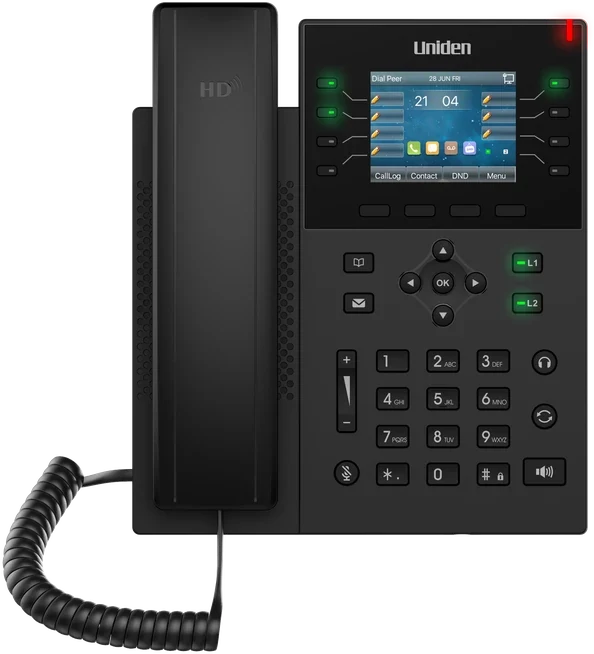
Uniden EVOC2 HD handsets plug into your network and talk to the cloud, with no mobile network inside to retire.
Australian hosting and support
100% Australian-hosted, with local support and a dedicated account manager to guide any change.
If you would rather not assemble the pieces yourself, Uniden offers a phone in a box setup with handsets ready to go.
Questions Business Owners Ask
Is 3G completely gone in Australia?
Yes. All three major carriers closed their 3G networks during 2024. TPG Telecom went first in January, Telstra followed later in the year, and Optus began its switch-off from late October 2024. The spectrum now supports 4G and 5G.
Why did some 4G phones stop making calls?
Many earlier 4G phones used 3G to make voice calls and only used 4G for data. Phones without VoLTE, which carries calls over 4G, had no way to call once 3G closed. Carriers then blocked devices that could not make calls over VoLTE, including calls to Triple Zero.
Which business equipment should I have checked?
Anything with its own mobile connection: older EFTPOS terminals, monitored security alarms, medical and duress alarms, lift emergency phones, GPS trackers, telemetry and other IoT devices. The same checklist is worth keeping for future network changes.
Is my office phone system at risk from future network changes?
It depends on how it connects. A system built around a particular line, network or on-premise box can be stranded when that technology is retired. A cloud phone system runs as software over any internet connection, so it keeps working when the networks underneath change.
Do I keep my business number if I move to a cloud phone system?
Yes. Your number is ported to the cloud platform and stays with you through moves and network changes. Uniden Voice over Cloud includes free number porting.
What is the single most useful step after the 3G experience?
Make a list of every device that depends on a specific network, then move the most important services, starting with your phones, to software delivered over the internet. Add a backup connection on a different network so one failure cannot cut you off.
Keep Reading: Reliability and Cloud Phones
The 3G switch-off is one part of a bigger change in how Australian businesses communicate. These articles pick up the other threads.