



















Got an Upgrade Offer? Start Here
Plenty of business owners will hear about a full fibre upgrade this year, from their internet provider, a neighbour or a flyer in the letterbox. The usual first worry is the phones: will the number change, will the handsets still work, and will there be a day with no calls? Before answering those, here is what has actually changed.
For several years, many premises on Fibre to the Curb (FTTC) could only get a free move to Fibre to the Premises (FTTP) if they signed up for one of the faster plans. From July 2026, NBN Co is dropping that condition. The result is that about 600,000 more single-dwelling premises become eligible without having to order a premium speed tier first.
That change sits inside a bigger program. With up to $3 billion committed by the Australian Government and over $800 million from NBN, the goal is to move hundreds of thousands of premises from copper to full fibre by 2030, including about 622,000 that are currently on Fibre to the Node.
Jul 2026
High-speed plan condition removed for FTTC upgrades
~600k
Additional FTTC premises now eligible
$800M+
NBN's own contribution to the fibre program
~100 kbps
Bandwidth one business call needs
The Copper Timetable
The free upgrade is the carrot. There is also a stick. NBN Co's Targeted Upgrade program covers roughly 130,000 homes and businesses still on FTTN and FTTC. Those premises will be upgraded to full fibre, with the first NBN-led notices expected from July 2027. Anyone in scope who does not move will eventually lose the old service.
Voice went through this first. The copper PSTN and ISDN services behind traditional phone lines have already been switched off as part of the NBN migration, which is why business calling moved onto the internet to begin with. Broadband copper is now heading the same way, and the end state is a network that is fibre all the way to the premises wherever that is possible.
⚠️ Still Running on Copper?
If your office has an old phone line limping along, or your internet is on FTTN or FTTC, do not wait for a disconnection notice to set the pace. Sort the phones and the connection on your own timetable, when you can test things properly and choose a quiet week, rather than rushing a change because a date has been set for you.
Will Fibre Make Calls Sound Better?
Honestly, for most small businesses, not by much, because calls were never the heavy user of your connection. One good quality call needs about 85 to 100 kbps in each direction. Do the sums for a busy office:
- A three-person office with everyone on the phone at once uses about 0.3 Mbps.
- Ten calls at the same time come to about 1 Mbps.
- Twenty calls at the same time sit around 2 Mbps.
Any NBN service can carry those numbers. What decides whether calls sound clear is how steady the connection is, not how fast. You want latency under about 150 ms, very little jitter, very little packet loss, and enough upload, because most connections give you much less upload than download and every word you say travels up.
That is where fibre earns its keep. On FTTN, upload can be modest and the quality depends partly on how far the premises is from the node. FTTP gives you much more upload, closer to symmetric on the right plan, and latency that barely moves. So the gain is not "my calls finally work". It is "my calls stay clear while someone uploads a 2 GB video and the whole team is in a meeting".
You don't need fibre for good calls, you need a good connection. But fibre gives you so much headroom that "good" stops being something you have to think about. The practical take on fibre and business voice
What Fibre Helps With Beyond the Phones
The phone system is only one thing sharing your connection. Card terminals, cloud accounting, video calls, backups and security cameras are all on it too. That is where the upgrade really pays off for a business:
- Room for everything at once. Calls, video and cloud software stop competing with each other at the busiest part of the day.
- Upload that keeps up. Sending large files, running video meetings and backing up to the cloud all lean on upload, which is where copper struggles most.
- Steadier performance. Fibre does not slow down with distance from a node or play up after heavy rain the way old copper can.
- Fewer faults. No ageing copper between you and the network means one less thing to corrode or get wet.
- Space to grow. Add staff, AI call handling and more devices without having to rethink the connection every year.
Phones First, Fibre Second
It is tempting to think "I'll sort the phones once the fibre is in". We would suggest the opposite order. A cloud phone system runs on whatever you have now: FTTP, FTTC, FTTN, HFC, Fixed Wireless, and even 4G or 5G. Because calls use so little bandwidth, you get good quality straight away, and when the fibre is installed the same system keeps running with more room underneath it.
The old way, a switchboard on the wall wired to copper lines, is tied to the very network that is being retired, so every change to the line means work on the phones. Once the phones live in the cloud, the line underneath can change, be upgraded or even drop out during an outage without you replacing any equipment or touching your numbers.
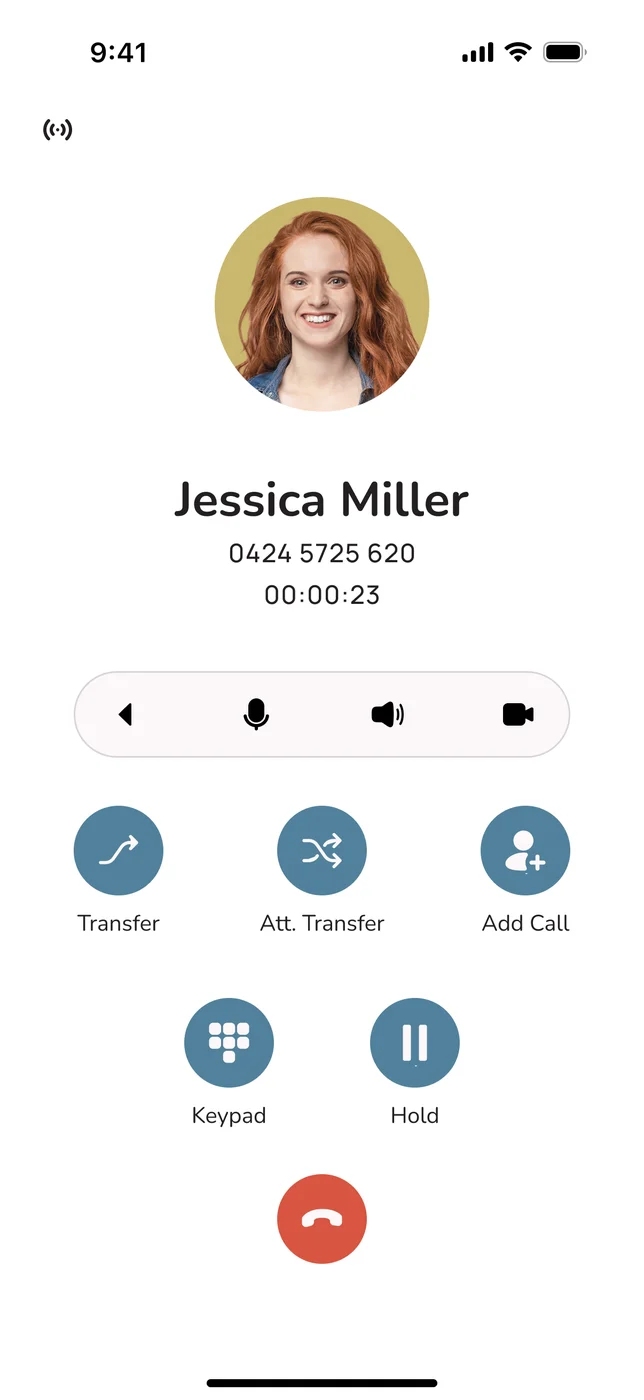
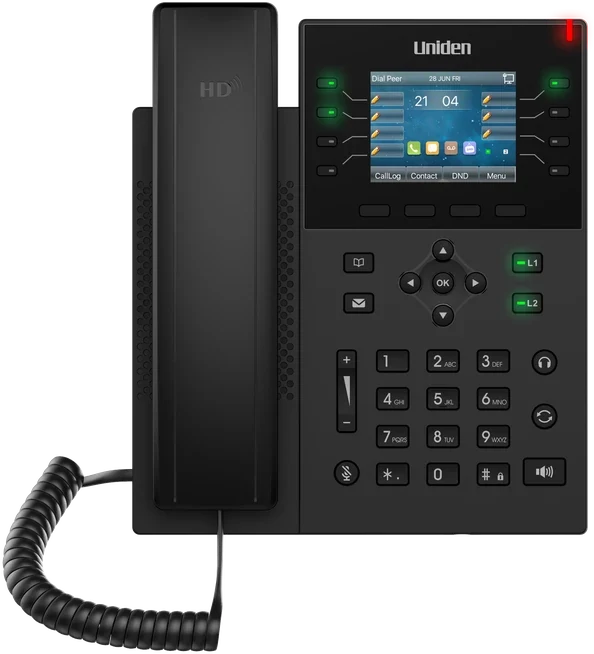
It also makes upgrade day much less stressful. If the connection is down for part of the day while the new fibre is connected, calls can simply ring through to staff on the mobile app until the office is back online. Your Uniden desk handsets plug into the new router and pick up where they left off.
The Order We Recommend
Step 1: Move the phones to a cloud system over the connection you already have. Step 2: Check whether your address qualifies for full fibre and book it in. Step 3: On the day, let calls go to the mobile app while the connection is swapped. Same numbers, same handsets, more headroom, nothing to reinstall.
Your Connection Type and What to Expect
Every NBN connection type can carry business calls. The difference shows up when you pile video, cloud apps and more people on top. Find your connection in the left-hand column.
| If you are on | Calls today | What to keep an eye on | Upgrade priority |
|---|---|---|---|
| FTTN (Fibre to the Node) | ✓ Fine for normal call volumes | Upload and quality vary with distance from the node | High, especially if the team is growing |
| Fixed Wireless | ~ Works; add mobile failover | Higher latency, and weather can affect it | Take fibre if it is offered |
| HFC (Cable) | ✓ Works well | Upload is moderate | Medium |
| FTTC (Fibre to the Curb) | ✓ Excellent for most businesses | Good upload, low latency | Now easier, with no high-speed plan needed |
| FTTP (Full Fibre) | ✓ Best available | High, near-symmetric upload; very steady latency | You are already there |
In short, even the slower connection types handle business calls comfortably right now. Full fibre takes away any lingering doubt and leaves room for the video, AI and extra staff you are likely to add.
Checking Whether You Qualify
Finding out where you stand takes a few minutes:
- Look up your address. Use the upgrade checker on the NBN website, or ask your internet provider whether an FTTP upgrade is available or planned for your premises.
- Read the conditions. The fibre build is generally free when you order a qualifying plan, and from July 2026 many more FTTC premises qualify without moving to a high-speed tier.
- Note the copper deadline. If you are on FTTN or FTTC, keep the Targeted Upgrade program in mind, with notices from July 2027, and move before you are told to.
- Sort the phones first. Get onto a cloud phone system now so the fibre install is a straightforward improvement rather than a phone system rebuild.
Where Uniden Voice Comes In
Uniden has been an Australian household name since 1966, and Uniden Voice Over Cloud is its business phone system. Here is how it fits around a fibre upgrade:
- Runs on any NBN connection now and makes full use of fibre once it arrives, with nothing to reinstall. Our guide to how Uniden Voice works on the NBN has the detail.
- Business nbn and phones from one place. If you would like one provider and one support number for both, look at the Uniden Voice business nbn bundles.
- Uniden hardware that moves with you. The EVOC2 HD desk handset, conference phones and headsets plug into the new router after the upgrade. A phone in a box option arrives ready to go.
- Hosted entirely in Australia, across redundant data centres, for low delay and dependable service.
- Your numbers stay yours, with free porting, so changing connection or provider never means a new number.
- AI, call routing and mobile-app failover included, so you gain a smarter, more resilient system and not just a faster line.
- Local support and a dedicated account manager to help plan the move from start to finish.
Full fibre is on its way to a lot more Australian businesses. The ones that put their phones in the cloud first will hardly notice the copper being switched off around them. They will simply end up with quicker, steadier communications and one less job on the list.
Questions Owners Ask
What actually changed for NBN fibre upgrades in July 2026?
NBN Co removed the rule that FTTC premises had to order a high-speed plan to get a free upgrade to full fibre. That makes around 600,000 more premises eligible. It is part of a wider program, backed by up to $3 billion from the Government and over $800 million from NBN, to move hundreds of thousands of premises off copper by 2030.
Will my business phone number change when I upgrade to fibre?
No. With a cloud phone system, your number lives with the phone provider, not on the physical line, so swapping the connection underneath does not affect it. If you are also changing provider, numbers can be ported. Uniden Voice Over Cloud ports numbers for free.
Can I run a cloud phone system on FTTN or Fixed Wireless?
Yes. Each call needs only about 100 kbps, so every NBN type can carry business calls. On Fixed Wireless it is worth adding mobile failover because latency is higher and weather can affect the signal. Fibre is not required for good calls; it adds headroom.
What happens to the phones on the day the fibre is installed?
If your phones are on a cloud system, calls can ring through to staff on the mobile app while the office connection is being swapped over. Once the new connection is live, desk handsets plug into the router and carry on. There is no switchboard to reprogram and nothing to reinstall.
Is my copper NBN going to be switched off?
If you are in scope of the Targeted Upgrade program, yes. About 130,000 premises still on FTTN and FTTC will be moved to full fibre or face disconnection, with the first notices expected from July 2027. Planning the move early avoids a rushed change.
How do I find out if my premises qualifies for a free upgrade?
Enter your address in the upgrade checker on the NBN website or ask your internet provider. The build is generally free with a qualifying plan, and from July 2026 many more FTTC premises qualify without a high-speed tier. Uniden Voice works on your connection whether or not you upgrade.
Related Guides
Full fibre is one part of a broader move to internet-based business communications. These guides pick up the other pieces.