



















The Morning, Hour by Hour
Big outages tend to make the news as a single headline. For a business, though, the order in which things happened matters, because it shows exactly when customers started failing to get through.
Around 3am: the first reports
Overnight on Wednesday 8 July 2026, a few Telstra mobile customers started noticing that calls would not connect and mobile data had stopped. At that hour most people were asleep, so the early reports were a trickle, but the fault was already spread across the country, eventually covering every mainland state capital.
After 6:30am: the commute hits
As alarms went off and people reached for their phones, the trickle turned into a flood. Outage tracking sites logged complaints in the tens of thousands. Many handsets showed "SOS" or a satellite icon at the top of the screen, which means the phone has lost its normal mobile network and can only attempt emergency calls.
Through the morning: no clear cause
Telstra posted on its website that it was "looking into an issue affecting some mobile calls and data connections" and suggested customers retry their connection. While the disruption was under way the cause was not made public, and Telstra did not confirm how many customers or which areas were affected.
~3am
When customers first reported problems
6:30am+
When complaints surged
10,000s
Outage reports lodged
0
Impact on NBN and fixed internet
⚠️ What "SOS Only" Means for a Business
A phone in SOS mode can usually still reach Triple Zero (000) by borrowing another carrier's network where there is coverage. Ordinary calls, texts and data will not go through. So if the business number rings through to staff mobiles on the affected network, customers calling in hear nothing useful, even though nobody at your end has done anything wrong.
It also went well past people who think of themselves as Telstra customers. Telstra sells wholesale access to its network, so people with Belong, Aldi Mobile and Superloop services were hit as well. And because so much infrastructure leans on mobile connectivity, some train services in Victoria and New South Wales were suspended while the network was down. That is a good reminder that what gets called a "phone outage" these days is really a connectivity outage.
Two Networks, Two Very Different Days
The detail that matters most for business is simple: the NBN and other fixed-line internet services were not affected. The fault sat in Telstra's mobile network. Office and home broadband carried on as normal all morning.
That means two businesses side by side on the same street could have had completely different mornings. One that handled its calls through staff mobiles had no phones. One that ran its phone system over the office internet connection had working phones, because its calls never touched the mobile towers. A cloud phone system carries voice as data over the NBN or a business fibre service, so it sits on the network that stayed up.
The Takeaway in One Sentence
A network outage only shuts your business down if every way a customer can reach you depends on that one network. Spread your calling across independent paths and a national incident turns into a news story you read about over lunch.
Three Businesses, Same Morning
To make this concrete, here are three typical setups we see in small Australian businesses, and how each would have fared on 8 July. These are illustrations, not real customers, but most owners will recognise one of them.
The plumber who runs everything from a mobile
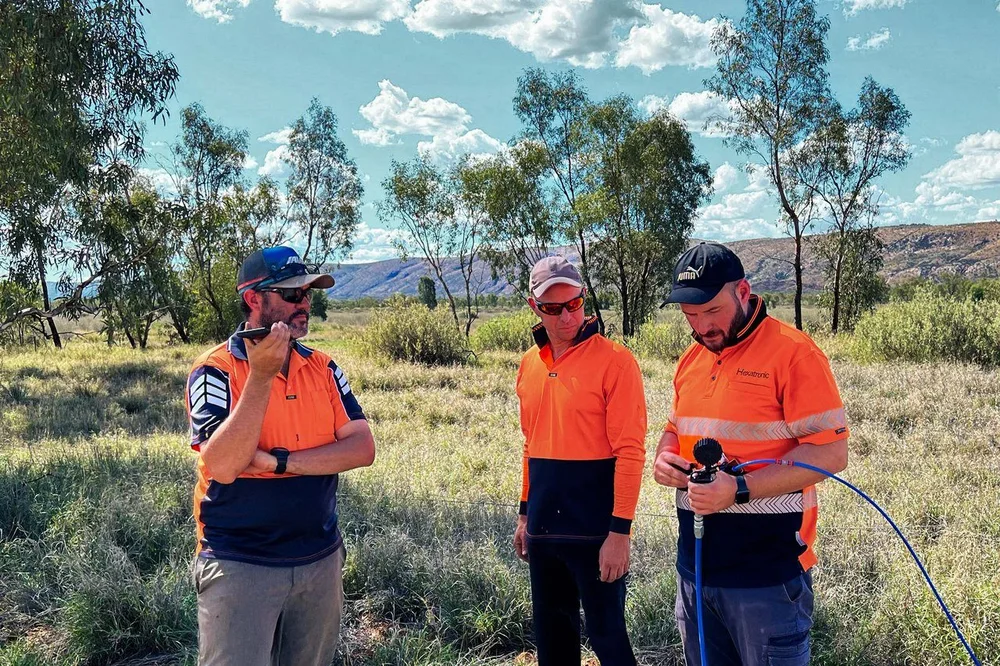
The business number is a mobile on a Telstra-network plan, and it lives in the owner's pocket. On the morning of the outage the phone shows SOS. Customers with burst pipes ring, hear nothing and call the next plumber on the list. The owner does not even find out how many calls were lost, because they never arrived.
The clinic with an old PBX in the back room
Reception uses desk phones on an ageing switchboard plugged into a fixed service. The mobile outage barely touches the front desk, which is good luck rather than good planning. But the same clinic would be silent if its fixed line dropped or the power went out, because the PBX needs both, and there is no way to send calls anywhere else.
The office on a cloud phone system
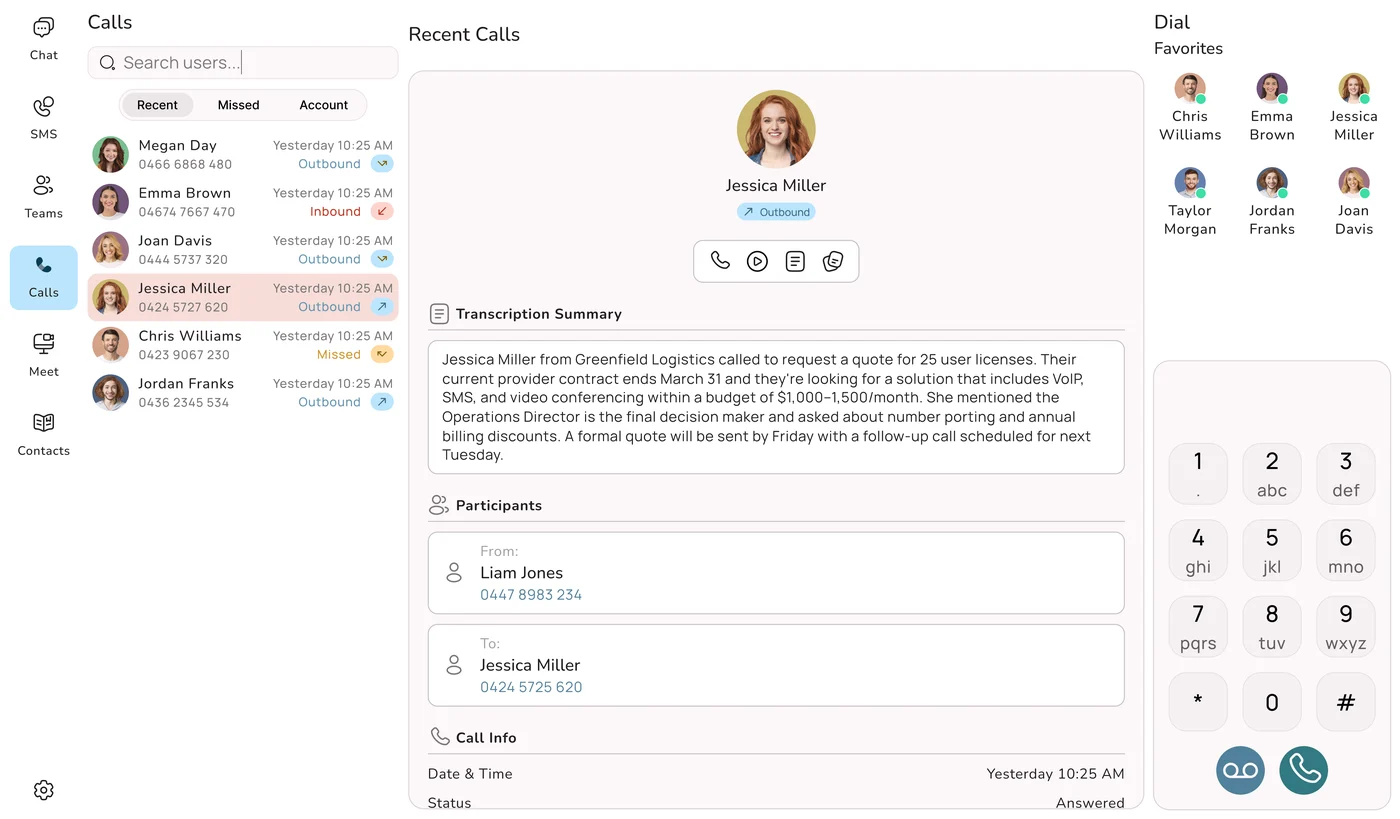
Desk handsets and staff apps all connect to a cloud system over the NBN. When mobiles drop to SOS, the desk phones keep ringing and staff on laptops keep answering. If the office internet had failed instead, a 4G backup on another carrier and the mobile apps would have carried the calls. Customers never know anything happened.
| What fails | Mobile-only business | Old PBX on a fixed line | Cloud phones with failover (Uniden Voice) |
|---|---|---|---|
| A mobile network goes down | ✗ No calls at all | ~ Depends on its lines | ✓ Calls carry on over the NBN and apps |
| The office internet drops | ✓ Not affected | ✗ Silent | ✓ 4G/5G backup and mobile apps take over |
| The power goes out | ✓ Handsets run on battery | ✗ Switchboard switches off | ✓ Calls move to staff mobile apps |
What a Quiet Phone Really Costs
A few hours without mobile service sounds like an annoyance. For a business that lives on inbound calls, the damage is real and much of it never comes back:
- The work goes to someone else. Most people who cannot get through do not wait and try again. They ring the next business on the list.
- The diary has holes. Clinics, salons and service businesses rely on the morning to confirm and fill the day. Slots that are not booked by mid-morning usually stay empty.
- Customers remember the silence, not the reason. Nobody says "their carrier had an outage". They say "I rang and nobody answered".
- You pay for idle hours. Staff who handle calls cannot do their main job, but the wages still go out.
- Urgent jobs stall. When the only contact path for staff and customers is one mobile network, emergencies get harder to coordinate.
Land all of that in the busiest part of the morning and "we're with Telstra, it wasn't our fault" does not help much, either with the customer or with the week's takings.
Part of a Pattern
It would be nice to call 8 July a freak event. It was not. Australia has had more than one large mobile outage in recent years, from more than one carrier, plus the emergency calling problems that came after the 3G shutdown and the Optus Triple Zero failure that led to a Senate inquiry.
Every network has bad days. A faulty software update, a routing mistake, failed hardware or a cut fibre cable can take down even the biggest operator. So the useful question for a business owner is not whether your carrier will have an outage, because it will. It is whether your phones can keep working when it does.
You cannot prevent your telco from having an outage. You can absolutely prevent that outage from becoming your outage. The core principle of business communications resilience
Building Layers Instead of Hoping
Shopping around for the most reliable carrier will not save you, because all of them fail eventually. What works is giving your calls more than one independent route, so that when one route stops, another is already there. We think about it as three layers.
Layer one: keep the main phones off the mobile network
Run your business phone system over the fixed internet connection, whether that is the NBN or business fibre. On 8 July, that was the network that kept going. A cloud phone system does this by default. If you would rather get the internet and the phones from one provider, Uniden Voice offers business nbn bundles.
Layer two: a backup connection on a different carrier
Add a 4G or 5G failover for the office, and put it on a different network from your main service. A backup that shares a carrier with the thing it is backing up can fail at the same moment, which defeats the purpose.
Layer three: rules that move calls automatically
The last layer is the call routing. Your system should send calls somewhere useful the moment a path drops: another office, staff apps, voicemail-to-email or an AI agent that takes down the details. Nobody should need to log in at 3am to make that happen.
What a Cloud Setup Does on a Day Like This
With an old system, the phone number, the switchboard and the line all sat at your premises, so a fault anywhere in that chain stopped the calls. A cloud phone system flips that around. Your numbers, call rules and voicemail live in redundant data centres in separate locations, and the handsets, computers and apps in your business are just ways of connecting to them over the internet. Here is what that means when a network falls over.
The number keeps answering
Your number is not tied to a cable or a box in your office, so a carrier fault or a local problem does not take it offline.
Calls change direction by themselves
Rules set ahead of time send calls to another site, staff mobiles or voicemail-to-email as soon as a path fails.
Several devices ring at once
A call can ring a desk phone, an app, a colleague and an AI agent together, so one dead device or network does not mean a missed call.
Hosted in Australia
Calls travel over local infrastructure, which keeps delay low and avoids long trips through overseas servers.
An AI agent on standby
An AI receptionist can pick up, ask the right questions and record each caller's details at any hour, so an early-morning incident does not cost you the job.
One change from your phone
Hear about an outage on the radio, open the app, change the routing once, and the whole business follows within seconds.
Put together, that is why a mobile outage like this one can pass a cloud-connected business by. Calls run over the NBN, they can fall back across separate paths, and customers keep reaching you while the mobile network sorts itself out.
Jobs to Do This Week
Whether 8 July hurt your business or you got away with it, these are the practical steps that stop the next one from silencing you. Most of them take an afternoon.
- ✅ Move the main phones onto fixed internet (NBN or fibre) instead of relying on mobiles alone.
- ✅ Install a 4G/5G backup on a second carrier, not the same one as your main connection.
- ✅ Plug the modem and router into a UPS so a brief power drop does not knock the connection out.
- ✅ Write your routing rules now for "internet down", "after hours" and "everyone busy".
- ✅ Get the mobile app on every staff phone so business calls can reach them on any network.
- ✅ Switch on voicemail-to-email and an AI agent so a caller is never simply lost.
- ✅ Pick an Australian-hosted provider with local support that will actually answer during an incident.
- ✅ Run a test outage: pull the internet cable on a quiet afternoon and check where calls go.
How Uniden Voice Handles It
Uniden is a name Australians have trusted since 1966, and Uniden Voice Over Cloud is that brand's business phone system. It was designed around the layers above:
- Hosted entirely in Australia, across redundant data centres, for low delay and resilience.
- Works over any NBN or business internet service, so your main calls do not depend on a mobile network. Our guide to how Uniden Voice works on the NBN covers the detail.
- Uniden desk phones that stay on the fixed connection, such as the EVOC2 HD handset, so reception keeps answering when mobiles drop out. A phone in a box option arrives ready to plug in.
- Automatic diversion to the mobile app, so calls follow staff to their phones if the office connection or power fails.
- Call routing and an AI receptionist included, so callers are answered or their details captured around the clock.
- Keep your current numbers with free porting, plus a dedicated Australian account manager and local support rather than an overseas call centre.
There will be more outages. The businesses that barely notice them will be the ones that chose, ahead of time, not to depend on a single network. You can make that choice now, on a quiet week, rather than during the next one.
Your Questions Answered
When did the Telstra outage start, and who was affected?
Problems were first reported around 3am on Wednesday 8 July 2026, with complaints surging after 6:30am into the tens of thousands. Telstra mobile customers across the mainland state capitals lost calls and data, and many phones showed SOS or satellite-only. Brands using Telstra's network, including Belong, Aldi Mobile and Superloop, were also affected, and some train services in Victoria and NSW were suspended.
Was the NBN down too?
No. The fault was in Telstra's mobile network. The NBN and other fixed-line internet kept working normally, so phone systems running over a fixed connection could keep making and receiving calls all morning.
My business number is a mobile. What should I change?
Put the business number on a cloud phone system that runs over your fixed internet connection, then add the mobile app to your phone so calls still reach you on the road. That way a mobile outage does not cut off your main number, and a fixed internet problem does not either, because calls can move to the app or another path.
Does a 4G backup help if it is on the same carrier?
Much less than you would hope. If your backup uses the same network as the service that failed, both can go down together. Put the 4G or 5G failover on a different carrier from your main connection so the two paths are genuinely independent.
Will my desk phones still work if the mobile network goes down?
Yes, if they connect to a cloud phone system over your NBN or business internet. Desk handsets such as the Uniden EVOC2 HD phone use the fixed connection, so they keep ringing while mobiles on the affected network show SOS. Uniden Voice Over Cloud also lets you set rules in advance to move calls to apps, another site or an AI agent if the fixed side has a problem.
How do I know if my setup would survive the next outage?
Test it. On a quiet afternoon, unplug the office internet and see where calls go, then switch off Wi-Fi on a staff mobile and repeat. If any test leaves a caller with no answer and no voicemail, you have a single point of failure to fix.
Related Guides for Staying Reachable
If this outage has you thinking about how your phones are set up, these guides cover the next steps in more depth.