

















Why a Workshop Is a Hard Place to Answer a Phone
Most phone advice for trades assumes one person in a ute with a mobile, which our phone system guide for tradies covers. A workshop is different: a fixed address, a front counter, several bays, and a team whose hands are covered in grease. That creates three problems office phone systems are not designed for:
- Nobody can hear it. Compressors, impact wrenches, a wheel balancer and the radio drown out a desk phone ringing in the office.
- Nobody can grab it. Gloves, oil and a car on the hoist mean that answering takes a minute of washing up, by which time the caller has gone.
- The wrong person answers. When the counter is empty, the call lands on whoever is nearest, and an apprentice ends up quoting a timing belt.
Our piece on what missed calls cost tradies does the maths on a call that rings out. This guide is about the workshop fix: sending each call where it belongs, so fewer need a mechanic to stop work.
The Five Calls Every Workshop Gets
General service, auto electrical, tyres or smash repair, the calls fall into the same five types, and each wants a different answer.
| Call type | Who really needs to handle it | Best tool |
|---|---|---|
| New booking: a service, a rego inspection, a set of tyres, a quote for panel work | Anyone who can see the diary | Counter, then AI agent for overflow and after hours |
| "Is my car ready?" | Nobody, if you tell them first | An SMS from the business number |
| Approval for extra work found on inspection | The mechanic or service adviser, never a bot | A recorded call, then an itemised SMS the customer replies to |
| Parts suppliers, insurers and assessors | The counter or the parts person | A separate number that skips the menu and the AI |
| After hours and weekends | The diary, not the owner's mobile | AI agent that books and texts a confirmation |
Tally a normal week. The calls only a mechanic can answer are usually a small slice, and that slice is the one worth protecting.
Replace "Is My Car Ready?" With a Text
The car was dropped at 7.30am, and from 11am the customer rings to ask how it is going. Each call is short, but each pulls someone off a job. Answer the question before it is asked, with two or three texts per job from the workshop's own number:
- On drop off: "Thanks, we have your Hilux. We will text you by 1pm with an update. [Workshop name]"
- If anything changes: "Your car needs a part that arrives tomorrow at 9am. We will call you shortly to talk it through."
- When it is ready: "Your car is ready for pick up. Total $412.50. We close at 5.30pm today. Reply to this message if you need anything."
Send from the business number, not a mechanic's mobile, so replies reach a shared inbox the counter can see. Keep each text under 160 characters where you can, because a longer message is split and each part is billed. Our guide to business SMS from your phone system covers sender IDs and templates in more detail.
Extra Work: Getting the Customer's Approval on Record
This is the call that causes disputes. The car came in for a logbook service and on the hoist you find worn pads or a cracked CV boot. You need the customer's go ahead first, and later you may need to show they gave it.
State consumer agencies are clear on the principle. Queensland's Office of Fair Trading tells car owners they should authorise all repairs, including work additional to the original quote. Western Australia's Consumer Protection says customers need to authorise any repair work based on the original quote and any agreed additional work, and suggests asking the repairer to call to discuss the extra work and costs. WA's consumer guide on motor vehicle repairs goes further: it advises against automatically authorising additional repairs, suggests asking for a written report or quote with parts and labour, and says you do not have to pay for repairs you did not ask for or did not authorise.
A phone system can turn that principle into a habit:
- Make the call from the business line, with recording on. Tell the customer at the start that calls are recorded. Explain what you found, what it costs in parts and labour, and what happens if they leave it.
- Follow up with an itemised text straight away. "ABC123: front pads and rotors, $385 parts and labour incl. GST, adds about 90 minutes. Reply YES to approve or call us on [number]."
- Wait for the reply before you start. The YES sits in the SMS thread with a date and time, alongside the call recording and its AI summary.
- No answer means no work. Leave a short voicemail, send the text, and move to the next job until they respond.
- Note it on the job card so the invoice matches what was approved.
General information, not legal advice
Repairer obligations and licensing differ by state and territory, and call recording is governed by federal and state laws. Check your state fair trading or consumer protection agency, and read our guide to call recording laws in Australia before you switch recording on. The simplest safe habit is to tell every caller the call is recorded.
One rule for any automation: an AI agent can book a car in, but it should never approve, quote or upsell extra repairs. That conversation belongs to the person who has seen the car.
Parts Suppliers and Assessors: Their Own Line
A supplier ringing about the wrong caliper, or an assessor calling a panel shop about a claim, should not wait behind a menu, an AI greeting or a queue of bookings. They are calling about work already in your bays.
Give them a second number. An extra local number on Uniden Voice is $3.90 a month. Hand it only to suppliers, assessors and fleet clients, and route it straight to the counter and parts person, with the floor handsets behind it. Your published number keeps its booking flow and AI overflow. Panel beaters can add a third number for insurer work that rings the estimator directly.
Hardware for a Loud Workshop
On the floor: cordless DECT
The W78P DECT cordless phone ($279) registers up to 10 cordless handsets to one base. Its datasheet lists a vibration alarm so you do not miss a call in noisy surroundings, noise reduction on calls, up to 21 hours talk time, and DECT coverage of up to 50 metres indoors and 300 metres outdoors. A Bluetooth headset connects for hands free calls under a car.
At the counter: a desk phone
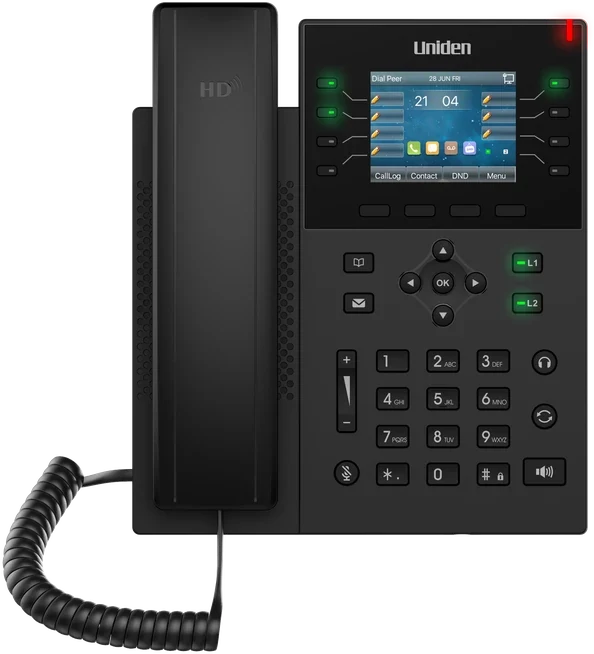
The Uniden EVOC2 ($249) is a plug and play desk phone with a 2.8 inch colour screen, seven DSS keys, Power over Ethernet, Wi-Fi and Bluetooth for a headset. A wall mount ($19.90) gets it off a crowded counter or onto the wall of the workshop office. It is a desk phone, not a cordless one.
In your pocket: the mobile app
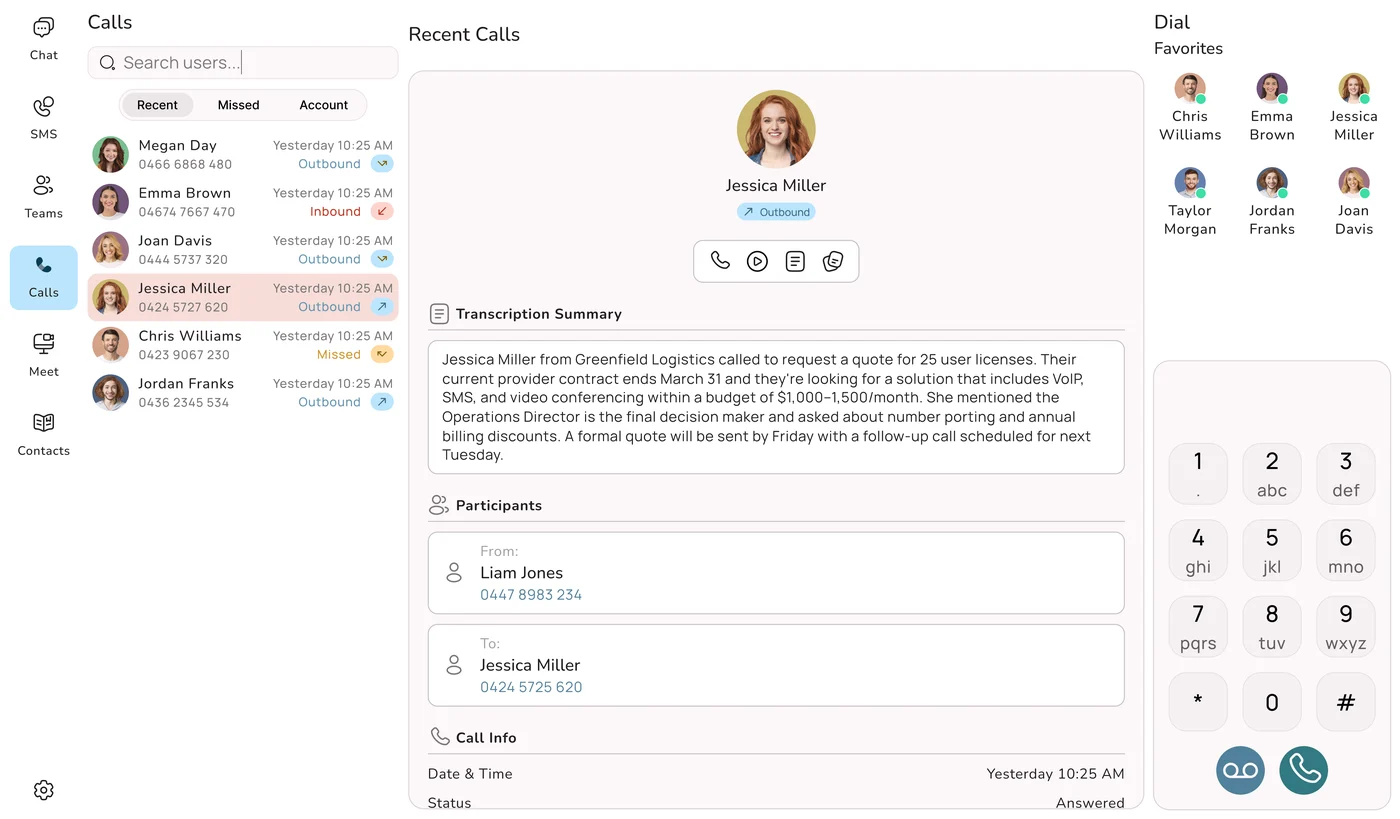
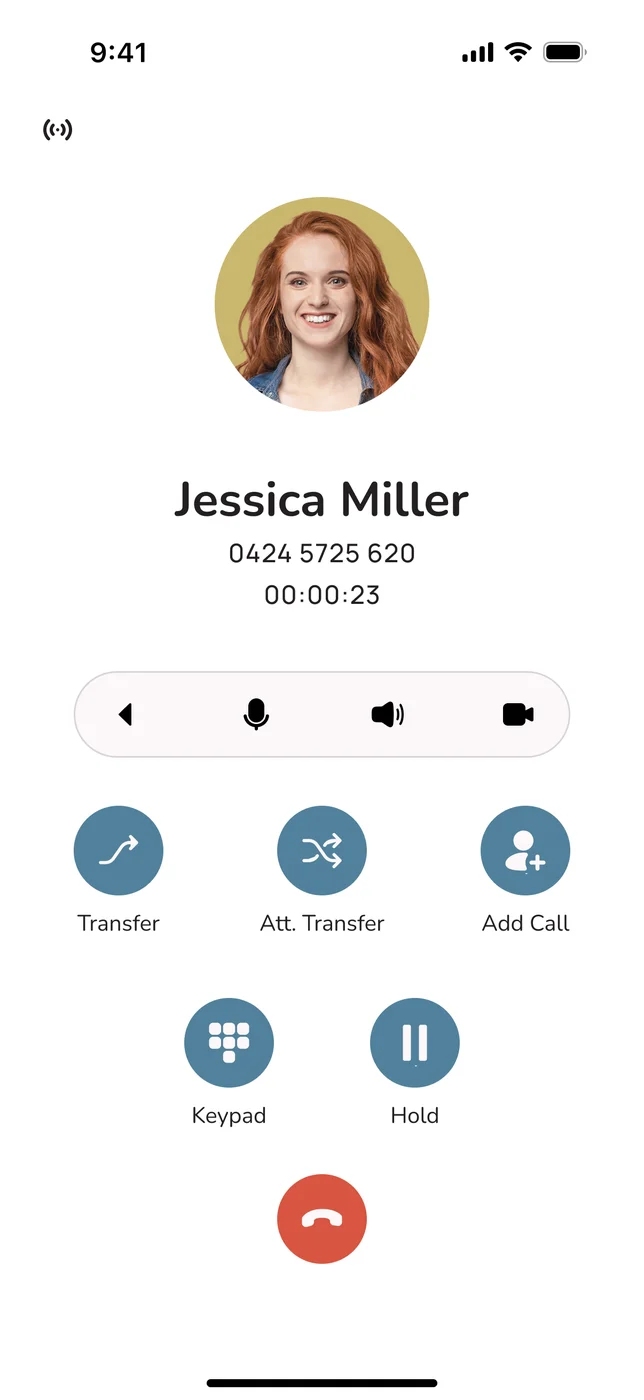
The owner and the service adviser can carry the business number on their own phone with the Uniden Voice mobile app, including SMS from the business number, so they can answer a supplier or approve a job from the yard.
If customers arrive when the counter is empty, a door intercom such as the IP66 rated A12 ($749, 90dB hands free speaker) rings the floor handsets or a mobile, so nobody wanders into the bays. In a big shed, put the DECT base mid building, not in the office, because metal walls shorten radio range. Hardware bought from Uniden Voice comes with free remote setup.
Routing: Counter First, Floor Second, AI Last
Once the hardware is in, the call flow decides who hears what. A simple order works for most workshops:
- Counter first. Customer calls ring the counter desk phone and the service adviser's app for about 15 seconds.
- Floor second. If nobody answers, a ring group adds the cordless handsets on the floor and the owner's mobile for another 15 to 20 seconds. Whoever is free first takes it.
- AI last. If it is still unanswered, the AI agent picks up, takes the booking or the message and texts a confirmation, rather than sending the caller to voicemail.
Keep any menu short: one option for "existing job" and everything else to bookings. Our guide to call flow design goes through ring groups, menus and time conditions step by step.
After Hours and Peak Times
Workshop calls cluster: Monday mornings, before school holidays and Christmas road trips, and after 5.30pm, when customers finally have time to ring and the roller door is down.
An AI agent built into the phone system, which we call Vocky, answers on your own number and books into your calendar. You give it your price list, your services and how long each job takes, and it books the right length of slot, texts the customer a confirmation and leaves you a transcript and summary. It can warm transfer to a person, and you set what it must never do, such as quote for a job it has not seen.
A time condition switches the line to the AI after hours, on weekends and on the public holidays you nominate, so nobody has to remember to divert the phones on Friday afternoon. If you are deciding which calls to hand over, our guide to which calls to automate is a good place to start. AI Agents start from $49 a week, and you can see how they work on the AI Agents page.
Worked Example: A Four Bay Workshop
Here is how a typical general repair workshop might set up. The business and its call volumes are illustrative; the prices are Uniden Voice list prices checked on 16 November 2026.
The workshop: four bays, an owner who still works on the tools, a service adviser on the counter, two mechanics and an apprentice. About 60 cars a week. One published number on the signage and Google listing.
| Item | What it is for | Price |
|---|---|---|
| Business plan, 3 users included (36 month term) | Service adviser, owner, floor handsets | from $84.90 a month |
| One extra unlimited user | Second floor handset or a parts person | $30.00 a month |
| Extra local number | Suppliers and assessors line | $3.90 a month |
| SMS, about 120 a week (two per car, illustrative) | Drop off and ready texts | $0.10 each, about $12 a week |
| Uniden EVOC2 desk phone plus wall mount | Front counter | $249.00 + $19.90 once off |
| W78P DECT cordless phone | Workshop floor | $279.00 once off |
| Number porting | Keep the number on the sign | Free with a new signup ($65 otherwise) |
| AI Agent (optional) | Overflow and after hours bookings | from $49 a week |
That puts the phone service at about $118.80 a month before calls extras, SMS and the optional AI agent, plus around $548 of hardware once off. The owner and adviser use the free mobile app, so their own phones need nothing extra.
Illustratively, if the counter fielded 30 "is my car ready?" calls a week at two minutes each, that is an hour, and many were answered by someone walking out of a bay. If two texts per car remove most of them, about $12 of SMS buys back that hour. Count your own week before you decide.
5
types of call a workshop gets, each with a different best answer
$0.10
per outbound SMS, the cheapest way to stop a status call
$3.90
a month for a separate supplier and assessor line
Setting It Up on Uniden Voice
Uniden Voice is an Australian owned and operated cloud phone system, and everything in this guide is part of the platform: ring groups that mix desk phones, cordless handsets and mobiles, time conditions with your public holidays, call recording you can retrieve from the portal, one way and two way SMS from your business numbers, and AI Agents built in. You change the call flow yourself from the portal.
Porting your existing workshop number is free when you sign up, so the number on your sign, your invoices and your Google listing stays the same. Our guide to porting your business number explains how the move works. For more on how other workshops use it, see our auto repair page.
Want the numbers first? See Uniden Voice pricing.