


















Hybrid Is Settled, and the Phones Did Not Follow
The Australian Bureau of Statistics has working from home sitting at around 36 per cent of employed people, essentially unchanged across the last three annual readings and up from about 30 per cent before 2020. Among knowledge workers the proportion is far higher. Whatever anybody thinks about it, three flat years is not a transition, it is a state.
Most businesses handled the transition with laptops, a video meeting licence and a chat tool. Those solved the visible problems. The phone system was left as it was, on the reasonable basis that calls were still connecting and nobody had escalated anything. What actually happened is that four functions the office phone provided disappeared at once, and because each failure is quiet and none of them appears on a dashboard, the business adapted around them instead of fixing them.
The tell
If a customer would struggle to reach a specific person at your business without knowing their mobile number, the phone system did not follow the team out of the building. That is the whole diagnostic, and it takes about ten seconds.
The Four Things That Break
| What the office provided | What happens without it | How you notice |
|---|---|---|
| A shared front door. The main number rang in a room where several people could hear it. | It rings on one person's app, or rings out. The main number becomes nobody's job, and whoever is conscientious becomes the receptionist by accident. | Customers say they rang and nobody answered. Your records say the call was answered, because it was, eventually, by the same person as always. |
| Visible availability. You could see who was at their desk, on a call, or clearly not to be interrupted. | Every allocation decision starts with "are you free", and half of them go unanswered for twenty minutes. | Work sits waiting. Nobody can name the delay because it is distributed across everybody's day in five minute pieces. |
| Frictionless handover. Turning around and saying "can you take this one". | A transfer becomes a message, a message becomes a callback, and a callback becomes tomorrow. | The customer explains the same thing twice. Internally this looks like a busy team rather than a broken process. |
| Ambient context. Overhearing half a call told you what was going on with an account. | Nobody knows anything they were not directly told. Handover requires a written brief nobody has time to write. | Somebody rings a customer without knowing they complained on Tuesday. |
The important thing about that list is that none of the four is a technology failure. They are all social functions that a shared room happened to provide for free. When the room goes, they have to be provided deliberately, and the phone system is where three of the four get rebuilt.
Fixing the Front Door
This is the one that costs money when it is wrong, because it is the one customers experience.
| Do this | Why |
|---|---|
| The main number rings a group, never a person | At least two people, in a defined order, wherever they physically are. A one person ring group is the most common configuration mistake in a distributed team, and it converts a flat battery into a lost customer. |
| Define what happens when nobody answers | An unbounded ring is a customer ringing your competitor within a minute. Overflow to a wider group, then to an AI answer or a monitored mailbox with a stated callback time. |
| Everyone presents the business number on outbound | Otherwise your customers slowly collect your staff's personal mobile numbers, and your phone identity migrates into private handsets you do not control. This is the failure that becomes serious the day somebody resigns. |
| Publish few direct numbers, on purpose | Every published direct line is a future single point of failure. Direct numbers make sense where the relationship genuinely is with the individual, which is fewer roles than people assume. |
| Set real hours, including for the people who work odd ones | Hours belong to the business, not to whoever happens to be awake. See the section on the right to disconnect. |
The accidental receptionist
In almost every distributed team there is one person who answers the main number more than anybody else. They did not ask for it and it is not in their role. It happens because their app is set up properly, or they are simply the fastest, and the ring group has no order or no timeout. The cost is real: their own work fragments, and when they take leave the front door is unattended and nobody has noticed there was only one person behind it. Look at answered calls by person for a month. If one name is more than double the next, you have found an unmanaged risk rather than a hard worker.
Making Availability Visible Again
Presence is the feature everybody has and almost nobody configures, and in a distributed team it does more work than any other single setting. It replaces the glance across the room.
Three things make it actually work. It has to be automatic where it can be: on a call should set itself, and a calendar meeting should set itself, because presence that depends on people remembering to update it is wrong within a week and then ignored forever. It has to be visible where people already are, in the phone app and in the messaging tool and ideally in the CRM, rather than in a portal nobody opens. And it has to be honoured by the routing, so that setting yourself unavailable actually stops calls arriving rather than merely displaying a red dot while the phone rings anyway. That last one is what teaches people to keep it accurate.
Agree on what the states mean, in one sentence each, and write it down. Available, on a call, in a meeting, focused and not to be interrupted, finished for the day. Teams that skip this end up with five people using the same icon to mean five different things, and then stop trusting any of them.
One Directory, No Personal Numbers
The single clearest sign that a phone system did not follow a team home is that staff contact each other on personal mobiles. It feels efficient and it costs more than it appears to.
Invisible
Internal calls on personal numbers produce no record, so nobody can reconstruct what was agreed or when.
Unowned
The contact route belongs to the individual. When they leave, the business cannot revoke it or redirect it.
Unfair
It puts personal availability on the line permanently, which is precisely what the right to disconnect exists to address.
The fix is unglamorous: one directory in the phone app, showing every colleague with presence, reachable by name rather than by number, on whichever device that person is currently using. It has to be genuinely easier than opening the mobile contacts list, or people will keep using the contacts list. Ease of use is the entire mechanism here, not policy.
Replacing What People Used to Overhear
This is the hardest of the four to rebuild, because in an office it was free and invisible. Three practices cover most of it.
Notes land where the customer lives. A call summary attached to the contact record in the CRM is worth more than a beautifully written note in a channel that scrolls away. If your system can write the summary automatically, that removes the discipline problem entirely, which matters because the discipline problem is the reason it does not happen. Our note on call transcription and CRM notes covers how this is normally set up.
Shared visibility of the queue, not just the outcome. Everyone who might take a call should be able to see what has already been asked, without having to request it. Half the awkward customer calls in a distributed team happen because the second person did not know there was a first call.
A short, genuinely short, daily point of contact. Ten minutes, and the agenda is what is in flight rather than status reporting. This is the only one of the three that costs time, and it replaces a surprising amount of what a room used to do.
Who Gets What Device
The instinct is to give everybody the same thing. The better approach is to match the device to how the person actually works, which is usually three groups.
| Who | Give them | Why |
|---|---|---|
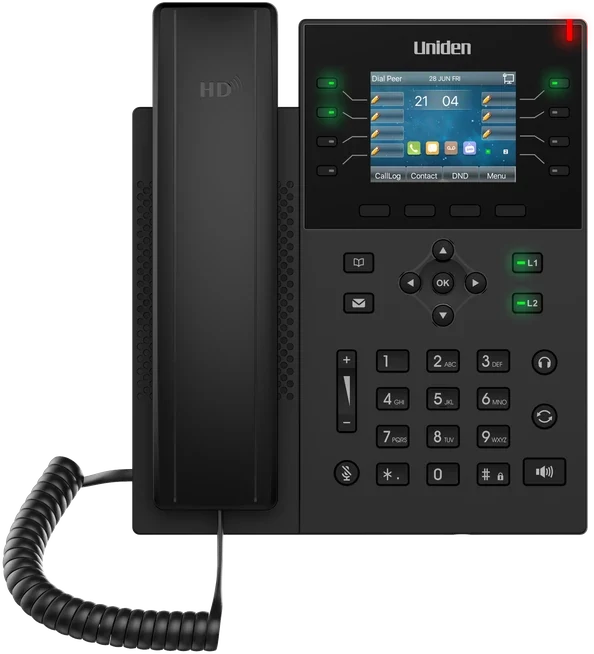
| On calls most of the day, at a fixed desk | A desk handset with a headset, plus the desktop app | Comfort over eight hours is a real factor, and a handset does not compete with the laptop for audio devices or get killed by a browser tab. |
| Mixed day, some calls, mostly other work | Desktop app plus a good USB or Bluetooth headset | Most hybrid staff sit here. The app follows them between office and home with no configuration. |
| Moving, in the field, or rarely at a desk | Mobile app, with native dialling fallback for weak coverage | The business number travels, outbound presents correctly, and calls still work where data is poor. |
| Anybody presenting or in meeting rooms | Room hardware, not a laptop on a table | Audio quality in shared spaces is the most common complaint about hybrid meetings, and it is a hardware problem rather than a software one. |
The headset is the least glamorous item on the list and it has the largest effect on how your business sounds to customers. A laptop microphone in a room with a hard floor makes a competent person sound careless. Buy proper headsets before buying anything else on this page.
Home Internet: What Matters and What Does Not
The most persistent misunderstanding about remote calling is that it needs a fast connection. It does not. A voice call uses a very small amount of bandwidth. What it needs is a consistent connection, because voice is sensitive to delay and to variation in delay, and neither of those is measured by a speed test.
| Measure | What it means | What to aim for |
|---|---|---|
| Bandwidth | How much data can move. Barely relevant for one call. | Almost any modern connection is sufficient. Stop worrying about this one. |
| Latency | Delay each way. Above roughly 150 milliseconds people start talking over each other. | Lower is better. Onshore call handling helps here, which is why it is worth asking where the platform sits. |
| Jitter | Variation in that delay. This is what makes audio sound broken up. | The single most useful number to look at when somebody reports bad calls. |
| Packet loss | Audio that never arrives. Sounds like clipped words. | Should be near zero. Often caused by wi-fi rather than the internet service. |
Nine times out of ten it is the wi-fi, not the internet
Bad home call quality is usually a wi-fi problem: distance from the access point, a neighbour on the same channel, a microwave, or a mesh node handing over mid call. Before escalating anything to the internet provider, have the person try a wired connection or move within sight of the router for one call. That test takes two minutes and resolves most reports. Our VoIP and SIP troubleshooting guide works through the rest in order.
The other quiet cause of poor audio at home is bandwidth contention rather than bandwidth shortage: somebody else in the house on a large upload, or a backup running. Prioritising voice on the router fixes it where the equipment supports it, and moving the backup to overnight fixes it everywhere else.
The Office Still Exists, and It Changed
Hybrid did not empty the office, it changed what the desks are for. Two consequences matter for phones.
Desks are shared. A handset bolted to one person's identity is now wrong most of the week. Hot desking on the phone, where a person logs into whatever handset is in front of them and it becomes their extension, is no longer a large enterprise feature and should be in your requirements. Without it people simply use their laptop, which is fine until they end up in a meeting room with poor acoustics.
Meeting rooms carry hybrid calls now. Most meetings have somebody dialling in, and the experience of the remote person is almost entirely determined by the room's microphone. This is the most reliably underspent line item in hybrid work, and the one that generates the most complaints.
Emergency Calls From Home
This is the compliance detail most businesses have not addressed, and it is genuinely important rather than a formality.
When a call is made to 000 from a cloud phone system, the address available to the emergency operator is the service address registered for that user or that service, and there is no automatic way for the network to know that the person is now sitting in a spare bedroom eleven kilometres away. In an office, one registered address covered everybody. Distributed, it does not.
| Do this | Detail |
|---|---|
| Register the address people actually work from | For staff who work at home regularly, their home address should be the registered address for their service, not the office. |
| Update it when people move | Put it in the same checklist as changing their payroll details. It is forgotten precisely because it is invisible until the day it matters. |
| Tell staff plainly what to use in an emergency | The safest instruction is to dial 000 from the mobile handset's own dialler, which uses the mobile network and its location capability. Say this in induction rather than assuming. |
| Do not let an emergency call enter any automated flow | Check it rather than assume it, on every device type. |
Our full guide to Triple Zero and cloud phone systems covers the obligations in detail, including what happens during a power or internet failure at the premises.
Hours, Time Zones and the Right to Disconnect
Australian employees have a right to refuse unreasonable contact outside working hours, and the provisions now cover small business employers as well as larger ones. In a distributed team this stops being an abstract policy question, because the boundary that a building used to enforce is gone.
Four settings do most of the work. Set hours on the business, so the phone stops rather than relying on individuals deciding not to answer. Set individual working hours where people genuinely work different ones, including staff in Western Australia or Queensland whose day does not line up with head office. Give after hours callers something real, because an AI answer that takes details and books a time removes the guilt that keeps people picking up at 9pm far more effectively than a policy does. And if some calls truly are urgent, define urgent with a specific question and run a named rotation, because vagueness here is exactly what makes everybody feel permanently on duty.
Our note on the right to disconnect for small business covers the obligation, and the practical point is worth repeating: a system with real hours is the first arrangement where the off switch is not somebody's willpower.
Security, Personal Devices and Offboarding
| Risk | Control |
|---|---|
| Personal devices carrying business calls | Individual accounts rather than shared logins, so access can be revoked for one person without disturbing anybody else. Shared logins also destroy call records and make it impossible to see who handled what. |
| Someone leaves and the app stays installed | Central revocation that works without needing the device back. Verify this works before you need it, ideally during a normal offboarding rather than a difficult one. |
| Recordings and transcripts on home machines | Keep them in the platform rather than downloaded. Set who can access them as an explicit role rather than leaving them generally readable. |
| Home networks outside your control | Accept that you do not control them and design accordingly: no reliance on network location for trust, and multi-factor authentication on the platform. |
| Voice as identification | Synthetic voice has made a familiar voice worthless as proof of identity. Approvals must not depend on recognising one, and staff should be told so explicitly. See our note on voice cloning and vishing. |
| Customer relationships living in a personal handset | Correctly configured outbound caller ID, so customers save the business number rather than an individual's mobile. Ten minutes of setup, and it is the single most valuable protection on this list. |
Onboarding Someone You Will Never Sit Next To
New starters used to learn the phone by watching. Remote starters do not, so it has to be taught in about twenty minutes on day one.
| Step | What to cover |
|---|---|
| 1. Their own account | Never a shared login. Multi-factor enabled on the first day rather than later. |
| 2. Notifications and battery | Allow notifications fully including lock screen; exempt from battery optimisation on Android. These two settings cause nearly every report of the app not ringing. |
| 3. Outbound caller ID | Confirm what shows on a call they make, by ringing a phone they can look at. Do not assume the default is right. |
| 4. Presence, and what the states mean | The one sentence per state agreed earlier. Two minutes now saves a fortnight of ambiguity. |
| 5. Their registered address | For emergency calling, plus the instruction on what to dial in an emergency. |
| 6. A test call, made by you | Ring them and confirm it rings, with the app closed and the device locked. Do not ask whether they set it up. Ask nobody anything, just ring them. |
Test with a call, never with a question
The only test that proves the notification path works is a real inbound call to a locked device with the app closed. It takes thirty seconds per person. Running it across the whole team once a quarter catches the settings that operating system updates quietly reset, which is a real and recurring cause of calls that arrive as missed calls twenty minutes late.
How We Set It Up
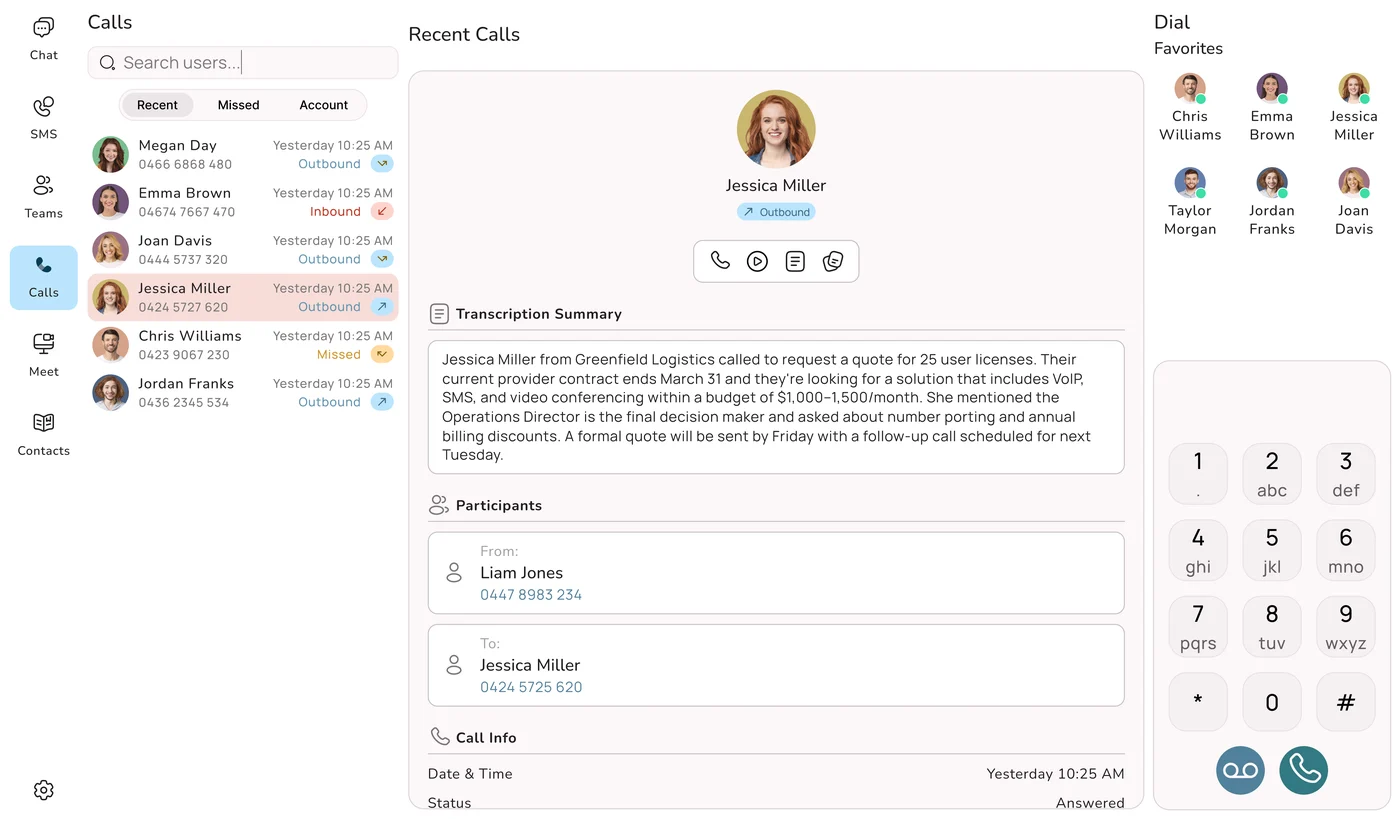
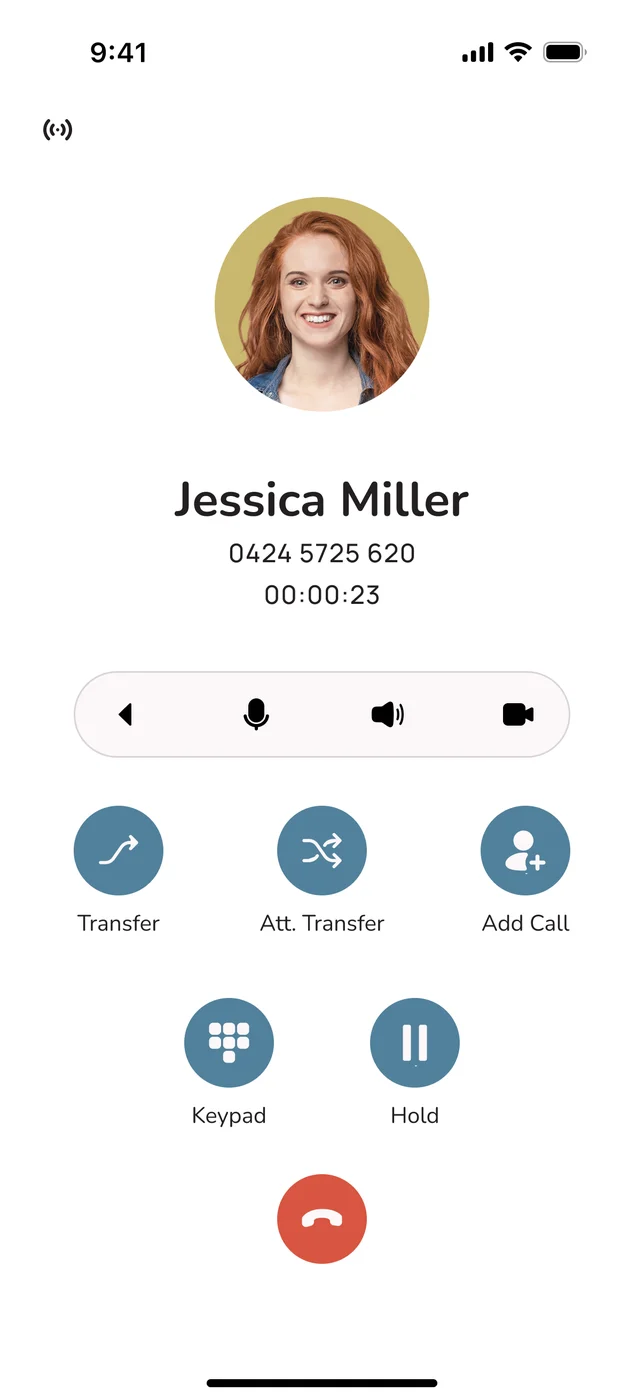
Uniden Voice treats location as irrelevant, because in a hybrid business it is. The same identity works on a desk handset, a desktop app and a mobile, with one directory, one set of presence states, and the business number on outbound wherever the person happens to be. Hot desking is included rather than being an enterprise upgrade, so a shared office works the way a shared office needs to.
The calls are handled on Australian infrastructure we run, which keeps latency low for people working across the country, and the recordings and transcripts stay onshore. When something does go wrong with a distributed team, the useful thing is usually not a feature: it is being able to ring a support number in Australia and get somebody who can see the account, the device and the call record in one place.