












How to Use This Checklist
Pick three providers. Fewer and you have nothing to compare, more and the calls blur together. Our guide to the best business phone systems in Australia is a reasonable place to build the list, and if you want to see what a complete business phone system includes before you start, our product page sets it out.
Then put the same twenty questions to each, in writing where you can. Written answers matter for two reasons. They are easier to compare side by side, and a provider that will say something on a call but not in an email is telling you something useful.
What this checklist is not
It is not a guide to moving your service across once you have chosen, which is covered in changing business phone providers without losing calls, and it is not a setup plan, which is in how to set up a business phone system. This is the part before both: deciding who to trust with your phones.
Business Phone System Contracts and Exit Terms
Start here, because the cheapest monthly price is often bought with the hardest exit.
| Question | Why it matters | Good answer | Red flag |
|---|---|---|---|
| 1. What is the minimum term, and what does it cost to leave early? | Early exit is usually the remaining months, sometimes plus hardware payout. On a 36 month term that can be most of the contract. | A clear term, a written exit formula, and the choice of a shorter term at a higher monthly rate. | "You will not want to leave." Or an exit clause that only appears in a separate terms document. |
| 2. Can I add and remove users without a contract variation? | Staff numbers change. Seasonal businesses discover this in February. | Users added and removed from the portal, billed from that day. | Adding is instant, removing waits for the term to end. |
How Uniden Voice answers this. Our headline plan price is published and quoted on a 36 month term. Setup and number porting are free, users can be added and removed as your staffing changes, and AI Agents carry no contract at all. Whatever term suits you, ask us to put the exit terms in writing, exactly as you would ask anyone else.
The Real Total Cost
Plan pricing is a starting point. The invoice is what you pay. Our business phone system cost calculator walks through every line, and these two questions bring them into the open.
| Question | Why it matters | Good answer | Red flag |
|---|---|---|---|
| 3. What will my first full month's invoice total, including calls, numbers and GST? | Per user prices exclude call charges, extra numbers, 1300 and 1800 rental and sometimes GST. | A written estimate for month one based on your user count and call pattern. | A per user price and nothing else. |
| 4. Which features I saw in the demo cost extra? | Demos are run on the top tier. Recording, queues, reporting and AI are common add ons. | "Everything you saw is in the plan," or an itemised list of what is not. | "It depends which plan you choose," with no list. |
How Uniden Voice answers this. Business phone plans start from $84.90 a month with three users included, on a 36 month term. More than forty features, including menus, queues, voicemail to email and reporting, are in the plan rather than on a price list. Calls are pay as you go or an inclusive call pack. AI Agents are priced separately, as covered below, and we will itemise the lot for your user count before you commit.
Where It Is Hosted and Who Supports It
Two questions that look like box ticking until something goes wrong.
| Question | Why it matters | Good answer | Red flag |
|---|---|---|---|
| 5. In which country are my calls, recordings and voicemails stored? | Recordings hold customer details. Health, legal, NDIS and government work often requires them to stay in Australia. | A named country for each type of data, in writing. | "In the cloud," or "with our global partners." |
| 6. Who answers when I ring support, where are they, and what hours do they work? | Your phones are how customers reach you. A ticket queue overseas is a different service from a person in your time zone. | A phone number, a location and hours you can hold them to. | Email or chat only, or "24/7" with no detail on who is on the other end. |
How Uniden Voice answers this. Uniden Voice is designed, built, hosted and supported in Australia. Support is an Australian team on 1300 881 662, Monday to Friday, 9am to 5pm AEST. Our note on Australian infrastructure versus overseas cloud explains why we think this matters.
Reliability and Internet Outages
A business phone system that runs over the internet is only as reachable as your connection. The question is not whether the internet will drop, it is what your callers hear when it does.
| Question | Why it matters | Good answer | Red flag |
|---|---|---|---|
| 7. What happens to incoming calls if our internet goes down? | Without a plan, callers get silence or an engaged tone, and assume you have closed. | Calls fail over to mobile apps or another number automatically, with no one having to change a setting. | "Your calls will go to voicemail." |
| 8. How do you tell customers about outages, and what happened in the last one? | Every network has incidents. How a provider talks about them is the useful signal. | A specific recent example and how customers were notified. | "We never have outages." |
How Uniden Voice answers this. If your office internet goes down, calls can be routed straight to the mobile app, so the business number keeps ringing on staff phones. We are also an nbn provider, so you can have the internet and the phones on one bill with one support number if you prefer.
Keeping Your Numbers
Your number is on the van, the website and every invoice you have ever sent. Losing it, even for a day, costs real work. The mechanics are in our number porting guide.
| Question | Why it matters | Good answer | Red flag |
|---|---|---|---|
| 9. Can I keep every number, including 1300, 1800 and any second lines, and who pays to move them? | Second lines and old fax numbers get forgotten, then a customer rings one. | Yes to all of them, porting included in the price. | A porting fee per number, or "we will look into that one." |
| 10. How long will the port take, and does my old service stay live until it completes? | The outgoing carrier sets part of the timetable. Gaps happen when the old service is cancelled too early. | An honest range, and a firm rule that the old service stays live until the port is done. | A guaranteed date, or advice to cancel the old service first. |
How Uniden Voice answers this. Porting is free. Your number stays live on your old service while the port is arranged, because the timing partly belongs to the outgoing carrier. If you would rather start fresh, you can choose a new local, 1300 or 1800 number.
Desk Phones, Apps and Existing Handsets
| Question | Why it matters | Good answer | Red flag |
|---|---|---|---|
| 11. Do I have to buy desk phones, and can I keep the ones I have? | Some teams want a handset on every desk, some want none. Hardware can be a large hidden cost. | Desk phones optional, a clear answer on which existing models work, and hardware priced separately from the service. | Handsets bundled into the contract so the term cannot end until they are paid off. |
| 12. Are the mobile and desktop apps included for every user, on every platform we use? | Staff on the road or at home need the business number on their own devices. | Yes, for iPhone, Android, Windows and Mac at minimum. | Apps charged per user, or missing for one of your platforms. |
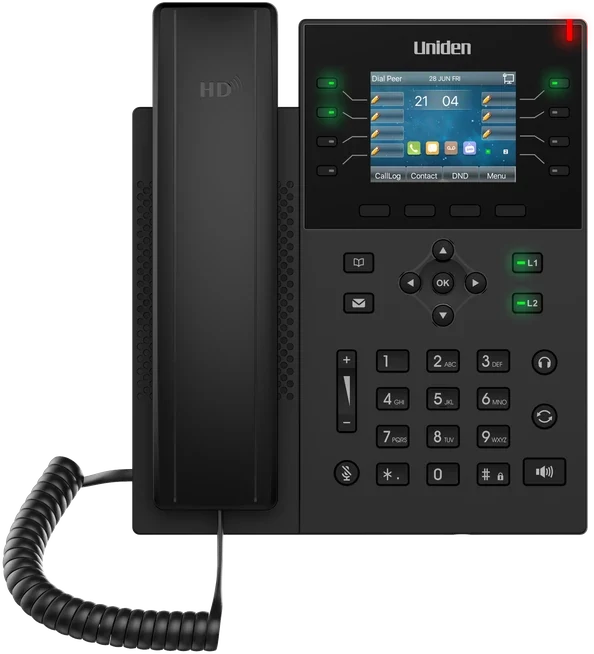
How Uniden Voice answers this. Uniden desk phones such as the EVOC2 are there if you want them, and they provision themselves over Wi-Fi or a network cable. They are not compulsory. Apps for iOS, Android, Windows, macOS and Linux are included for every user. If you have handsets you would like to keep, bring the model numbers to the demo.
AI Answering and What It Costs
Most providers now offer an AI receptionist. They are not equally useful, and they are priced in very different ways.
| Question | Why it matters | Good answer | Red flag |
|---|---|---|---|
| 13. What can the AI actually do on my calls, and can I hear it first? | Taking a message is easy. Booking a job into a calendar and texting a confirmation is the useful part. | A live example on a call you make, set up for a business like yours. | A slide deck and a recorded demo only. |
| 14. How is AI priced: per agent, per call, per minute, or a flat fee? | The model decides whether a busy month costs a little more or a lot more. | One clear model, current rates shown before you switch it on, and no contract on the AI itself. | An AI price that only appears after an "assessment." |
How Uniden Voice answers this. Uniden Voice AI is from $49 a week with unlimited agents, the builder portal and training included, and no contract. AI call minutes are charged by the minute on top, and current rates are shown before you confirm. You can hear an agent on a call before you decide.
Call Recording
| Question | Why it matters | Good answer | Red flag |
|---|---|---|---|
| 15. How do callers get told they are being recorded, and where are recordings kept and for how long? | Recording rules in Australia vary by state, and the obligation to notify sits with you, not the provider. | A recorded notice you control, a retention period you can set, and a known storage location. | "Recording is on by default, it is fine." |
The legal side is in our guide to call recording laws in Australia. How Uniden Voice answers this: recordings can be kept on the phone, on the PC or in the cloud, and the greeting that tells callers is yours to word.
Integrations
| Question | Why it matters | Good answer | Red flag |
|---|---|---|---|
| 16. Does it connect to the software we already use, and is that a setting or a project? | Click to dial and caller names from your CRM save minutes on every call. A custom integration project is a cost and a delay. | Your systems named on a list, switched on from the portal. | "We can build that," with a quote to follow. |
How Uniden Voice answers this: integrations are switched on from the marketplace in the portal, including HubSpot, Zoho, Monday, Slack, Xero, Lightspeed, Vend, Google Drive and OneDrive, and API access is available on Business and Enterprise plans.
Security and Toll Fraud
| Question | Why it matters | Good answer | Red flag |
|---|---|---|---|
| 17. How do staff sign in, and what happens to their access when they leave? | A former employee with the app still on their phone still has your business number. | Access removed centrally in one step, with no shared passwords. | Logins shared between staff, or a support ticket needed to remove a user. |
| 18. What stops someone running up international calls on our account? | Toll fraud through compromised accounts is a long standing telecommunications risk and can cost thousands in a weekend. | International barring by default, spend limits, and alerts on unusual call patterns. | "That is very rare." |
How Uniden Voice answers this: our apps use sign in with a link rather than a password, and users are added and removed from the portal. Ask us about spend limits and international barring on your account in the demo, and expect a specific answer.
Setup and Training
| Question | Why it matters | Good answer | Red flag |
|---|---|---|---|
| 19. Who sets it up, and what does training look like? | A business phone system configured badly works badly, however good the platform is. | The provider configures your hours, menus and ring groups with you, and shows your team the apps. | A login and a link to the help centre. |
How Uniden Voice answers this: we configure the account before the box ships, so the first call works rather than the fifth, and AI training is included in the AI price.
Testing a Business Phone System Before You Buy
| Question | Why it matters | Good answer | Red flag |
|---|---|---|---|
| 20. Can I use it properly before I sign? | Your staff will use the app every day. How it feels matters more than any feature list. | A working demo you can click through yourself, then a live walkthrough set up around your calls. | Screenshots only, or a trial that needs a contract first. |
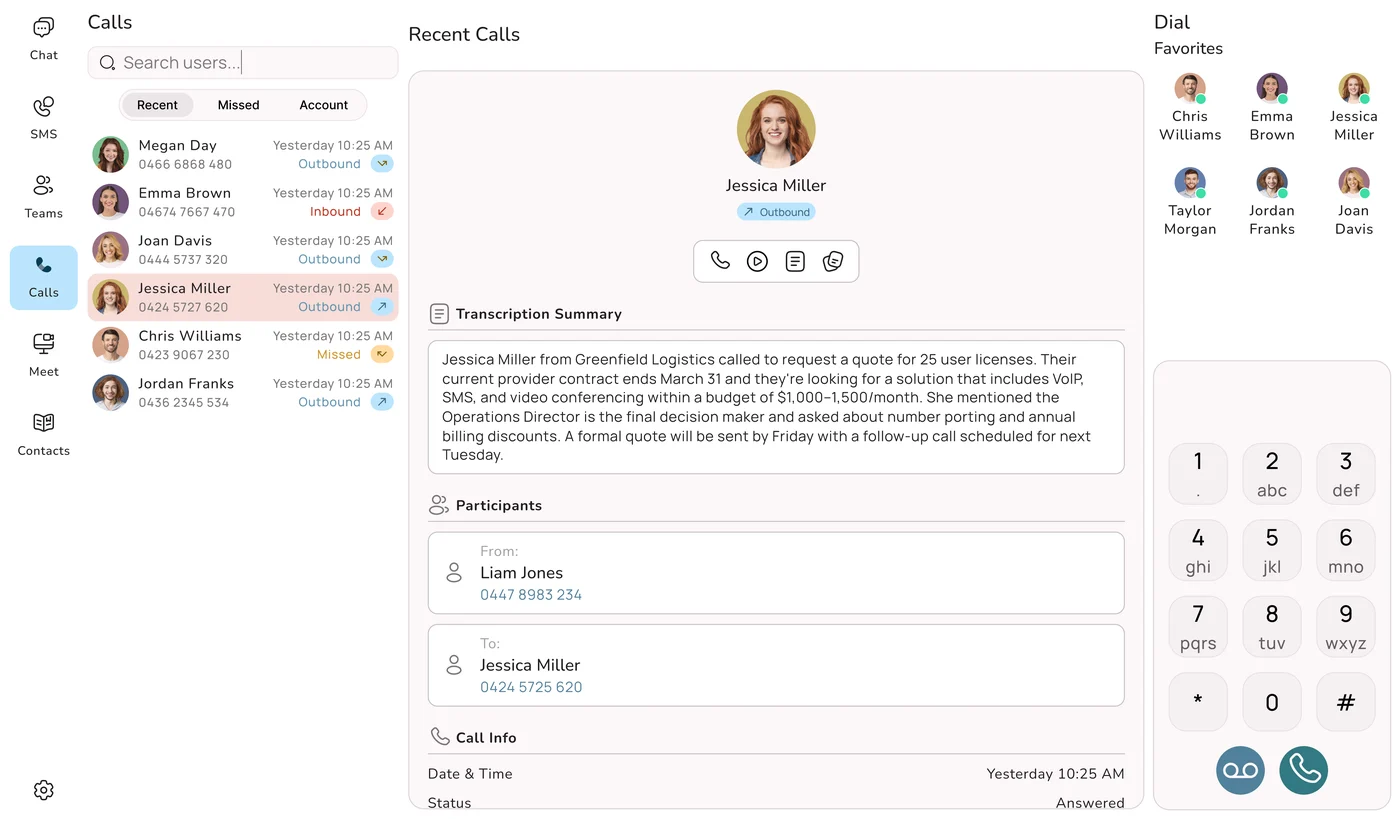
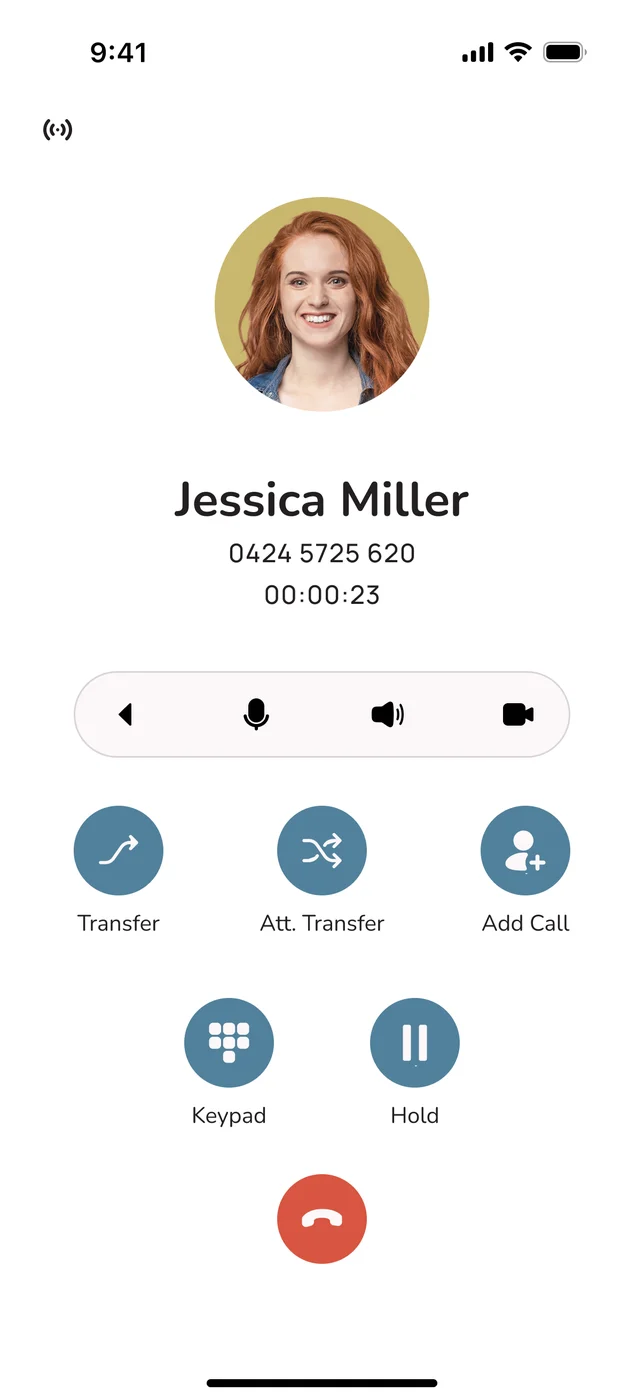
How Uniden Voice answers this. You can try both apps in your browser right now, with no sign up: the desktop app demo and the mobile app demo are fully clickable, from making a test call to opening an AI call summary. When you are ready, book a free 30 minute demo built around how your calls work today.
The Business Phone System Scorecard
Print this and fill it in during each call. Score each group 0 for a red flag answer, 1 for vague, 2 for a clear written answer. Twenty two is a perfect score, and in practice the gap between providers is usually obvious long before the total.
| Group | Questions | Provider A | Provider B | Provider C |
|---|---|---|---|---|
| Contract and exit terms | 1, 2 | |||
| Total cost and exclusions | 3, 4 | |||
| Hosting and support | 5, 6 | |||
| Reliability and outages | 7, 8 | |||
| Keeping your numbers | 9, 10 | |||
| Desk phones and apps | 11, 12 | |||
| AI answering and cost | 13, 14 | |||
| Call recording | 15 | |||
| Integrations | 16 | |||
| Security and toll fraud | 17, 18 | |||
| Setup, training and testing | 19, 20 | |||
| Total (out of 22) |
One answer outweighs the total
If a provider will not put the exit terms or the storage location in writing, treat that as disqualifying, whatever else they score. Everything else on this list can be negotiated or worked around. Those two cannot be fixed after you have signed.
For what a business phone system actually is and how the pieces fit together, start with what is a business phone system. For the evidence behind our own answers, read why Uniden Voice leads Australian business phone systems.