













The Personal Mobile Trap
According to the Australian Bureau of Statistics, Australians started 437,150 businesses in 2024 to 25, and there were 2,729,648 actively trading businesses at 30 June 2025. The overwhelming majority of the new ones began with the founder's personal mobile as the business number, for the entirely sensible reason that it was free and already working.
It is worth being precise about why that becomes a problem, because “it looks unprofessional” is the least important reason and the one people correctly dismiss.
| What actually goes wrong | When it bites |
|---|---|
| You cannot hand it to anyone. Your first hire cannot answer the business phone, because it is your phone | The moment you take on help, which is exactly when you are busiest |
| You cannot switch it off. There is no after-hours, because the business number and your personal number are the same object | Immediately, and permanently |
| You cannot see anything. No record of missed calls, no idea how many enquiries you lost last month | When you start spending money on marketing and cannot tell what worked |
| You cannot sell the business. A buyer is purchasing your customer relationships, and the phone number they ring is registered to you personally | At exit, when it is worth actual money |
| You cannot leave the carrier easily. Personal mobile plans and business services behave differently at contract end | Whenever you next want to change something |
The asymmetry that makes this the first decision
Almost every other choice on this page can be changed in an afternoon for nothing. Plans, handsets, call flows, greetings, who is in which ring group: all trivially reversible. The number is not. Once it is on invoices, signage, listings, review sites and the vehicle, changing it means telling every customer you have, and some of them will not get the message. Spend twenty minutes on this decision now rather than two years of quiet friction later.
Which Number Type to Choose
Australia gives you four practical options. There is no universally correct answer, and plenty of good businesses run two of them.
| Type | What it signals | Who pays | Best for |
|---|---|---|---|
| Geographic local (02, 03, 07, 08) | A real business in a real place. Still the strongest trust signal for anyone buying locally | Caller pays a local or included call | Trades, clinics, cafés, professional services, anyone whose customers are within a city or region |
| Mobile (04) | Reachable, informal, sole-operator | Caller pays mobile rates | Genuinely mobile operators as a second number: rarely the right primary business number |
| 1300 | Established, national, more than one person | Caller pays the cost of a local call; you pay the rest | Businesses selling beyond one city, or with customers in several states |
| 1800 | Free to call. Removes the last friction from an enquiry | You pay the whole call | Enquiry-driven and considered purchases, where one extra call is worth more than the call cost |
If you serve one area, take the local number
An 07 number tells a Brisbane customer you are in Brisbane, and that matters more than it sounds. For local trades and services, an inbound number can actually read as less local, which is the opposite of what you want.
If you serve the country, take a 1300
It is memorable, it is portable between providers and premises, and it does not tie you to a city. If you might move offices or add locations, it removes the question entirely.
If enquiries are your bottleneck, consider 1800
Free-to-call still measurably lowers the barrier for a considered purchase. Model it honestly: if one additional enquiry a week covers the call cost, the maths is straightforward.
Having two is normal and cheap
A local number for the community and a 1300 for the website is a common, sensible setup. On a cloud system both ring the same place and cost very little to hold.
One practical note that saves grief: whatever you choose, make sure it is portable. Numbers in Australia can be moved between providers under the industry Local Number Portability framework, which means the number belongs to your business rather than to whoever you bought it from. Check that the number you are given is a portable service and not a feature of a particular package. Our guide to getting a 1300 or 1800 number covers the selection and setup in detail.
How Many Lines You Actually Need
This is where new businesses most often over-buy, because the mental model comes from the era of physical lines.
The only number that matters
Not how many staff you have. Not how many phones. How many conversations happen at the same moment. For a new business with one to five people, that number is almost always two, and cloud systems are sold per user with concurrent calling included, so the question mostly disappears. Do not let anyone size you on headcount alone.
| Your situation | What you need | What you do not need |
|---|---|---|
| Just you | One user, one number, voicemail-to-email, a mobile app | A PBX. A second line. Anything in a cupboard |
| You plus a part-timer | Two users, a ring group so both phones ring | A receptionist package |
| Three to five, mixed office and field | Per-user apps, a simple menu, after-hours routing | Desk handsets for the field staff. They have phones |
| Five to fifteen, real reception | A queue rather than a ring group, basic reporting, call recording if you take orders | A contact centre licence |
The reason this matters commercially is that phone systems are one of the few business purchases where buying ahead of your needs provides no benefit at all. A cloud service adds a user in about ninety seconds. There is no reward for pre-buying capacity and no penalty for adding it the day you need it.
What to Buy, and What to Skip
The short version: probably nothing, at first.
| Item | Verdict | Reasoning |
|---|---|---|
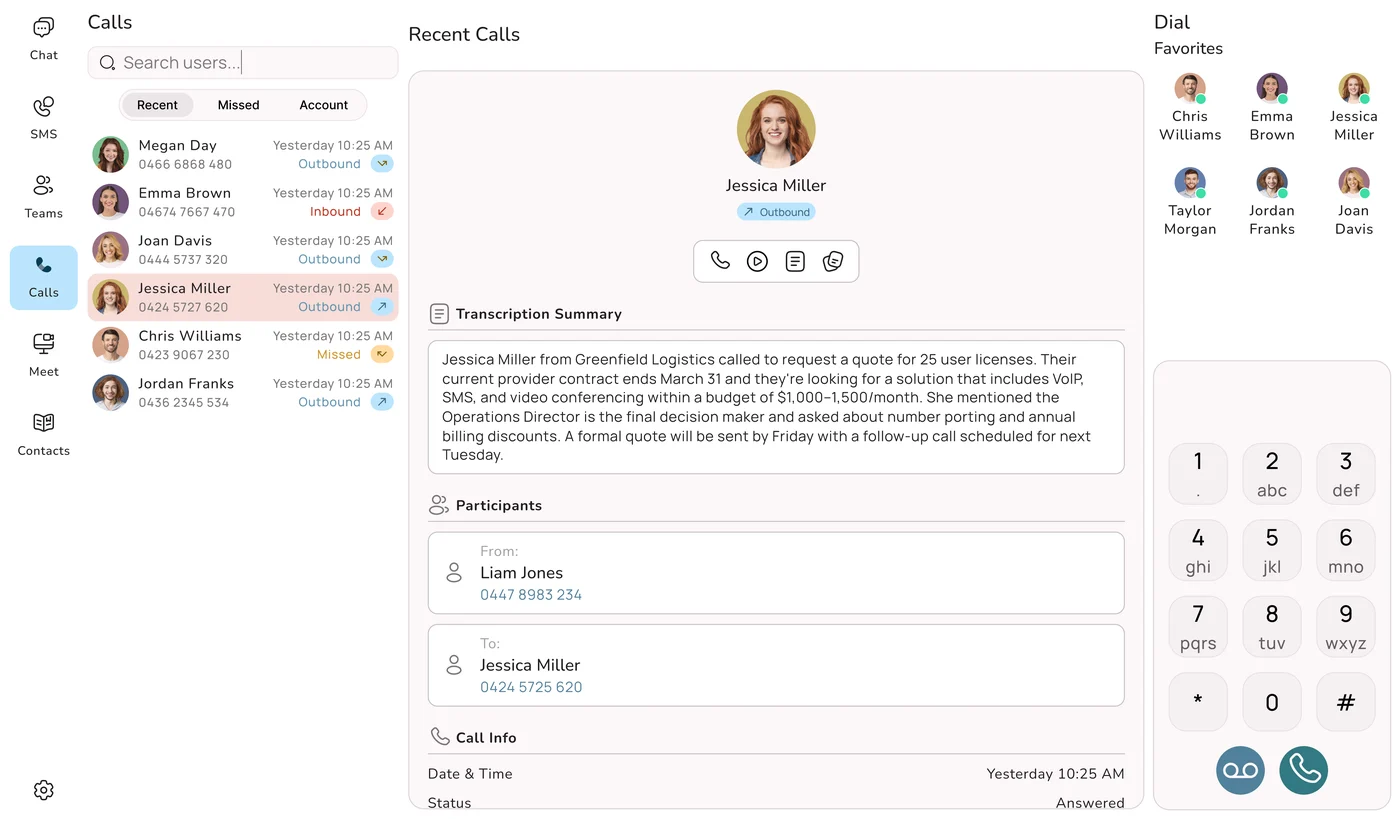
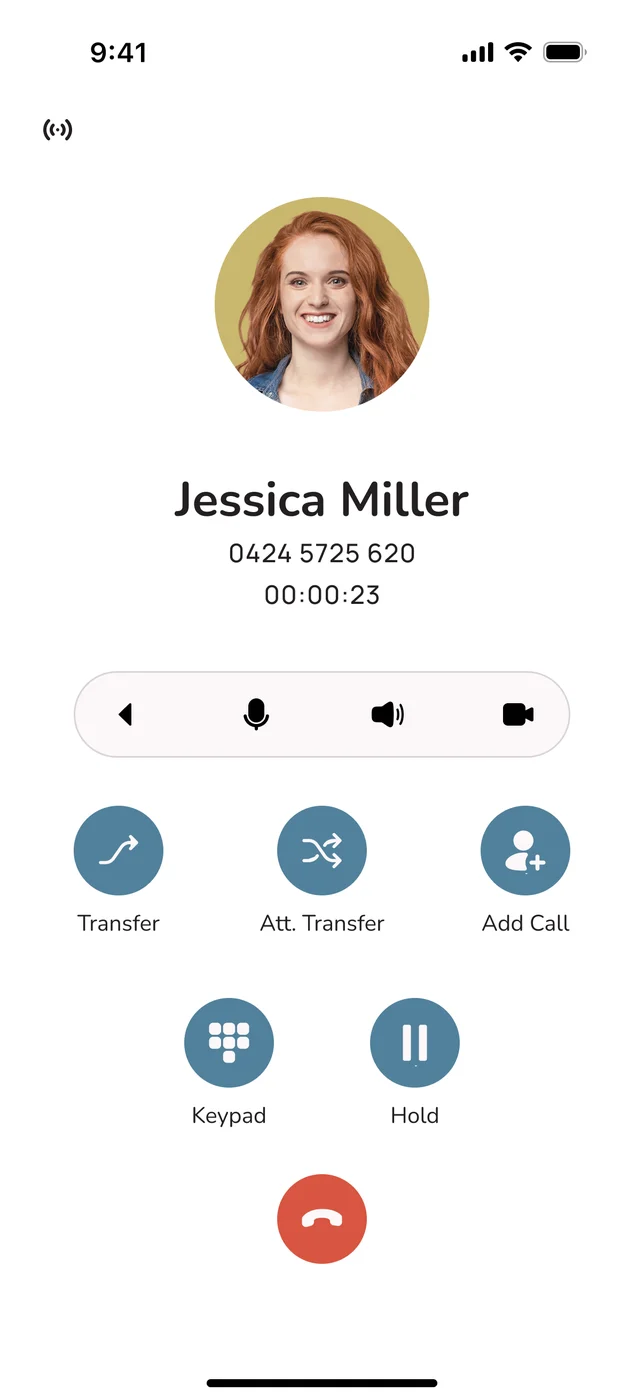
| Softphone apps on the phones and laptops you own | ✓ Start here | This is a complete business phone system. Calls, transfers, hold, voicemail, and your business number displayed on outbound calls from a personal handset |
| A decent headset | ✓ Buy one per person who takes calls | The cheapest quality improvement available. Callers hear the difference immediately and it costs less than a month of most plans |
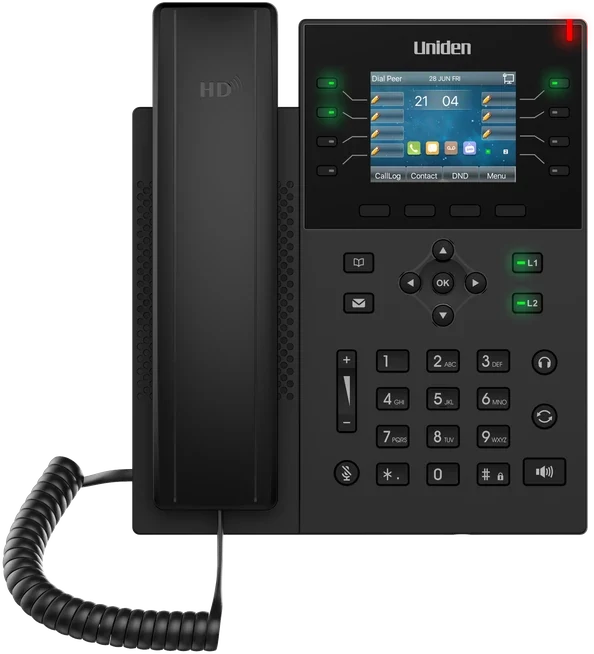
| Desk handsets | ~ Only for desks | Genuinely better for someone on the phone all day at a fixed position. Pointless for field staff, and a waste for anyone who works from a laptop |
| A cordless handset | ~ Situational | Excellent in a workshop, warehouse, clinic or café where someone moves around inside one building |
| An on-premise PBX | ✗ Skip | A capital purchase, a maintenance liability and a single point of failure, solving a problem a new business does not have |
| A second physical line “for backup” | ✗ Skip | Redundancy on a cloud system comes from routing to mobiles, not from another copper service |
| A fax number | ~ Only if a regulator or a supplier insists | Some health and legal workflows still do. If so, take an electronic fax service rather than a machine |
$0
Hardware needed to start
2
Concurrent calls, typically
1
Decision that is hard to undo
90s
To add a user later
If you do want handsets, buy ones that arrive pre-provisioned: they plug in and work without anyone configuring them. Our piece on plug-and-play handset provisioning explains why that matters more than the handset's feature list.
The Setup Week, Day by Day
None of this is a full day's work. It is spread across a week because a couple of steps involve waiting.
| Day | Do this | Why now |
|---|---|---|
| Day 1 | Choose the number type. Order the number. Decide whether you want a second one | Everything else depends on it, and it is the only irreversible choice |
| Day 1 | Set your emergency service address for the location the phones are used at | This is what a Triple Zero operator sees. Do it before you forget it exists |
| Day 2 | Install the app on every phone and laptop. Make a test call out, and check the number that displays | Catching a wrong outbound caller ID now saves confusing your first fifty customers |
| Day 2 | Set business hours and record the after-hours greeting | Ten minutes. Prevents the most common bad first impression there is |
| Day 3 | Voicemail-to-email, and a missed-call SMS auto-reply | The highest-return automation available to a new business, and it takes minutes |
| Day 3 | Add anyone else who needs to answer. Build one ring group | So the business is not dependent on one person's phone being charged |
| Day 4 | Publish the number: website, Google Business Profile, invoices, email signature, socials | Do it once, everywhere, from a written list, so nothing carries the old number |
| Day 5 | Test properly. Ring from an outside mobile, in hours and out of hours. Leave a voicemail. Miss a call on purpose | Testing the paths you designed is different from testing the path you use |
| Week 2 | Look at your call report. How many came in, how many were missed, when | This is the habit that turns the phone into a management tool instead of a bill |
The Five Call Flows to Configure
“Call flow” sounds like something for a call centre. It just means: what happens to a call in a given situation. There are five, and a new business should have an intentional answer to each.
1. In hours, someone free
Ring the right people at once, or in a short sequence. Two or three rings before it moves on. Nothing clever required.
2. In hours, nobody answers
Voicemail is the floor, not the answer. Add an automatic SMS: “Sorry we missed you, we'll call back shortly.” This alone recovers work that would otherwise go to whoever the customer rings next.
3. After hours
A greeting that states your hours and what to do now, then voicemail to email. If your trade has genuine emergencies, add a path for them, and only for them.
4. Public holidays and closures
Set it in advance for the year. The business that answers correctly on Australia Day looks organised for a cost of about five minutes annually.
5. When something is wrong
If your internet is out, calls should route to a mobile automatically. Configure it on day one, when you are calm, not during the outage.
The optional sixth
An AI receptionist that answers, takes details and books appointments outside hours. Not essential on day one, but it converts flow two and three from "we missed it" into "we captured it".
Flow two is the one that pays. For a trade or service business, missed calls are the largest quiet revenue leak there is, and the fix is a setting rather than a project: what missed calls actually cost works the numbers through.
Seven Expensive Early Mistakes
| Mistake | What it costs | Do this instead |
|---|---|---|
| 1. Using your personal mobile as the business number | The whole list at the top of this page, plus a painful migration in year two | Get a business number on day one. Keep your mobile as your mobile |
| 2. Publishing before testing | Cards, signage and listings carrying a number that rings the wrong place | Test from an outside mobile before anything is printed |
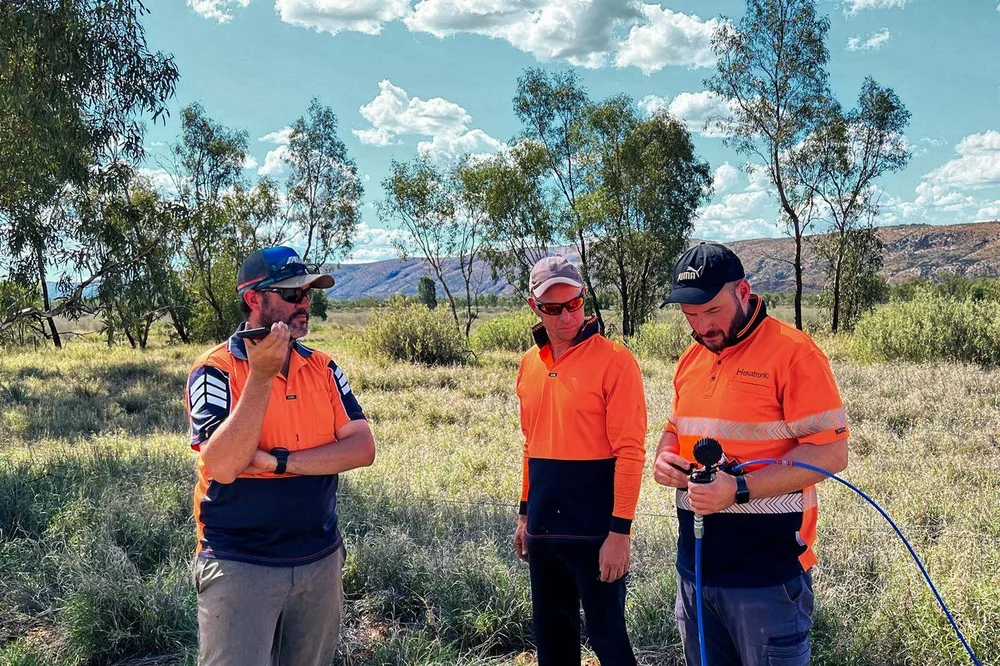
| 3. Buying handsets you do not need | Hundreds of dollars of desk phones for people who work from a ute | Apps first. Buy hardware when a specific person at a specific desk needs it |
| 4. No after-hours message | Every out-of-hours caller hears endless ringing and forms a view | Ten minutes on day two |
| 5. One person owns the account | Nobody can change anything when that person is unreachable | Two administrators from the start, even in a two-person business |
| 6. Skipping the emergency address | A safety problem that only reveals itself in an emergency | Set it on day one and check it whenever you move |
| 7. Signing a long contract for a business you have not run yet | Being locked into a size and a shape you guessed at before you had customers | Start on terms you can change. You do not yet know what you will need |
And one that is not obvious
Do not use a number you do not control: a number supplied as part of a website package, a marketplace listing or a booking platform. When you leave that platform, you may not be able to take the number with you, which quietly makes the number a reason not to leave. Ask one question of any supplier offering you a number: is this service portable to another provider?
What Changes at 5, 15 and 50 People
Worth knowing now, because the choices you make in week one determine how smooth these transitions are.
| Size | What changes | What you should already have |
|---|---|---|
| 1 to 4 people | Nothing much. Everyone answers everything | A business number, apps, after-hours, missed-call text |
| 5 to 15 | A simple menu becomes worthwhile. Reception emerges as a real role. You start wanting reports | A ring group that can become a queue without changing the number |
| 15 to 50 | Queues, call recording, CRM integration, hold-time reporting, someone accountable for the phones | A platform where those are settings rather than upgrades |
| 50+ | Service levels, workforce planning, quality assurance, multi-site routing | A provider that did not need replacing to get here |
The practical implication is the same at every step: choose a platform where growth is a setting, not a migration. The cost of a phone system is rarely the monthly fee: it is the two or three times you replace it because you outgrew a decision made in a hurry.
The Day One Checklist
| ✓ | Item |
|---|---|
| 1 | Business number ordered, and confirmed portable |
| 2 | Outbound caller ID shows the business number, not a mobile |
| 3 | Emergency service address set for each location |
| 4 | App installed on every device that will answer |
| 5 | Business hours configured |
| 6 | After-hours greeting recorded and tested |
| 7 | Voicemail to email working, to an inbox someone reads |
| 8 | Missed-call SMS auto-reply switched on |
| 9 | Two administrators on the account |
| 10 | Public holiday routing set for the next twelve months |
| 11 | Failover to mobile configured for an internet outage |
| 12 | Number published everywhere from one written list |
If you only do three things
Get a business number that is not your mobile. Record an after-hours greeting. Turn on the missed-call text. That is under an hour of work, it costs almost nothing, and it puts you ahead of the substantial majority of the 437,150 businesses that started last year.
When you are ready for the next layer, the best phone systems for small business in Australia compares the options properly, what a business phone system costs sets the budget expectations, and how to start a business in Australia covers everything that is not the phones.