



















Why the Renewal Date Matters More Than the Price
If you want to save money on your business phone system, the most useful number is not on the price list. It is the date your current contract ends. Leave a month before it and the exit cost is usually small or nothing. Leave a year before it and you may be paying out most of a year. Miss it and many contracts roll on, sometimes onto a new term, without anyone deciding anything.
So the first job is to find the contract, or ask your provider in writing for three things: the end date of the minimum term, the notice period, and what happens if you do nothing. Under the industry's consumer protections code, the ACMA says every telco must publish a critical information summary for each plan it sells, covering minimum monthly charges, how long the contract lasts and whether there are early termination fees (ACMA, 1 November 2023). Ask for the one that applies to your plan. It is usually the fastest way to see the exit terms in plain English.
Put a reminder in the calendar
Set it for three months before the end of the term. That leaves time to do this audit, get quotes, give notice and move, without paying for a month you did not need.
What to Put on the Desk
You need about an hour and last month's paperwork. Not a summary, the full invoices with every line on them.
- The phone bill, including any separate bill for a 13, 1300 or 1800 number.
- The internet bill, even if it comes from a different company.
- Any lease or rental agreement for handsets or the phone system itself, with the end date and payout figure.
- The maintenance invoice for an on premises or self hosted PBX, if you have one, and any IT callouts for phone problems in the last year.
- Your card or bank statement, to catch subscriptions that never reach the phone bill: a bulk SMS service, a conferencing tool, a call recording app.
- A list of the people who actually make and take business calls today.
If you would like current market prices to measure against, our guide to business phone system costs in Australia has them. This audit is about your own bill.
The Seven Places a Business Phone Bill Leaks
Go through the bills with a highlighter. For each item below, write down the monthly amount and whether a modern business phone system would include it, replace it, or leave it as a separate cost.
1. Line rental
A charge per line, every month, whether the line rings or not. Older systems were sized by lines, so a business that once needed four simultaneous calls may still be paying for four lines it now rarely fills. A cloud system is priced per user instead, so the line count stops being a cost of its own.
2. Per minute calls and 13/1300 charges
Look for per minute or per call charges to mobiles and national numbers, and on any 1300 or 1800 number, the monthly rental plus the per minute charge you pay for inbound calls. Add up a typical month. If calls are a large slice of the bill, ask every provider you compare how they charge for your actual call pattern, not a sample one.
3. Handset and system leases
Leases are easy to forget because they often sit with a finance company, not the phone provider. Note the monthly amount, the end date and the payout figure. Then count the handsets against the people. A lease on six phones for three staff is paying for three ornaments.
4. Maintenance on an on premises or self hosted PBX
A PBX in the comms cupboard, or one running on a server you look after, carries costs that never appear on the phone bill: a maintenance contract, licence renewals, an IT callout when the menu needs changing, and eventually a replacement. If the system is old, our piece on the signs it is time to upgrade covers the warning signs. For this audit, just write down what it cost you in the last twelve months and divide by twelve.
5. Separate internet and phone bills
Two providers means two bills, two support numbers and, when something breaks, two companies who can each say it is the other one. Taking both from one provider does not always cost less, so check the numbers. Our guide on saving money with one provider sets out when it does.
6. Users who left
Compare the users, extensions or seats on the bill with your list of people. Staff who left last year, a temp from the busy season, a desk that became a storeroom. On a per user plan each one is a monthly charge for nobody.
7. Overlapping subscriptions
This is the one owners find on the card statement rather than the phone bill: a separate SMS tool for appointment reminders, a conferencing subscription, a call recording app. Many cloud phone systems now include business SMS and other features in the plan, so check which of your extras are already covered before you renew any of them.
Worked Example: Six Desks, Three People
Here is how the audit might look for a small office that had six staff a few years ago and now has three. Every figure in this example is illustrative. It shows the method, not anybody's real bill, and your numbers will differ.
The office has an on premises PBX and six desk phones on a lease with eight months left, two phone lines, a 1300 number, a maintenance contract on the PBX, a separate SMS tool for reminders and a conferencing subscription. The internet comes from another provider and is left out of the sums to keep them simple.
| Monthly cost (illustrative) | Today | After moving |
|---|---|---|
| Phone system, 3 users, apps included | n/a | $84.90 |
| Line rental, two lines | $70.00 | $0.00 |
| Calls to mobiles and national numbers | $85.00 | $40.00 (allowance) |
| 1300 number, rental and inbound minutes | $40.00 | $29.90 |
| Lease on the PBX and six handsets | $95.00 | $0.00 |
| PBX maintenance contract | $55.00 | $0.00 |
| Separate SMS tool | $29.00 | $15.00 (messages sent from the phone system) |
| Conferencing subscription (kept) | $25.00 | $25.00 |
| Total per month | $399.00 | $194.80 |
The "after" column uses figures from our own price list: the plan from $84.90 a month with three users on a 36 month term, a 1300 number at the $19.90 a month listed for an additional 1300 or 1800 number (check the price for your first one with us), with inbound 1300 calls at 5 cents a minute (about 200 minutes here), and outbound SMS at 10 cents a message (150 messages). The call allowance is a guess the office would replace with its own call history. The conferencing tool stays because the team uses it for video with clients, and an honest audit only removes what is genuinely duplicated.
The monthly saving is $204.20. That is the number that goes into the payback sum.
Working Out Payback, Exit Fees Included
A monthly saving only matters once it has paid back what it cost to get it. Payback is one sum:
Payback in months = one off cost of moving / monthly saving
The one off cost of moving is where owners undercount. Include all of these:
- Exit fees on the phone contract, if you leave before the end of the term.
- Lease payouts on handsets or the old system.
- New hardware, if anyone needs a desk phone. Many staff will be happy on the app.
- One month of overlap, because the old service stays live until the number port completes.
- Setup and porting fees, if the new provider charges them.
For the six desk office:
| One off cost (illustrative) | Amount |
|---|---|
| Lease payout, 8 months left at $95 | $760.00 |
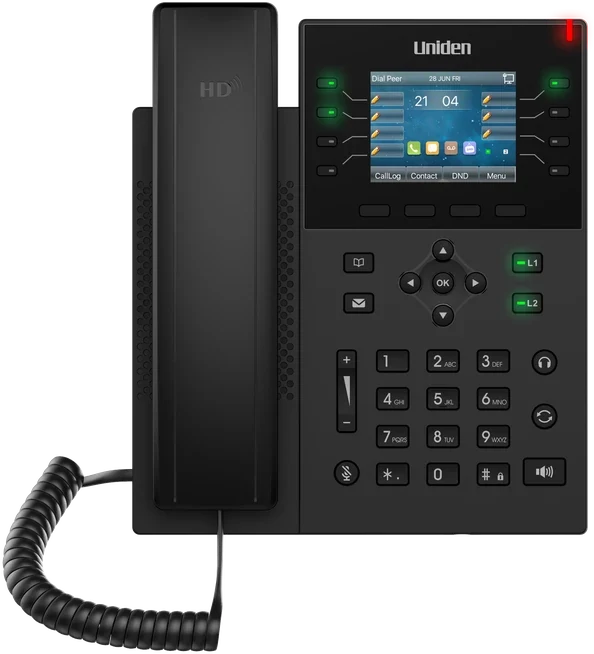
| One Uniden EVOC2 desk phone for reception | $249.00 |
| One month of the new plan while the old one is still live | $194.80 |
| Phone contract exit fee (already out of contract) | $0.00 |
| Setup and number porting | $0.00 |
| Total one off cost | $1,203.80 |
$1,203.80 divided by $204.20 is about 5.9 months. After that, the saving is money the office keeps. Over a 36 month term the saving comes to $7,351.20, or $6,147.40 once the one off costs are taken out.
$204
monthly saving in the illustrative example
5.9
months to pay back the one off costs
$6,147
net over 36 months, after the one off costs
A rough guide: payback under 12 months is usually a clear case for moving. Between 12 and 24 months, look harder at timing. Over 24 months, the saving is probably too thin, or the exit cost too high, to justify the effort right now.
Move Now or Wait for the Contract to End?
When there is a large exit fee or lease payout, there is a simple test. Multiply the monthly saving by the number of months left on the contract or lease. If that figure is bigger than the exit cost, moving now saves more than waiting. If it is smaller, wait, and move in the month before the term ends.
| The six desk office (illustrative) | Figure |
|---|---|
| Monthly saving | $204.20 |
| Months left on the lease | 8 |
| Saving given up by waiting (8 x $204.20) | $1,633.60 |
| Lease payout avoided by waiting | $760.00 |
| Verdict | Move now. Waiting costs $873.60 more. |
Run the same test on your own figures. If your exit fee is the remaining months of a long term multiplied by a high monthly charge, the answer may well be to wait, and that is a perfectly good outcome of an audit. You still know what you will move to, and when.
When Moving Will Not Save You Money
An honest audit sometimes says stay. That is usually the case when:
- You are early in a long term and the exit fee is most of the remaining contract.
- Your current plan is already lean: per user pricing, no leases, nobody billed who has left, no duplicate tools.
- Most of your spend is on call types that cost much the same everywhere, such as heavy international calling, so the saving on the plan is small.
- You own recent hardware outright and it would be wasted by the move. Ask whether it can be reused before you rule anything out.
Even then, the audit is rarely wasted. Removing users who left, cancelling a duplicate SMS tool or ending a lease on spare handsets can be done with the provider you already have. If you want a line by line way to put a number on every part of a quote, our business phone system cost calculator is the long version of this exercise, and our earlier piece on fixed costs to review after the rate rise covers the phone and internet bill alongside the rest of your overheads.
Moving Without Losing Calls
The savings disappear quickly if customers ring a dead number for a day. The rules that matter most are short:
- Do not cancel the old service yourself. Your number stays live on it until the port completes, and the port itself is what ends it.
- List every number, including the 1300 number, any second line and the old fax number someone still has on a letterhead.
- Give notice to the lease company and the PBX maintainer separately. The phone provider will not do it for you.
- Set up and test the new system before the port date, so the first call after the switch reaches the right person.
The full sequence, from reading the exit terms to the morning of the cutover, is in our guide to changing business phone provider without losing calls, and the mechanics of moving a number are in our number porting guide.
What a Uniden Voice Quote Looks Like
If you would like a second column for your own audit, this is what ours contains. Business phone plans start from $84.90 a month with three users included, on a 36 month term. Setup is free and number porting is free, with your old service kept live until the port completes. More than 40 features are in the plan, and every user gets the apps for iOS, Android, Windows, macOS and Linux, so a desk phone is optional rather than required. If you do want one on a desk, the Uniden EVOC2 is $249. Our pricing page also carries a guarantee to beat any competitor's quote.
We are also an nbn provider, so if a separate internet bill is one of your leaks, our nbn plans let you put both on one bill with one Australian support number. Uniden Voice is designed, built, hosted and supported in Australia, with support on 1300 881 662, Monday to Friday, 9am to 5pm AEST.
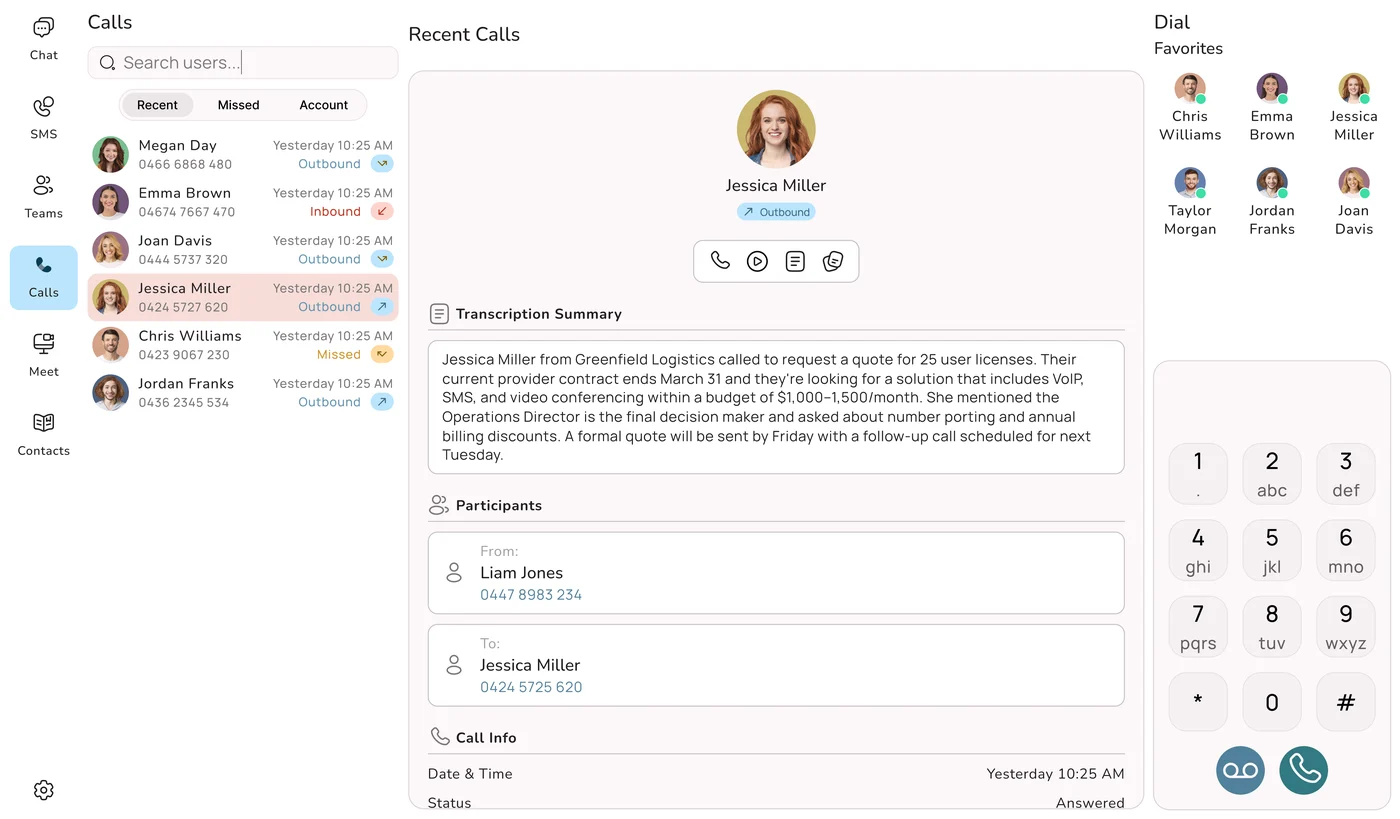
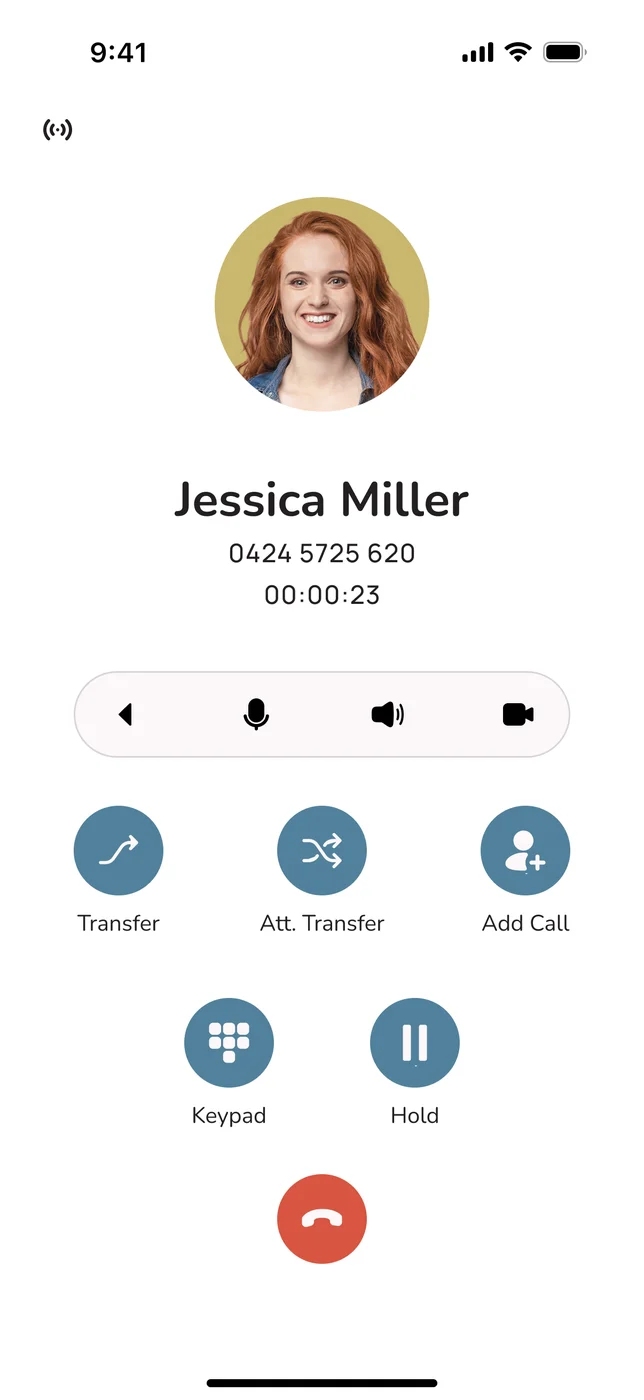
You can try the desktop app and the mobile app in your browser right now. Then bring your audit to a demo and we will fill in the "after" column with real figures for your business.
Prefer to check the numbers yourself first? See the full Uniden Voice pricing.