











Why the Order Matters
Almost nothing in this list is difficult. The trouble comes from doing things out of sequence. Print business cards before you register the business name and you may find the name is taken. Build a Google Business Profile with your personal mobile and you will be ringing customers back from that number for years. Put your first few invoices through your personal account and your accountant will spend billable hours untangling them.
The principle is simple. Do the legal and money steps first, because everything else depends on them. Then lock in the details that will be printed and published, such as the name and the phone number. Only then spend money on things that carry those details, like signage, a website and advertising.

The Eight Steps After Your ABN
Here is the sequence. Each step has a short explanation underneath.
- 1
Link your ABN to myID and RAM
Your myID (it used to be called myGovID) proves who you are online. Relationship Authorisation Manager (RAM) links that identity to your ABN so you can use the ATO's online services and act for the business.
- 2
Register your business name
If you trade under anything other than your own name, register it with ASIC. At 2026-27 rates it costs $47 for one year or $108 for three.
- 3
Decide on GST
Registration is required once your turnover reaches, or is expected to reach, $75,000 a year. Taxi and ride-share drivers must register from the first dollar.
- 4
Open a business bank account
Keep business money separate from day one and connect it to bookkeeping software. It makes your tax return, your BAS and your records far easier.
- 5
Sort out insurance
Public liability and professional indemnity depend on your trade. If you employ anyone, workers compensation is compulsory in every state and territory.
- 6
Get your business phone number
Before anything gets printed or published. This is the step people rush, and the one that is hardest to undo. More on it below.
- 7
Domain, email and Google Business Profile
Register a .com.au domain (your ABN helps establish eligibility), set up email on it, and create your Google Business Profile using the business number.
- 8
Put scam guards in place
New ABNs attract fake renewal notices and invoice scams within weeks. Know what the real ones look like before the fake ones arrive.
A few details worth knowing. Your ABN application itself is free through the Australian Business Register, so ignore any website that charges for one. Sole traders trading under their own name, exactly as it appears on the ABN, do not need to register a business name. The ATO expects you to keep business records for five years. And if you are going to employ people, the rules changed on 1 July 2026: under Payday Super, superannuation now has to be paid at the same time as wages rather than quarterly, so choose payroll software that handles it from the start.
The official sources are the Australian Business Register, ASIC business names and the ATO's guide to starting a business. Your accountant can tell you which of these apply to your structure.
Why Your First Phone System Matters So Much
Most new owners treat the phone as a two minute job. They already have a mobile, so they put that number on the business cards and move on. It feels like the practical choice. It is also the decision we see people regret more than almost any other, because a phone number has a property nothing else on this list has: it spreads.
Think about where the number goes in the first twelve months. It is on the business cards, the website, the Google Business Profile and every directory listing. It is signwritten on the ute or the shopfront. It sits in the footer of every quote and invoice, in your email signature and on your social pages. Customers save it in their phones and pass it on to friends. Most of that cannot be recalled. You can reprint cards and repaint the van, but you cannot update the number in five hundred customers' contacts, or in the referral a happy client wrote in a local Facebook group two years ago.
Compare that with the other early decisions. A logo can be refreshed. A website can be rebuilt over a weekend. Bookkeeping software can be swapped at the end of a financial year. The phone number is different because other people hold copies of it, and it keeps working for or against you long after you have forgotten where it was printed.
Spreads
Your number ends up on signage, listings, reviews and in customers' phones. Other people hold the copies.
Sticks
Changing it later means old listings and old contacts ring a number that no longer reaches you.
Speaks
How the call is answered is often a customer's first real contact with your business.
Scales
The system behind it decides whether you can hire, take a break or go on holiday without losing calls.
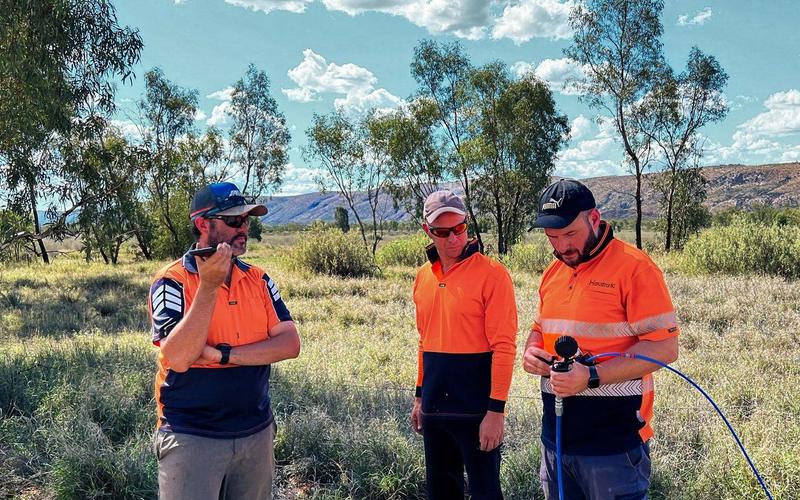
There is a second reason the first phone system matters, and it is about the calls rather than the number. In the early months, every enquiry counts. A new business does not have a pipeline of repeat work yet, so a missed call from a first time customer is often a job that goes to whoever answers next. When you are on the tools, driving, or with another client, the phone system decides what happens to that call. A personal mobile sends it to a voicemail most people will not leave a message on. A business phone system can ring a second person, send the caller a text, or have an AI receptionist take the details and book them in. We looked at what those missed calls cost in our guide to missed calls for tradies.
The Personal Mobile Trap
Using your own mobile number is free and instant, which is exactly why it is so tempting. The problems do not show up on day one. They show up in year one and year three, when the business has grown around a number that belongs to you personally.
| Situation | Personal mobile number | Business number on a cloud phone system |
|---|---|---|
| After 6pm and weekends | Every call reaches you, or none do. You cannot tell a customer from your mum before you answer. | Business hours are set once. After hours callers hear a message, leave a voicemail or talk to an AI receptionist. |
| Taking a holiday | You either take the calls on the beach or miss them. | Forward the number to a colleague, an answering service or an AI agent for the week. |
| Hiring your first person | They cannot answer your personal phone. Customers keep ringing you. | Add a user and the number rings both of you, or goes to a small queue. |
| Calling customers back | Your personal number shows up, and customers save it and call it at 9pm. | Outbound calls from the app show the business number. |
| Selling the business | The number customers know is attached to you, not the business you are selling. | The number is a business asset that transfers with the sale. |
| Records and disputes | Business calls are mixed in with personal ones. | Call history, recordings and notes sit with the business. |
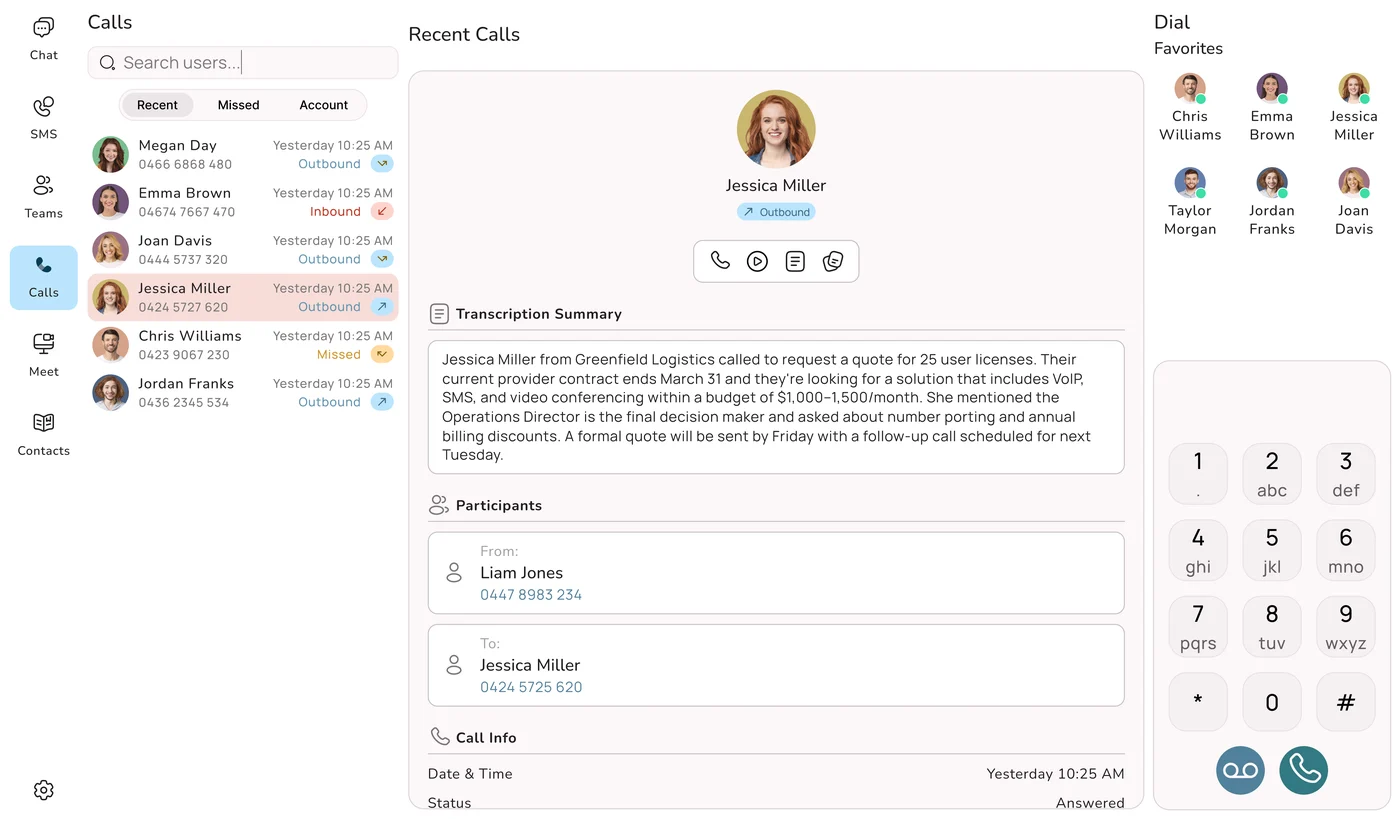
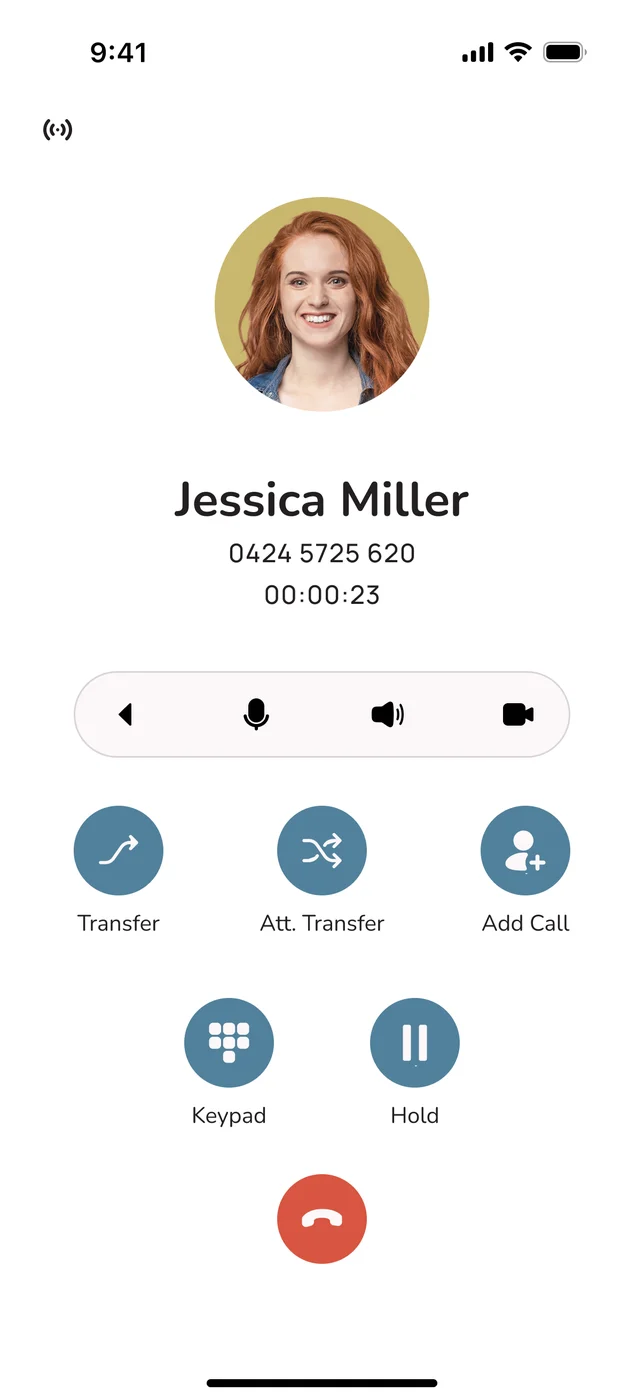
The good news is that avoiding the trap does not mean carrying two phones. A business number on a cloud phone system rings the mobile you already own through an app, so you get the separation without the extra device. Our guide to putting a business number on your mobile compares the ways to do it.
What to Choose on Day One
You do not need a complicated system to start. You need a few decisions made properly, because they are the ones that are hard to change later. Our full guide to setting up a phone number for a new business goes into each of these in detail.
The type of number
A local number (02, 03, 07 or 08) says you are nearby. A 1300 or 1800 number works nationally and can follow you if you move. A mobile number suits some trades. Pick the one that matches how customers will find you. Our 1300 and 1800 guide explains the options.
Who owns it
Make sure the number is held in the business's name and can be ported if you ever change provider. Avoid arrangements where a reseller or a marketing company holds it for you. Read who owns your 1300 number before you sign anything.
Where it rings
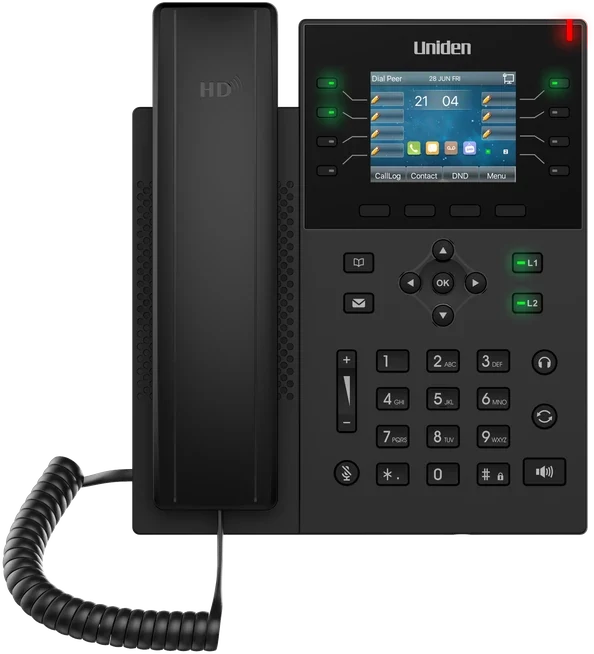
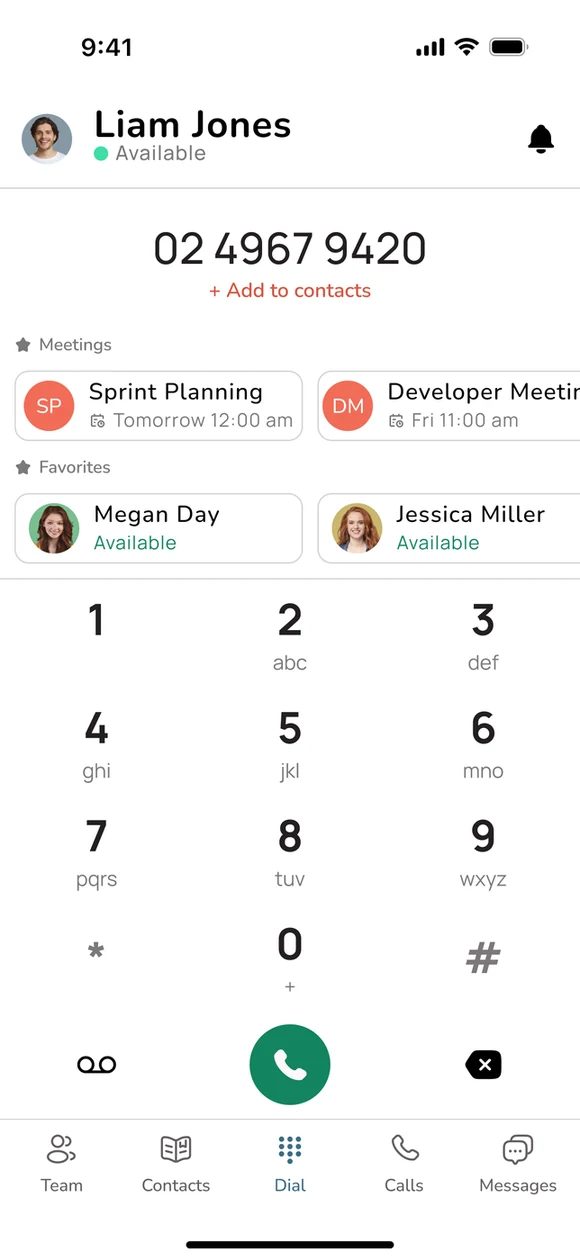
On day one, probably just your mobile app. Later, a desk phone, a laptop and a second person. Choose a system that can grow into that without a new number.
Your hours
Decide when the business is open and what happens outside those hours. It protects your evenings and tells customers when to expect an answer.
What happens to missed calls
A clear voicemail greeting at the very least. Better still, a text back to the caller or an AI receptionist that takes the details while you are busy.
Who helps you
Check that you can ring a real person when something goes wrong. When you are new, the support team is part of the product.
Two quick checks that people skip
Emergency calls. If your business number can call 000 from a desk phone or app, the provider needs your correct address. See our guide to triple zero on cloud phones. Caller ID. Calls from new or badly configured numbers are more likely to be flagged as a possible scam on customers' phones. Our article on business calls flagged as scams explains how to avoid it.
Your First 30 Days
Here is how the steps fit into a month for a typical sole trader or small partnership. It is not a race. The point is that each week builds on the one before.
| When | What to get done |
|---|---|
| Week 1 | Set up myID and link the ABN in RAM. Register the business name. Talk to an accountant about GST, structure and what records to keep. |
| Week 2 | Open the business bank account and connect bookkeeping software. Arrange insurance. Choose your business phone number and set your hours and missed call handling. |
| Week 3 | Register the domain and set up email. Create your Google Business Profile with the business name, address or service area and the business number. Order cards and signage, now that the details are final. |
| Week 4 | Build or refresh the website. Save the real ASIC, ATO and bank contact details somewhere safe so you can check any notice against them. Ring your own number from another phone and hear what a customer hears. |
That last item takes a minute and it is the one we recommend most. Call your business at 7pm on a Tuesday and see what happens. If you would hang up, so will your customers.
The Scams That Find New ABNs
Basic details of every ABN, including the business name and location, are public on ABN Lookup. That is useful for customers, and it is also a mailing list for scammers. New businesses commonly receive official looking letters and emails offering to "renew" a business name or list the business in a directory, for several times the real ASIC fee. ASIC has warned about a rise in emails impersonating it, and many of these notices carry a line in the small print saying they are not an ASIC bill.
Three habits that stop most of it
Renew your business name only through ASIC's own site, reached from a bookmark rather than a link in a message. Check any invoice for "registration", "listing" or "compliance" against the supplier you actually engaged. And if someone rings claiming to be from the ATO, your bank or your phone provider, hang up and call back on the number you already have. Our guide to the Scams Prevention Framework covers the rest.
How Uniden Voice Helps New Businesses
Uniden Voice over Cloud is built so a new business can start with one number on one mobile and grow without changing it. You can choose a local, 1300 or 1800 number, have it ringing in the app on your phone the same day, and set your hours, voicemail and after hours handling from one portal. When you are ready, add a desk phone, a desktop app, a second person or an AI agent that answers when you cannot, on the same number your customers already have. There are no lock-in contracts, porting is free, and the number stays yours if you ever leave.
Just as important when you are new, you can call our Australian support team on 1300 881 662 and talk to someone who can see your account and help you set it up properly. If you are weighing up the costs first, our business phone system cost guide sets out what a small setup should cost, and why a tech partner who answers matters explains what to look for in whoever you choose.