

Business phone system
- Business phone systemA complete cloud phone system, set up for you
- Features50+ features: IVR, queues, recording, desktop and mobile apps
- Call flowsDecide exactly how every call is answered and routed
- AI Agents Built inAnswer, book and follow up on calls, day or night
- Time to upgradeStill on an old PBX? Here is what you are missing
Apps and hardware
- Desktop app Live demoCalls, chat, SMS and AI summaries in one window
- Mobile app Live demoYour business number on your iPhone or Android
- Uniden desk phonesThe EVOC2 and a full range of office, DECT and conference phones
- Business NBNNBN set up alongside your phones, on one bill
- Why our internetBuilt for voice, so calls stay clear when the line is busy
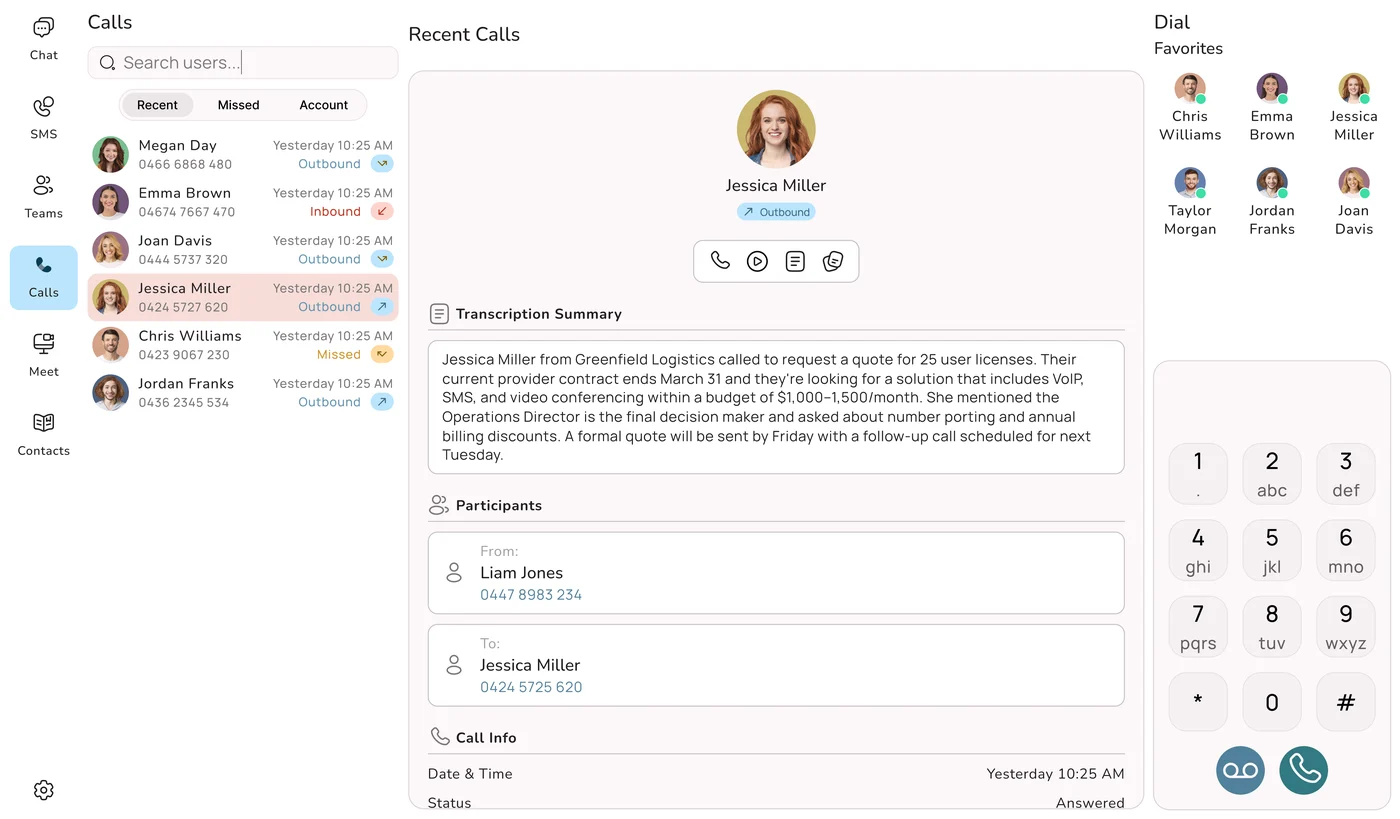
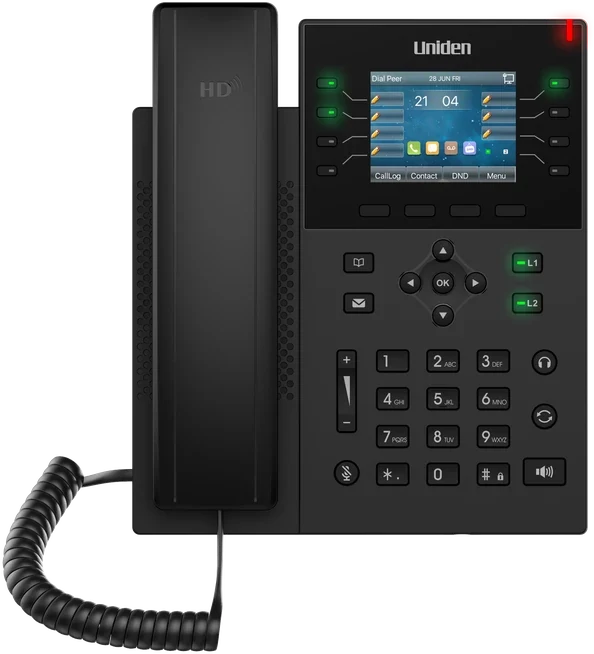
New Try it liveTake the Uniden Voice apps for a spin, right here
Click through working demos of the desktop and mobile apps: calls with AI summaries, team chat, SMS and more. No download, no sign up.
Desktop app demoMobile app demoDesigned, built, hosted and supported in Australia. Uniden desk phones, cloud apps and AI in one system.Book a demoAll features
AI on your phone line
Uniden Voice vs AI receptionists
See every comparisonAI AgentsEvery call answered, day or night
It answers on your own numbers, books the job, sends an SMS and warm transfers to your team when a person is needed.
Meet your AI agentBuilt into your phone system, not bolted on. No second number, no call forwarding.Book a demo
Professional services
Trades, retail and hospitality
Browse all industries Case study · Optical Solutions AustraliaFive branches, five phone systems, now one.5 sites1 systemRead the story
 Case study · Coco's Wealth of HealthWhen every enquiry and phone order matters.Maroubra organic health-food storeRead the story
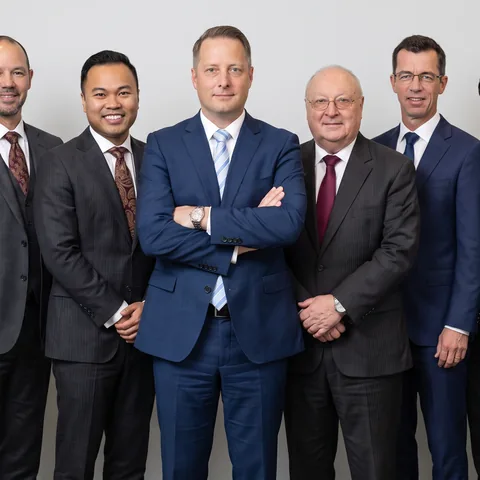 Case study · Shuriken Advisory GroupOne connected team across Sydney, home and overseas.30+ team1 platformRead the story
 Case study · Carlingford Dental SurgeryEvery call rings the whole team.Dental Carlingford, NSWRead the story
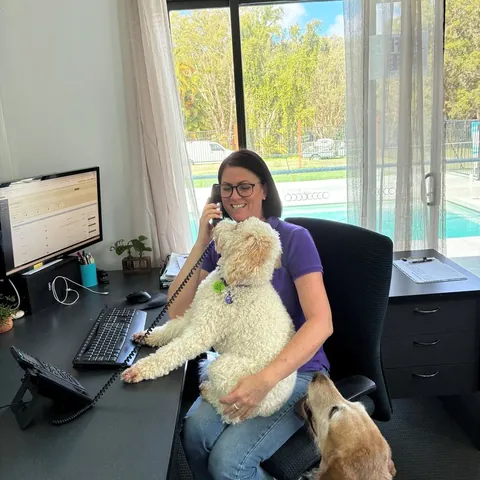 Case study · PTSD Dogs AustraliaA direct line for veterans, answered from anywhere.Charity Sunshine Coast, QLDRead the story
 Case study · Imperial Realtor GroupSales calls to sales, rentals to property management.Real estate Mango Hill, QLDRead the story
 Case study · Good 2 Eat CateringA catering team on the move, on one number.Catering and events Sunshine Coast, QLDRead the story
 Case study · ManolutionsOne number for the firm, a direct line to Paul.Executive advisory Works across time zonesRead the story






Our customersFrom one-person shops to national brands
See how businesses like yours run their phones on Uniden Voice.
Find your industryWorking on your own? A real business number and NBN for sole traders, no lock-in.Sole tradersStartups
Phone plansBusiness phone planfrom$84.90/month3 users included on a 36-month term. Every feature, one simple per-user rate.Free setup and free number portingDesktop and mobile apps includedAI Agents built inSee phone plans![Uniden Voice mobile app on a call]()
![A small team working together at a desk]()
Internet, hardware and more

Bundle and savePhones and NBN from one Aussie team
One provider to call when something needs fixing. No finger pointing.
See NBN plansWe guarantee to beat any competitor's quote. Keep your existing numbers when you move across.Sign up online1300 881 662
Learn and get set up
The library at a glanceBrowse all
180business
guides403kreads
so far
guides403kreads
so far
Guides by topic
- Phone systems67
- AI24
- Industries18
- Costs13
- NBN8
- Security7
- News5
- Other guides38


Need a hand? Our support team is based in Australia.Contact support
Call us on 1300 881 662 or send a message and the team will get back to you.Send a message
Guides and Articles
Every phone vendor claims plug and play. Almost none of them explain what the handset is actually doing in the ninety seconds after you plug the cable in, or what has to be true beforehand for it to work at all. This is the full account for the Uniden EVOC2: the complete specification, the provisioning sequence in order, what to do when a phone comes up blank, and how long it really takes to deploy one desk or forty.
Short answer: yes. Longer answer: most AI advice was written for companies a hundred times your size, which is why it feels like it does not apply to a business with six staff and no IT department. Here is what Australian small businesses actually use AI for, what it genuinely costs, what the law now expects of you, what you should never hand over - and the one project worth doing first.
Australia is a founding member of the Global Coalition on Telecommunications, the group now writing security and resilience principles for 6G. 2026 has been its busiest year yet: new members, the first 6G principles, an EU partnership and Telstra signing a 6G research agreement. Most of it is a decade away from your desk. One part of it should change what you buy this year.
Buying your phone system from one company and your internet from another creates a fault nobody owns. Here is what actually changes when the connection and the calls come from the same provider - prioritisation, one bill, one SLA, faster fixes - and the two cases where bundling is the wrong call.
Not every call belongs to a robot, and not every call needs a person. The businesses winning with AI phone agents in 2026 are not the ones automating everything: they are the ones drawing a clear line between the calls a machine handles brilliantly and the calls that must reach a human fast. This is the decision framework for getting that line right.
Australia's largest electricity and gas retailer is investigating a major data breach, and the data taken is unusually rich - names, addresses, dates of birth, phone numbers and partial card and bank details. The first wave is the headline. The second wave is the scam calls that use the stolen details to sound legitimate, and that wave lands on your staff. Here is what is confirmed and what to do about it.
Almost every "Australian" business phone system is a login to somebody else's platform in somebody else's country. Uniden Voice runs on Australian infrastructure we operate ourselves - which changes what happens to your data, who answers when it breaks, and how a fault actually gets fixed.
RCS (Rich Communication Services) is the modern upgrade to SMS, verified branded senders with your logo and a trust badge, rich media, carousels, buttons and chatbot flows, and, since iOS 18, iPhone support too, reaching up to around 85% of smartphones in some major markets. But in Australia carrier support is still limited: RCS for iPhone has not yet been enabled by Telstra, Optus or Vodafone, so SMS remains the only channel that reaches every mobile. This plain-English guide explains exactly what RCS is and how it works, while the switch-or-not decision lives in its companion comparison.
At 2pm on 27 July 2026, phones across Australia vibrated and shrieked for ten seconds. That was the national test of AusAlert, the cell-broadcast warning system that goes live on 1 October. It is a real improvement on the SMS-based system it replaces. It is also a useful reminder that a government alert warns your staff about a bushfire - it does not tell your customers you are closed, or route your calls somewhere safe.
Most businesses have four inboxes and call it omnichannel. Real omnichannel means one queue, one history, and a customer who never has to re-explain themselves. Here is the honest guide - channel by channel, with the order to add them in.
The right to disconnect now covers small business, and that has left a lot of trade and field-service owners uneasy: if someone has a burst pipe, a dead aircon in a heatwave or a power fault at midnight, someone still has to answer. The good news is the law was never a ban on after-hours contact, and emergencies are expressly outside it. This is the tradie and on-call deep-dive to our broader right-to-disconnect explainer: how to build a call flow that keeps genuine emergencies covered while keeping your team, and your business, on the right side of the line.
An NDIS audit is not a test of how well you support people - it is a test of whether you can prove it. Most providers document their shifts carefully and then lose the entire telephone record: the intake call, the family concern, the roster change, the complaint that was fixed. Here is what the rules actually require, and how to stop the phone being the hole in your evidence.
Voice cloning crossed the point where people can no longer reliably tell. That breaks the oldest control in business - "it sounded like him". Here are the four attack patterns hitting Australian businesses, and the seven controls that still work.
Coverage maps and outage registers help you compare carriers, but they won't answer your phone when one goes down. Here is how to find your single points of failure and give every business call a second way through.
A participant rings to change a Thursday support. It takes three systems and two people, and somewhere in the middle they are asked to explain their situation for the fourth time this month. That is not an efficiency problem - it is what fragmented software feels like from the other side of the phone. Here is what actually changes when an NDIS provider's systems start talking to each other.
A category-by-category directory of the SaaS platforms Australian businesses actually run - accounting, CRM, HR, field service, health, legal, retail, education, logistics - and exactly how each one connects to your phone system.
From 2026, Australian telcos must publish honest coverage maps and a public register of every major outage - a real win for anyone choosing a network. But a map that tells you the network went down is not the same as a phone system that stays up, and this overview explains the difference for business owners.
New estates on LightFast Networks fibre have no copper phone line at all - so your business phone system is your phone. Here is what GPON fibre to the home actually is, why symmetrical fibre suits voice better than anything before it, and how to get connected with Uniden Voice.
Contact centre software stopped being an enterprise-only purchase in 2026. Here is the eight-point scorecard for judging any platform, what agentic AI actually changed this year, and the honest case for why Uniden Voice Over Cloud leads the Australian market.
From 30 June 2026 a new ACMA industry standard forces Telstra, Optus and TPG to describe mobile coverage with one honest legend: good, moderate, basic or no coverage. It is a genuinely useful change, but a clearer map does not put more bars on your phone. This guide explains what each label really means for a business that runs on mobile, where you can realistically expect a Triple Zero call to connect, and why the smartest response is to stop tying your phones to any single network's coverage.
Dial 000 from a cloud phone and the emergency operator does not see your GPS - they see the address registered against your service. After the Optus outage, Australia now has a Triple Zero Custodian and new enforceable telco obligations. Here is what actually happens, and the ten-minute check every business should do.
Your phone system should not be an island. Here is how Uniden Voice Over Cloud connects to over 1,000 business apps through native integrations, open REST APIs, webhooks and the new MCP standard - and what each connection method actually gives you.
RCS is the biggest business-messaging story of 2026: verified brand senders with logos, buttons and carousels, now reaching iPhones too after Apple added it in iOS 18. But in Australia, carrier support is still catching up, and SMS remains the only way to reach every mobile number. Here is the plain-English, honest verdict on what your business should actually do with its texts this year.
Traditional call quality assurance scores about two calls in a hundred, weeks late, by a team leader who would rather be doing something else. AI can score all of them. Here is what that actually gives you, the three ways it goes badly wrong, and how to roll it out without destroying your team's trust.
Everyone agrees AI voice agents are cheaper than staffing every phone line by hand, but almost nobody puts real numbers on the page. This guide does. We lay out the illustrative 2026 cost of an AI-handled call versus a human one, the Gartner-forecast savings reshaping contact centres, and a worked, clearly-labelled example of what the return might look like for a small Australian business, so you can judge the economics for yourself rather than take a sales pitch on faith.
Since 26 August 2025 the right to disconnect has covered small business employers with fewer than 15 staff, adding around 5.4 million employees to the rule. It is not a ban on after-hours contact, but it does change how you should handle calls once the day is done. The safest, simplest fix is to stop sending after-hours calls to staff personal mobiles and let your phone system take over instead.